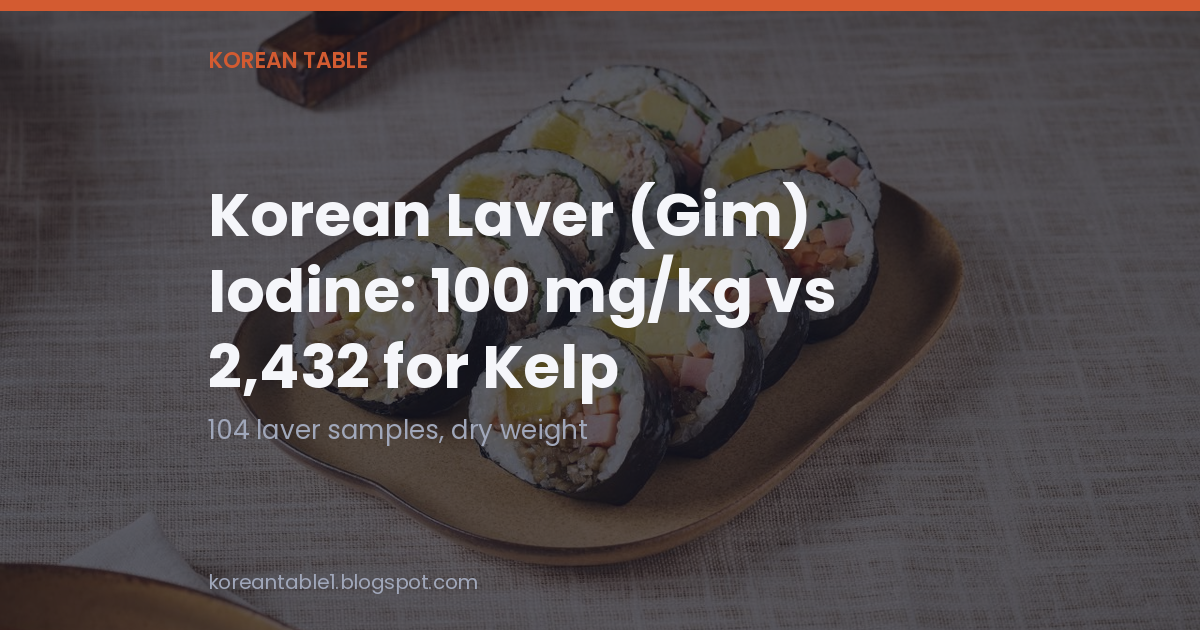
Korean Laver (Gim) Iodine: 100 mg/kg vs 2,432 for Kelp
A Korean article dated August 4, 2025 says a single sheet of seasoned gim (김, roasted laver, about 2 g) carries 200 to 300 µg of iodine, and that "조미김 단 한 장만 먹어도 하루 권장량을 가뿐히 넘어서게 됩니다", which is "even one sheet of seasoned gim easily passes the daily recommendation." The recommendation it means is 150 µg for adults. If you eat gim every day, the lab numbers are easy to check, and a 2025 Korean study of 104 laver samples is the best set I found.
The article is on Daum, a Korean portal. It lists seasoned gim next to miyeokguk (미역국, seaweed soup) at 1,000 to 2,000 µg a bowl, and it gives no per-100 g figure or measurement source, so the 200 to 300 µg has no visible origin.
What 348 seaweed samples measured
Researchers at the National Institute of Fisheries Science in Busan collected seaweed from 12 coastal regions between October 2020 and July 2024, freeze-dried it, and measured iodine by ICP-MS. The paper, Lee et al., Foods, August 2025, reports dry-weight means for five kinds:
| Seaweed | Samples | Mean iodine, mg/kg dry weight |
|---|---|---|
| Laver (gim, Porphyra) | 104 | 100.18 ± 78.60 |
| Green laver (파래, Enteromorpha) | 76 | 86.11 ± 59.85 |
| Sea mustard (miyeok, Undaria) | 61 | 176.89 ± 88.91 |
| Hijiki | 87 | 526.57 ± 282.16 |
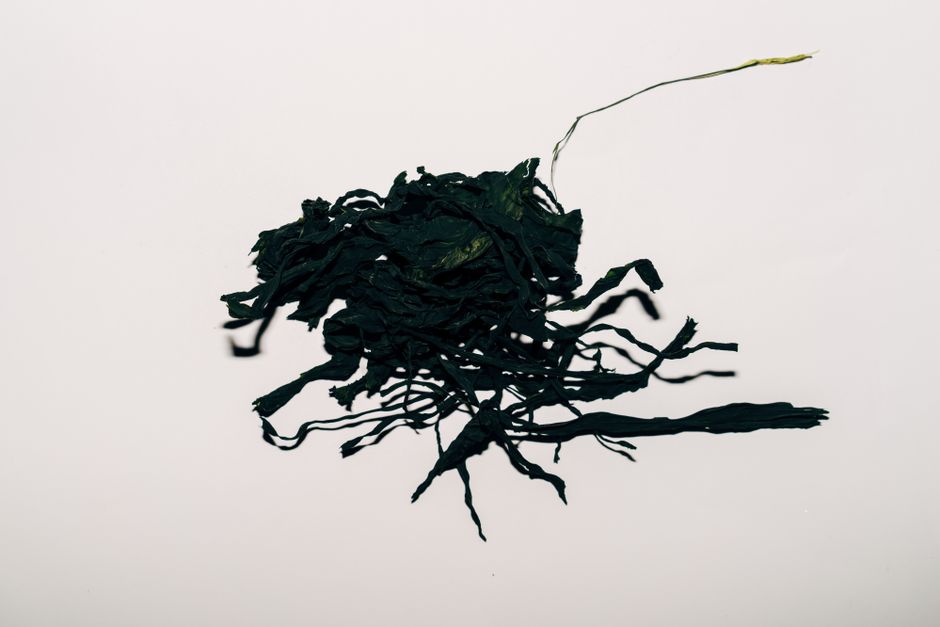
| Sea tangle (dasima, kelp) | 20 | 2,432.11 ± 1,110.25 |
The spread inside laver is wide, from 23.45 to 412.19 mg/kg across the 104 samples. Dividing the table's two means, kelp is about 24 times laver by dry weight. The paper's own text says "more than 45 times", and the two figures do not agree with each other. A different Korean paper on brown seaweed, Kwon et al. 2024, cites an earlier total diet study that put sea mustard at seven times and kelp at 80 times laver. The ratio changes with the sample and the preparation. In the table above laver is near the bottom (only green laver is lower), and the total diet study that Kwon cites also puts it below both brown seaweeds.
Grams, not sheets
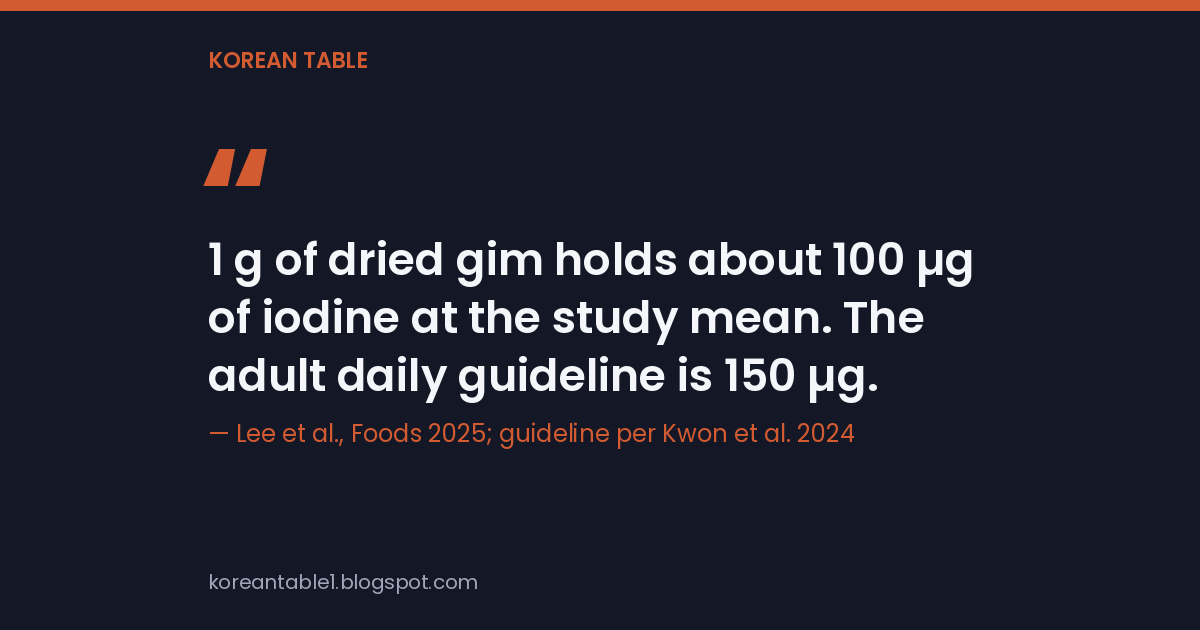
One mg/kg equals one µg per gram. At the study mean, 1 g of dried laver holds about 100 µg of iodine, and 150 µg arrives at roughly 1.5 g. At the lowest sample (23.45) it takes about 6.4 g to reach 150 µg, and at the highest (412.19) about 0.36 g. I did those three divisions myself; the paper does not give them.
The Daum article's 2 g sheet at 100 µg per gram gives 200 µg, the bottom of its 200 to 300 range. So the claim fits the mean if the sheet really is 2 g of pure laver. A seasoned sheet also carries oil and salt, and I did not weigh one, so the weight on your own packet is the number to trust. Package grams times 100, with 23 to 412 as the range, is the check.
What Koreans actually eat
The same paper took consumption from the 2023 national nutrition survey (KNHANES). The average person eats 1.02 g of laver a day, dry weight, which comes to 102.44 µg of iodine. Among people who reported eating laver that day, the average was 2.94 g, or 294.69 µg.
Its hazard index divides intake by an upper limit. Against Korea's 2,400 µg limit, laver scores 0.04 for the average person and 0.12 for laver eaters. Against the stricter 600 µg limit the paper takes from EFSA, the Europe food-safety agency, it scores 0.17 and 0.49. Kelp gets 0.68 on the Korean limit and 2.72 on the EFSA one, from an average of 0.67 g of dried kelp a day.
The Daum figure is reasonable arithmetic for a pure 2 g sheet at the mean. On these tables the large numbers come from brown seaweed, since kelp averages 1,632.61 µg a day against laver's 102.44.
The soup and the broth
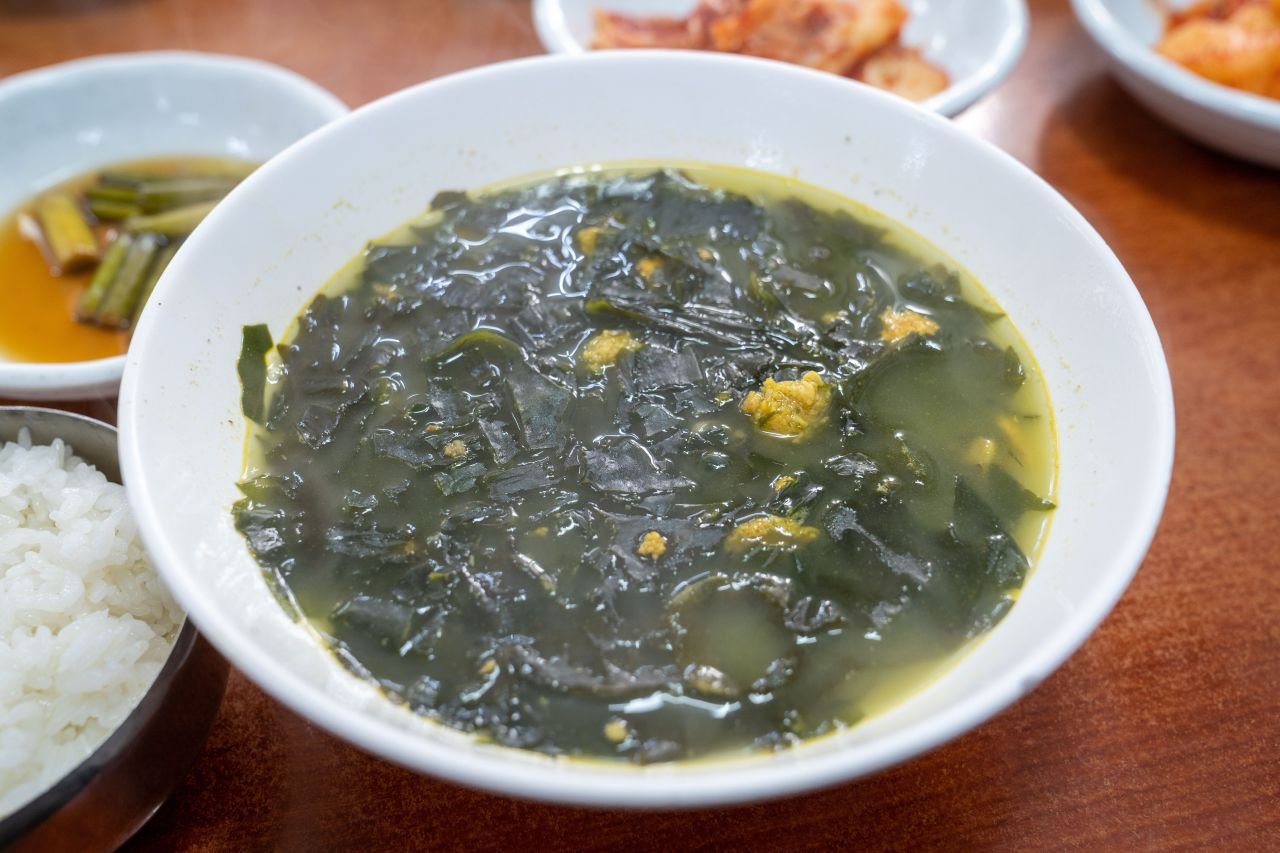
Kwon et al. covered 40,166 people in the 2016 to 2021 surveys and counted only brown seaweed, so gim is outside it. Mean iodine from brown seaweed was 559.16 µg a day, with a 95th percentile of 3,062.07 µg, above the 2,400 µg limit. Kelp broth contributed 347.57 µg a day on average, more than kelp itself (115.58) or sea mustard (96.01). Only 37.6% of people ate any brown seaweed on the survey day, and the authors write that usual intake is probably lower than their mean. They describe that mean as "much lower than the UL."
For new mothers the numbers run higher. A 2021 survey of 1,054 postpartum women found a mean of 2,945.6 µg a day, above the 2,400 µg limit. The authors cite about 1,705 µg of iodine in one 250 mL bowl of miyeokguk.
Thyroid data
A 2019 analysis of 6,095 adults from the 2013 to 2015 survey estimated mean iodine intake at 790.1 µg, with 551.0 µg from food. Among women, intake at or above the upper limit went with higher odds of thyroid disease than the lowest-intake group (OR 2.418, 95% CI 1.010 to 5.787). The study is cross-sectional, so it shows an association and not a cause. None of these papers sets a safe number of gim sheets for someone with a thyroid condition.
I searched in Korean and English for official video on seaweed iodine from the Ministry of Food and Drug Safety and the Fisheries Science institute and found none, so this post has no embed.
Do you know the weight of the gim pack in your cupboard, and how often it also goes into soup?
This is a running series, not a one-off post — a new post goes up every day, at around 9am Korea time.
About · Contact · Privacy Policy
Read next: Korean Sweet Potato Types: Bam, Hobak and the Japanese Honey One · Bean Sprout Tails: Trim or Keep? Korean Lab Numbers by Part · Does Perilla Oil Need to Be Refrigerated? Korea's 40-Week Test


Comments
Post a Comment