Bean Sprout Tails: Trim or Keep? Korean Lab Numbers by Part
Should you trim bean sprout tails before making kongnamul-guk (콩나물국, soybean sprout soup)? A common Korean answer is "keep the roots, that's where the hangover compound is," and a Korean news site ran that line again on September 19, 2026. I went back to the Korean lab data behind it, and the numbers split in a way the headline hides.
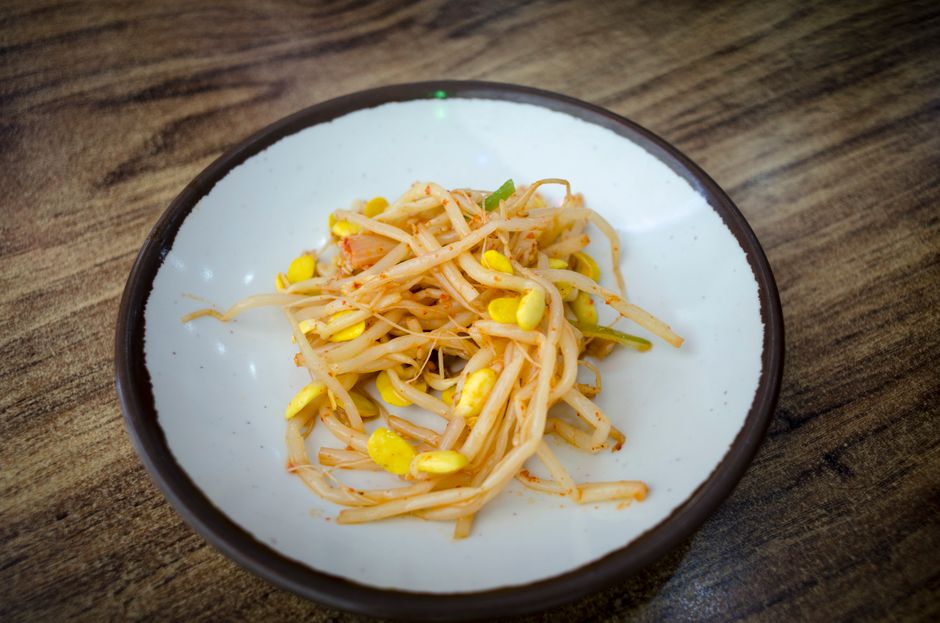
First, the sprout in question. Kongnamul (콩나물) grows from soybeans and has a large yellow head. Sukju (숙주) is the mung bean sprout, with a small green-hulled bean. At a Korean grocer such as H Mart, the Hangul on the bag is the quickest way to tell them apart.
What the "keep the roots" articles claim
The September 19 piece in News-wa says "아스파라긴산은 뿌리 부분에 가장 풍부하다," which means the compound is richest in the root. It adds that 100 g of kongnamul holds 1,101.56 mg of it, "대부분이 뿌리에 몰려있다" (mostly concentrated in the root), and credits the number to the National Institute of Agricultural Sciences.
The article does not name the table behind the per-part claim, and 1,101.56 mg is a figure for the whole sprout per 100 g.
MBC's morning news program, Newstoday, made a similar recommendation in July 2020: if you are making the soup to ease a hangover, "끝 부분을 떼어내지 않는 게 좋고" (better not to pick off the ends). The number MBC showed for the root, however, was an isoflavone figure.
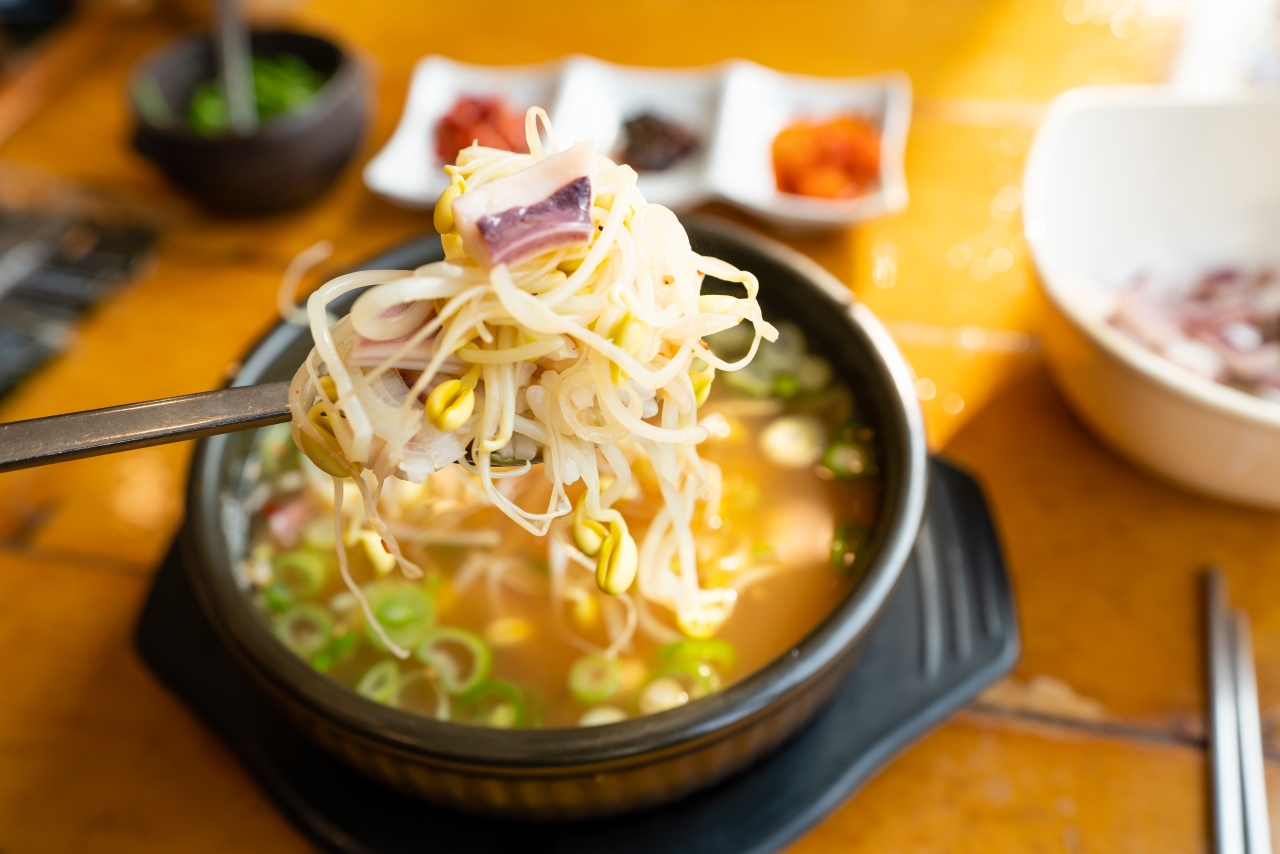
The 2003 RDA numbers, part by part
The per-part figures MBC used first appear, as far as I could trace, in a 2003 report on work by the Rural Development Administration's Honam Agricultural Experiment Station. The station analysed sprouts of Pungsannamul, a sprouting soybean the RDA bred. Two different measurements came out of it, and they point in opposite directions:
| Part | Isoflavone (mg per g) | Total amino acids (mg per g) |
|---|---|---|
| Head | 3.20 | 616.10 |
| Stem | 2.37 | 390.54 |
| Root | 3.99 | 278.89 |
The root leads on isoflavone. On total amino acids it comes last, at less than half of the head's figure. The same 2003 article tells readers to put the heads in when making hangover soup, because that is where it places the asparagine. So the original data supported keeping the root for isoflavones and keeping the head for the hangover story. By 2026 the two had become one line: "the root has the hangover compound."
A university study that measured asparagine directly
A 2008 paper from Kyungpook National University, Jeong, Son, Lee and Hwang, Agricultural Research Bulletin of Kyungpook National University 26:71–79, grew two sprouting soybeans under different temperatures, watering schedules and growing times. Its first sentence repeats the popular belief that asparagine is highest in the root.
Its own results, in the Korean abstract, place the peak elsewhere. For Pungsannamul, asparagine "하배축에서 가장 높았고" (was highest in the hypocotyl, the white stem), at 18.8% after 8 days at 30°C with two waterings a day. For the other variety, Agakong, the top reading was 18.9%, also in the hypocotyl, at 30°C with five waterings a day for 8 days. The same abstract reports that the root was the smallest share of the sprout's dry weight.
The English abstract of the same paper says something different. Its item 2 states that asparagine was "the highest in cotyledon and the lowest in roots," while the Korean item 2 in that position is about dry weight by part, with no asparagine figure. The Korean and English versions of item 2 describe different measurements. The results text on the same ScienceON page, describing the Agakong table, says asparagine was highest in the hypocotyl and lowest in the cotyledon, which matches the Korean abstract rather than the English one.
Newer RDA figures, by variety
In December 2019 the RDA's National Institute of Crop Science published a comparison of two varieties. The institute states that asparagine breaks down acetaldehyde after drinking, and it does not break its figures down by head, stem and root. Pungsannamul sprouts had 74.2 mg/g of asparagine, Aram sprouts 81.0 mg/g. The release gives the isoflavone value for both as 2,377 µg/g, the identical number, which looks like a typo but is what the page prints. GABA was 3.7 mg/g for Aram and 3.6 mg/g for Pungsannamul.
Units differ between these three sources, so I would not compare 74.2 mg/g with 18.8% or with 1,101.56 mg per 100 g as if they were the same scale.
So, trim or keep?
Put the three sources together and the tail comes out as the smallest part of the sprout, the richest part only for isoflavones in the 2003 data, and never measured as the richest part for asparagine in the sources I opened. If you trim the thread-like tails, you give up the part with the most isoflavone per gram. If you are making the soup for the hangover reason Koreans give, the 2003 RDA advice and the 2008 study both point you to the head and stem.
That leaves trimming as a question of texture and appearance. For a plain soup, I would leave them on.
The RDA's own YouTube channel has a short clip for pork and bean sprout jjageuli (a thick, stewed dish):
One more rule repeated across Korean recipe sites is to leave the lid either on or off for the whole boil, so the sprouts do not turn "beany." I searched in Korean for a food-science paper on that rule, and the results were recipe sites, Q&A boards and news explainers; no journal paper came up. I have left it out of the numbers above.
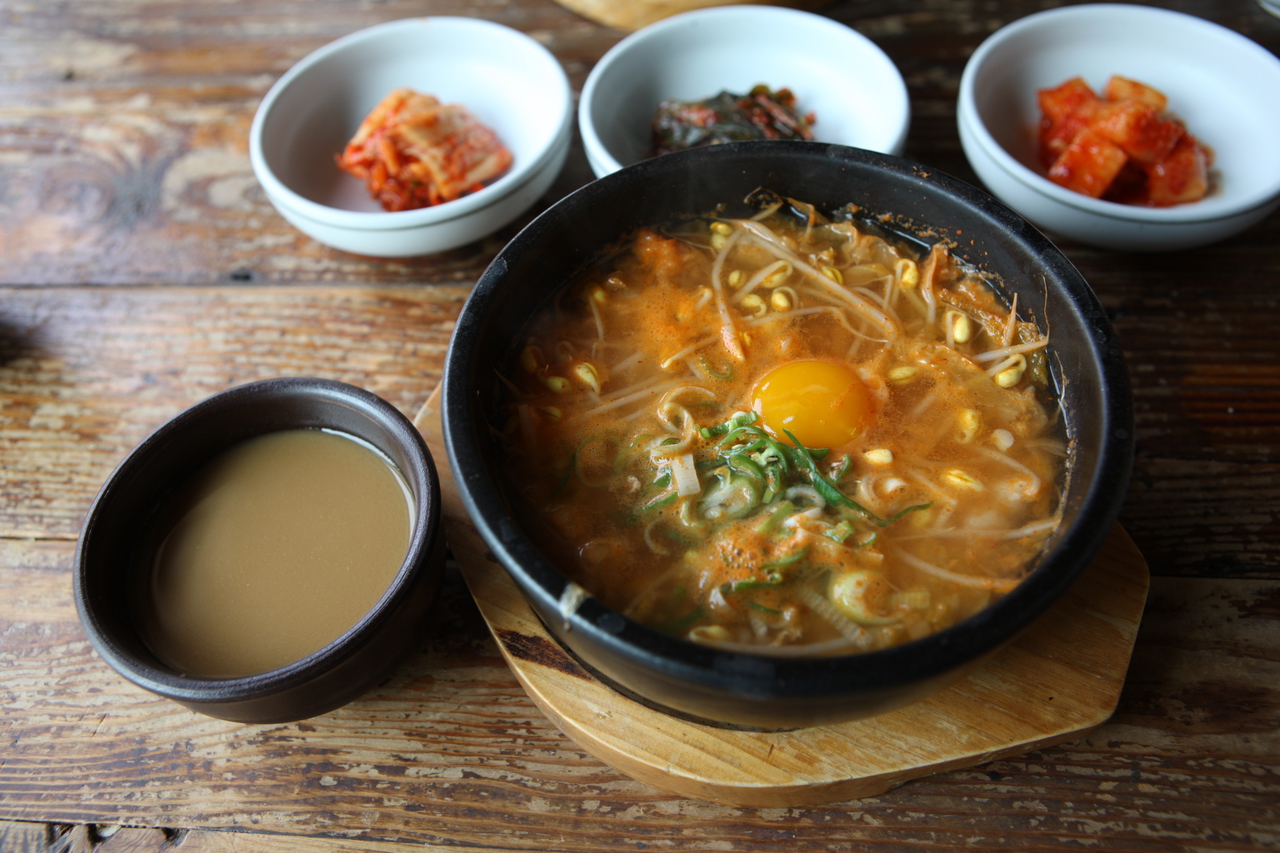
If you buy a bag this week, check that the label says 콩나물. Keep the tails, pick them off, or split the bag and do both.
This is a running series, not a one-off post — a new post goes up every day, at around 9am Korea time.
About · Contact · Privacy Policy
Read next: Does Perilla Oil Need to Be Refrigerated? Korea's 40-Week Test · Soju Alcohol Content Just Dropped Below 16% — Again · Is MSG Bad for You? What the Double-Blind Trials Found


Comments
Post a Comment