Does Perilla Oil Need to Be Refrigerated? Korea's 40-Week Test
Does perilla oil need to be refrigerated? Korea's Rural Development Administration (농촌진흥청, RDA) says yes, and in 2016 it published the storage test behind that advice. Perilla oil (들기름, deulgireum) is pressed from perilla seeds, and Wikipedia's entry describes the oil from toasted seeds as a flavor enhancer, condiment and cooking oil in Korean cuisine.
What the RDA storage test measured
The RDA press release of 21 November 2016 is short. Researchers stored freshly pressed perilla oil at 4°C, 10°C and 25°C and tracked two lab measures of rancidity, the acid value (산가) and the peroxide value (과산화물가).
At 25°C, ordinary room temperature, both values "급격히 늘어" (rose sharply) from week 20. At 4°C, the RDA reported no change in either value up to week 40. The release lists a 10°C group but, in the text I read, gives no result for it.
Twenty weeks is about five months, and the release uses that figure itself. That clock started from oil that had just been pressed. A bottle on a shelf in London or Los Angeles has been bottled, shipped and stocked first, and you do not know how much of those five months was used before you bought it.
The reason is the fat. According to the same release, alpha-linolenic acid, an omega-3 fatty acid, makes up more than 60% of perilla oil, compared with 10% or less in soybean oil and 1% or less in sesame oil.
The release quotes Oh In-seok, head of the RDA's upland crop development division (밭작물개발과장): "가정에서 들기름을 건강하게 먹기 위해서는 반드시 냉장고에 보관해야 한다." In English, "To eat perilla oil healthily at home, you must keep it in the refrigerator."
Sesame oil goes the other way
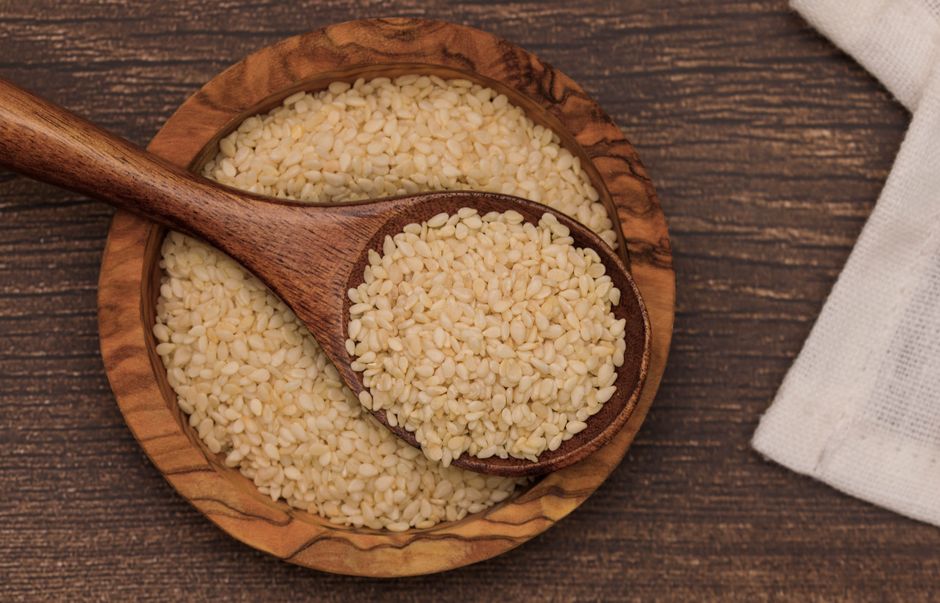
Korean storage advice splits the two oils. In a Nongmin Shinmun article from November 2023, reporter Ji Yu-ri advises keeping sesame oil at room temperature out of direct sunlight, and adds "냉장고에 오래 두면 오히려 맛과 향이 떨어질 수 있다" (a long stay in the fridge can actually dull its taste and aroma). For perilla oil she writes the opposite, "냉장고에 두고 먹어야 한다" (it should be kept in the fridge).
Her explanation is that sesame oil contains lignans (리그난), antioxidant compounds that slow rancidity, while perilla oil is rich in omega-3, which "쉽게 산패하는" (goes rancid easily). The RDA gave sesame oil's unsaturated fat as 80% in its 2016 release, and recommended a cool place with a stable temperature, away from direct light.
Ji gives shelf-life figures. Sesame oil keeps 24 months unopened and about 3 months after opening. Perilla oil also keeps 24 months unopened, but should be eaten within one month of opening. She does not name who set these numbers, so I treat them as the common Korean rule of thumb and not as a regulation. Ji also notes that sesame oil which turns slightly solid in a summer fridge returns to normal after a short rest at room temperature.
Toasted or cold-pressed: which one keeps longer?
Korean food researchers also study cold-pressed perilla oil (냉압착 들기름), pressed from untoasted seeds. A 2009 Korea Food Research Institute study in the Korean Journal of Food Preservation found cold-pressed oil much paler (Hunter L value 76.62 against 39.77 for oil pressed from roasted seeds) and with the lowest acid value of the three oils tested.
An older paper points the other way on keeping time. Kim In-hwan and colleagues (1996) measured an induction period, the time before oxidation speeds up, of 3.9 days for oil from unroasted perilla seed and 55 days for oil from seed roasted at 210°C for 30 minutes. The authors suggest that Maillard reaction products formed during roasting give the roasted oil its extra stability. The abstract does not give the test conditions, so the days cannot be read as a kitchen shelf life; I use only the ratio, roughly fourteen times.
On these two papers, cold-pressed perilla oil begins cleaner and loses its protection much sooner. Light counts too. In a 2012 Inha University study, which used UV irradiation, lipid oxidation was "higher and faster in perilla oil than that in perilla seeds."
Buying perilla oil outside Korea
H Mart lists several bottles online. When I opened the listings on 27 September, Hansang Perilla Seed Oil, 320ml, was described as "made from toasted perilla seeds," a product of South Korea, with the storage field set to "Dry." There is also an Ottogi (OTOKI) perilla oil in a 160ml bottle.
I read that "Dry" as the store's shelving category, since the listing says nothing about storage after opening. The RDA advice is about your kitchen, and the two do not contradict each other as much as they first seem to. Still, I would move the bottle to the fridge as soon as it comes home, and I think the smaller bottle is the better buy for most people. At 5ml per teaspoon, 160ml is 32 teaspoons. That is realistic to use within the one-month window Ji gives. A 320ml bottle is 64 teaspoons.
Where do those teaspoons go? Hansang's listing names sautéing vegetables, seasoning namul side dishes, and stews. The same listing describes the aroma as "earthy, nutty."
The storage rule from these sources is short. Perilla oil goes in the fridge, cap closed, from the day it is opened, and sesame oil goes in a dark cupboard.
This is a running series, not a one-off post — a new post goes up every day, at around 9am Korea time.
About · Contact · Privacy Policy
Read next: Soju Alcohol Content Just Dropped Below 16% — Again · Is MSG Bad for You? What the Double-Blind Trials Found · Is Kimbap Really the Risk? What Korea's Salmonella Numbers Show


Comments
Post a Comment