Kimchi Without Fish Sauce: What Replaces the Umami
A 2021 study in the journal Foods tested whether tomato could stand in for the fish sauce Korean cooks use in kimchi. The tomato came out ahead. You can read the study yourself here. A hot-water tomato extract measured 33,328 mg/kg of glutamic acid, the compound behind savory umami taste, against 21,032 mg/kg for commercial anchovy fish sauce in the same test, roughly a third less. The tomato version also carried less salt, 1.13% versus 1.87%, and far fewer of the volatile compounds that give fish sauce its funk.
It can. You're not chasing a lesser copy of the real thing here. Skipping fish sauce means replacing what it does in two ways. It builds a savory backbone into the paste, and it jumpstarts the fermentation.
Why Most Kimchi Isn't Vegan to Begin With
If you assumed kimchi was just cabbage, chili, and garlic, you're not alone. You're also not right. Traditional recipes, and most jars on a grocery shelf, lean on jeotgal — salted seafood, usually myeolchi-aekjeot (fermented anchovy sauce) or saeujeot (salted shrimp), sometimes both. You'll want to check the ingredient list on a store-bought jar before assuming it's meat-free. "Fish sauce" or "shrimp" often sits halfway down the label instead of at the top.
A 2024 fermentation study compared kimchi made with added fish against kimchi without it. On day one, the fish-added batch had roughly two and a half times the aspartic acid and 20% more glutamic acid. By day fifteen, the glutamic-acid gap had mostly closed. Jeotgal doesn't make kimchi taste good eventually; it makes it taste good immediately, from day one. If you skip it, your kimchi will taste thinner for the first few days in the fridge, then even out as fermentation catches up. That's worth knowing going in, so you don't panic and dump in extra gochugaru on day two. You didn't do anything wrong. It just needs the week.
What Replaces the Fish Sauce
Ranked by what's worth reaching for first:
- Soy sauce, ideally Korean guk-ganjang (soup soy sauce), plus a fruit-and-kelp stock. This is the closest match, and it's not a shortcut, it's how a lot of Korean temple food does it too, going back well before "vegan kimchi" was a marketing term.
- Dried mushroom powder. Shiitake, stirred straight into the paste, adds savoriness without any fishy edge. It's mild on its own, better as backup to the soy sauce than a full replacement.
- A small spoon of doenjang or white miso. Real depth, but go light. Doenjang especially is dark and chunky, and too much will muddy the paste's color and add a funk of its own that reads more "miso soup" than kimchi.
- Coconut aminos, if soy is also off the table. It's sweeter and less salty than soy sauce, so you'll need more of it and less added sugar elsewhere in the paste to keep the balance right.
Beyond Kimchee's vegan kimchi recipe is the clearest working version of the first option I found. She uses about 4 tablespoons of guk-ganjang, plus a cup to a cup and a half of stock simmered from pear, apple, radish, onion, and dried kelp. That's roughly the volume most standard recipes call for in fish sauce. She's upfront that her earlier attempts, soy sauce alone with no stock, came out flat. The stock made the difference.
Getting the Ratio Right
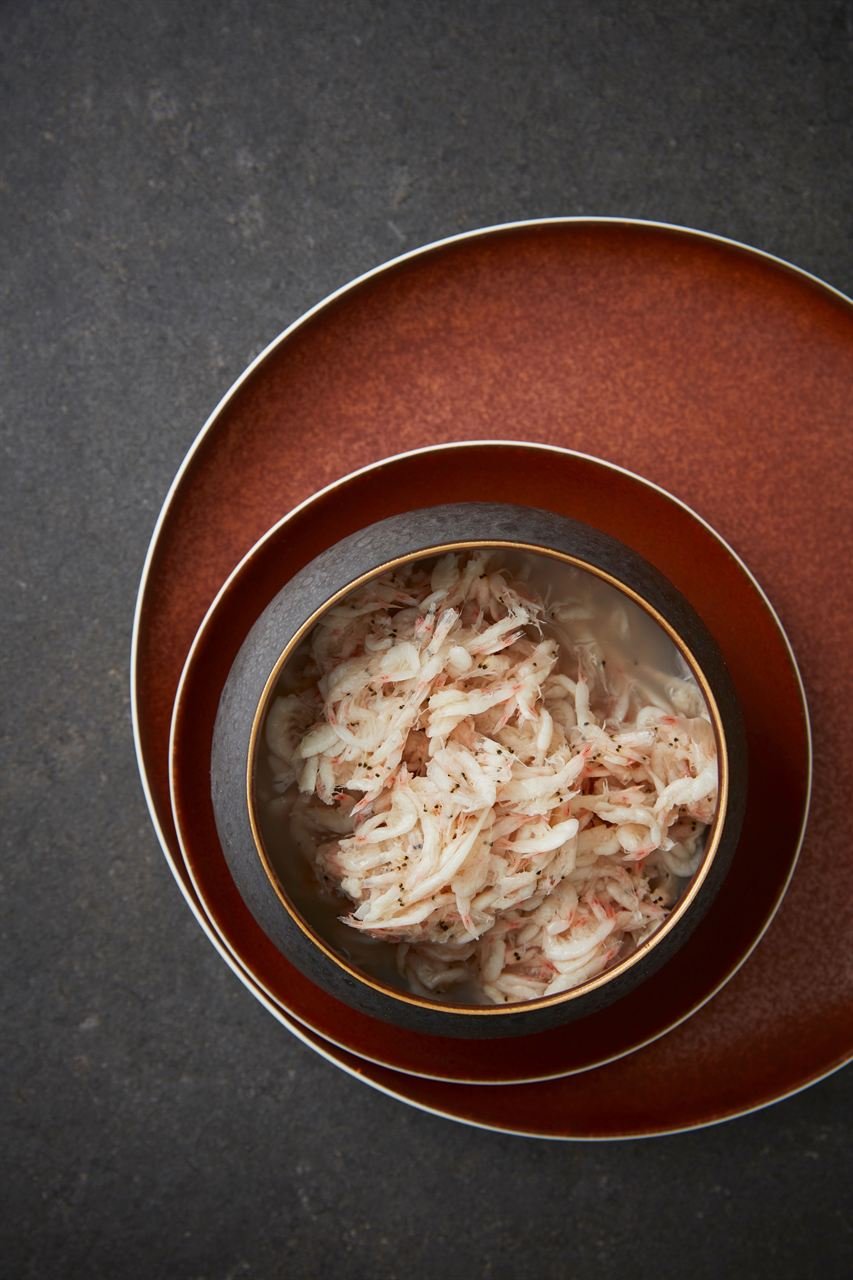
This is saeujeot, the salted shrimp from earlier in the post, the way it usually shows up: barely cured, still pink at the tails, packed in its own brine. It's stronger and funkier straight out of the tub than most people expect from something that goes into cabbage and chili paste.
For a whole napa cabbage batch (about 2.5 to 3 lbs, the size most home recipes assume), Beyond Kimchee's ratio works out to 4 tablespoons of guk-ganjang and 1 cup of the fruit-kelp stock. Mix both straight into your usual paste in place of the fish sauce. Guk-ganjang is saltier than it looks, so taste before adding salt anywhere else. If it's still flat after that, mushroom powder added a teaspoon at a time works better than more soy sauce. Extra soy sauce alone just adds salt past a certain point without adding more umami.
I haven't tested the tomato-extract method from that first study at home, and it's not something you'll find bottled at a Korean grocery store. If you try it before I do, a spoonful of tomato paste worked into the stock instead of straight tomato extract, I'd genuinely like to hear how it turns out.
Finding the Ingredients Outside Korea
Guk-ganjang shows up at H Mart and most Korean grocers under Sempio or Chung Jung One. Look near the regular soy sauce for a lighter-colored bottle, labeled "soup soy sauce" in English. Dried kelp (dasima) is in the same aisle, often bagged near the dried anchovies. Dried shiitake is standard at any Asian market. Nothing close by? A Japanese grocer's usukuchi (light) soy sauce plus a strip of kombu gets you close enough to start.
Give it the same week in the fridge you'd give any kimchi before judging it. The fish sauce version tastes finished on day one because it's supposed to; this one just needs to catch up.
This is a running series, not a one-off post — a new post goes up every day, at around 9am Korea time.
About · Contact · Privacy Policy
Read next: Fish Sauce Substitutes r/fermentation Readers Use in Kimchi · Kimchi Probiotic Counts by Fermentation Stage · Why Your Kimchi Isn't Fermenting (It's Probably Not Ruined)


Comments
Post a Comment