Why a Seoul Michelin Restaurant Just Paid 25 Million Won in Fines
A two-Michelin-star restaurant in Seoul was fined 25 million won this week over a dessert topping most diners probably assumed was safe to eat. It wasn't. The Seoul Western District Court on September 16 ordered the restaurant's operator to pay 15 million won of that (roughly $10,900 at this month's exchange rate), with the company that runs the restaurant paying the remaining 10 million won.
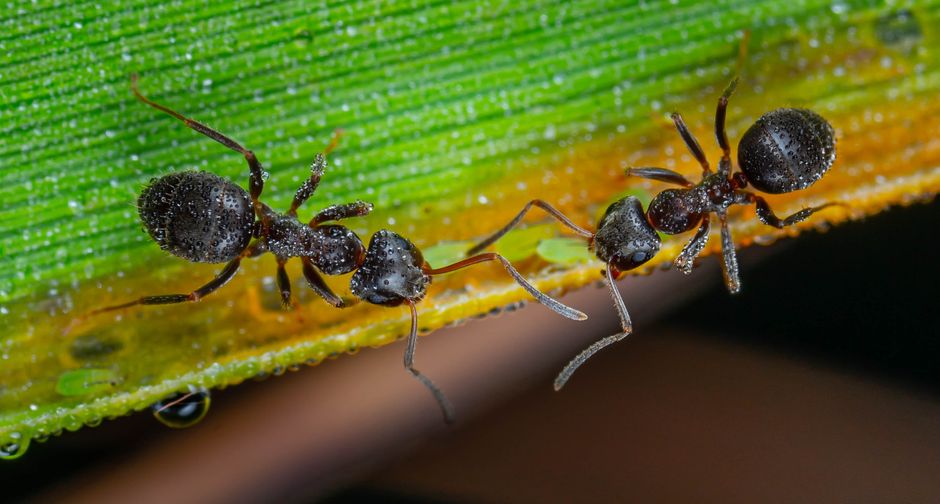
Dried ants aren't a niche ingredient globally. Colombia sells toasted hormigas culonas as a snack, Thailand puts red ant eggs in soup, and high-end Nordic tasting menus have used ant garnishes for years.
None of that carries over into Korean law.
The scale of it
According to Herald Corp and Korea JoongAng Daily's reporting on the ruling, the operator and the restaurant began importing dried ants from the United States and Thailand in 2021 and kept using them as a dessert topping until around January 2025, close to four years. Herald Corp's count from court records puts it at about 50,000 ants used, served to 12,274 customers, with the dish also appearing in the restaurant's own promotional material.
If you've ever sat through a tasting menu that runs six or eight courses, you know why nobody flagged this for four years. Nobody hands you an ingredient list table-side. A fleck of something dark and dried on a dessert plate reads as a plating choice, not a question you'd think to ask, and a two-Michelin-star name is exactly the kind of credential that makes a diner trust the kitchen instead of auditing it. Would you have noticed?
Korea's insect list has exactly ten names on it
Korea doesn't ban insects as food. It runs a closed, positive list, and an ingredient has to be added to it by name before anyone can sell it. A Daum News fact-check on the ants case ran the full roster: right now the list holds ten species, 백강잠 (dried silkworm larvae killed by a fungal infection), 식용누에 (silkworm larvae and pupae, the species behind beondegi, the boiled or steamed snack sold from carts across Korea), 메뚜기 (grasshopper), 갈색거저리 (mealworm), 흰점박이꽃무지 (a flower chafer beetle larva), 장수풍뎅이 (rhinoceros beetle larva), 쌍별귀뚜라미 (two-spotted cricket), 아메리카왕거저리 (superworm), 수벌 번데기 (drone bee pupae), and 풀무치 (Asian migratory locust).
Ants are not on it.
Kyunghyang Shinmun's coverage of the locust approval says the Rural Development Administration spent about two years running toxicity and nutrition studies on 풀무치, the locust that became that tenth name, before the Ministry of Food and Drug Safety took another eight months reviewing the safety file and expert opinions. It became legally edible in September 2021, after roughly two years and eight months of review. The restaurant started bringing in ants that same year, with none of that review behind it.
Ants also didn't clear a much lower bar. Court records cited by both outlets say the ants tested above Korea's legal heavy-metal limit. Neither report gave the exact multiple, so I won't invent one. A positive list exists precisely to catch that kind of unreviewed-ingredient risk before it reaches 12,000 plates.
Fines, not the jail time earlier reports floated
Regulators referred the case to prosecutors in July 2025, and a wire report from that month noted that a Food Sanitation Act violation carries up to five years in prison as a possible penalty, not just a fine. The court that ruled this month landed on fines instead. Its written reasoning said the Food Sanitation Act exists "to prevent the harm that food can cause and to protect and promote public health," translated here from the Korean coverage. Judges weighed that against a guilty plea, a clean record, and the fact that the restaurant pulled the ants after regulators issued a correction order.
Judges also noted, oddly in the operator's favor, that ants are genuinely eaten as food elsewhere.
I'll take a side here. A $10,900 fine after four years and 12,000 servings of an unapproved, metal-contaminated ingredient doesn't read like much of a deterrent for a restaurant charging fine-dining prices. Did the ant dish add more than that to the bill across those four years?
If you're eating in Korea and see bugs on a menu
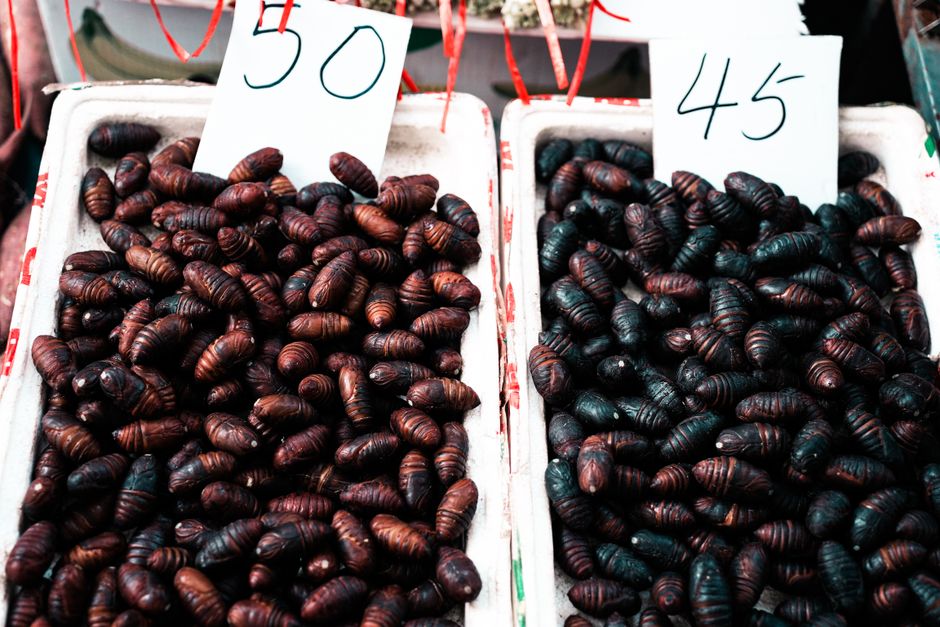
Beondegi is the one you'll actually run into. Street carts and some bars still sell it steamed or in a sweet-savory sauce, and it's the same 식용누에 species on the approved list above; smell hits before taste does, and the texture is closer to a soft bean than anything crunchy. Grasshopper (메뚜기), usually pan-fried with soy sauce and sugar, shows up occasionally too, mostly at older-style anju bars. Cricket protein bars and powders using 쌍별귀뚜라미 have started turning up in health-food stores, labeled plainly as cricket. Ever tried one?
What you won't find on any legitimate menu is ant. Whether this changes anything for the restaurant itself is a separate question, and the Korean reports I read on the ruling identify the operator by an initial or a surname only, and call the business a two-Michelin-star restaurant without ever naming it. Most diners eating there this week probably have no idea they're sitting in the restaurant from this story.
This is a running series, not a one-off post — a new post goes up every day, at around 9am Korea time.
About · Contact · Privacy Policy
Read next: How to Read the Date on Korean Food Packages After the 2023 Law Change · Are Korean Side Dishes Free? Banchan Refills and the Reuse Law · Fish Sauce Substitutes r/fermentation Readers Use in Kimchi


Comments
Post a Comment