Fish Sauce Substitutes r/fermentation Readers Use in Kimchi
When we wrote about what replaces fish sauce in kimchi, the post that got shared on r/fermentation leaned on one study: tomato extract measured ahead of anchovy fish sauce on glutamic acid, the compound behind umami. That thread pulled 101,000 views and top spot on the subreddit that day, and in the comments, nine different readers described what they actually put in their own jars instead. None of it comes with a lab measurement. All of it comes from people who've made the substitution more than once.

The Fermented-Paste Route
The most common substitute readers named was a paste most Korean kitchens already stock. u/BaylisAscaris wrote, "I added miso paste and it was fine." u/_hawkeye_96 goes further and uses it even in batches that still have fish sauce: "I also use miso in kimchi with great success. Although I do typically use fish sauce as well, I replace the anchovy paste in the traditional recipe with white or yellow miso." u/narf_7 reaches for doenjang the same way, layered onto a different base — their standard swap is rehydrated dried shiitake mushrooms in place of fish sauce, which they describe as delicious, with doenjang or another fermented Korean or Chinese paste added occasionally on top for extra umami. Soy sauce, notably, doesn't make the cut in their version.
Two Readers Build Their Own Sauce From Scratch
u/factoredfactorio posted a full recipe rather than a single swap-in: char onions or shallots, then simmer them down with mushroom stock, a dash of tamari, rice wine vinegar, a splash of apple or Asian pear juice, black salt, whole long pepper, and dried kombu until reduced by half. Their verdict: "I've used this to make kimchi and nuoc cham that is in my opinion, top shelf." u/Alienster takes a shortcut through a commercial product instead — a soy-and-mushroom fermented sauce sold under the brand Wan Ja Shan, additive-free and marketed as a vegan substitute for oyster sauce, then doctored further with charred pineapple and dried kombu blended in and left to sit refrigerated overnight.
The Minimalists and the Outliers
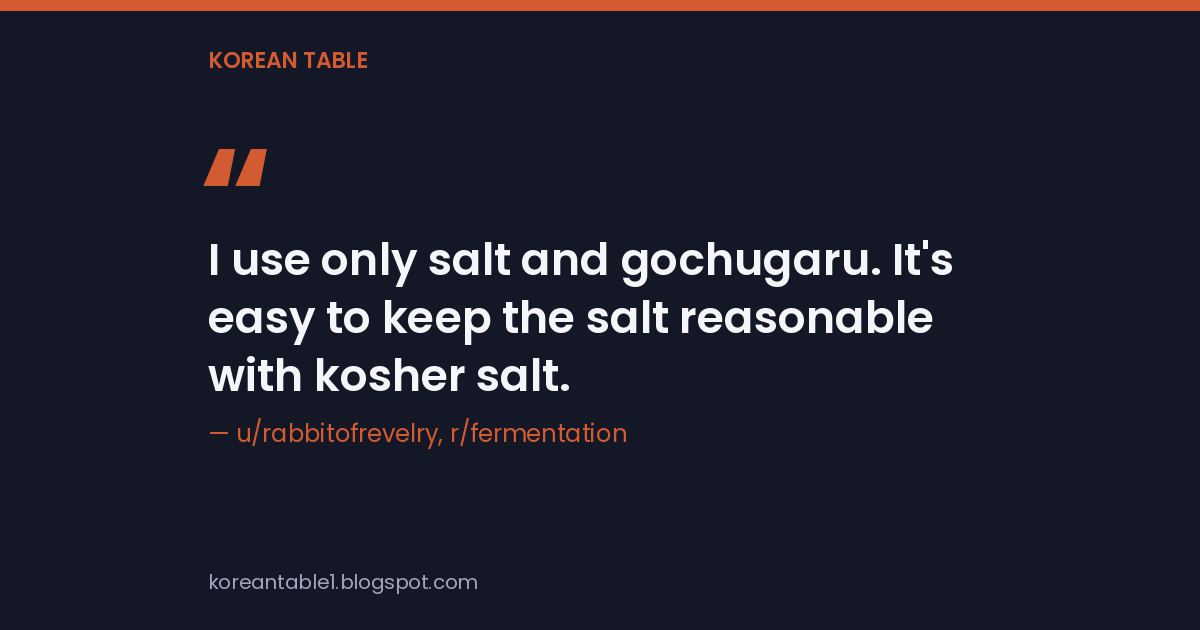
Not every reader tried to replicate fish sauce's flavor at all. u/rabbitofrevelry skips the umami substitution question entirely: "I use only salt and gochugaru. It's easy to keep the salt reasonable with kosher salt. Other salts, like table salt, can get salty very quickly." u/adonias_d went the opposite direction and named the ingredient plainly: "I actually started adding MSG for the umami flavor and it works pretty good." And u/wtf-reddrabbit, who dehydrates homegrown tomatoes into a powder for other cooking, read the original post's tomato-extract finding as validation of something they'd already been doing on instinct.
One reader raised a real safety point that the thread didn't fully resolve. u/HugeCrab warned, "It kinda has to be at least 2% salt though otherwise you risk a painful death for no reason." u/adonias_d's reply described a workaround, not a rebuttal: "I salt the cabbage in a brine presoak and add enough to get it to the safe amount. Just saying I don't add extra via additions." We haven't independently checked that 2% figure against a food-safety source, so treat it as one experienced fermenter's stated practice, not a verified minimum — if you're cutting salt for flavor reasons, that's the number to research further before you do, not take on a stranger's word.
The One With a Name Attached
Two commenters pointed to the same outside source. u/lauritadii wrote, "I think Korean Vegan uses a similar stock in her vegan kimchi recipe! been making that, very delicious," and u/AnotherNoether confirmed making it regularly: "Yes I make hers regularly, works like a charm. Mushroom dashi and soy sauce probably the biggest umami contributors in it." The Korean Vegan's published recipe calls for a vegan fish sauce built on soy sauce and sea flavors like dashima, with the option to substitute a store-bought vegan fish sauce or plain soy sauce directly — consistent with what the two readers described, even if "mushroom dashi" is their own shorthand for it rather than the recipe's exact wording.
What We Can't Tell You
None of these nine approaches has a glutamic acid number behind it the way the tomato study did. Miso, doenjang, charred-onion stock, MSG, plain salt and gochugaru — a reader saying a substitute "works" is a real data point about what holds up across repeated batches in an actual kitchen, but it isn't the same claim as a lab measurement, and we're not going to dress it up as one.
If you've swapped out fish sauce and landed on something that isn't on this list, we'd genuinely like to hear what it was.
This is a running series, not a one-off post — a new post goes up every day, at around 9am Korea time.
About · Contact · Privacy Policy
Read next: Kimchi Without Fish Sauce: What Replaces the Umami · Kimchi Probiotic Counts by Fermentation Stage · Why Your Kimchi Isn't Fermenting (It's Probably Not Ruined)


Comments
Post a Comment