The 5 mg/L Water Behind CU's New Triangle Kimbap
CU announced on September 17 (KST) that the rice in its samgak-gimbap is now cooked in water with a hardness of 5 mg/L or lower. BGF Retail, which runs the chain, applied it across the whole rice process, from washing and soaking the grain through to the cooking itself.
Water at the plants making those rice balls had been coming in at 50 to 120 mg/L. CU ran it through a softener to strip the minerals out, washing water included.
What hardness is doing inside the grain
Hardness counts the calcium and magnesium dissolved in water. According to the ZDNet Korea report on the launch, the mechanism CU is working from is that the lower the hardness, the more effectively water gets into the rice tissue, helping the starch take it up and raising how much moisture the cooked rice retains.
A task force inside CU's merchandising division, the Food Tech Lab, spent roughly ten months on it, looking for the hardness that suits the Saecheongmu rice from South Jeolla the chain currently buys. In CU's own testing, rice cooked in the soft water held over 20% more moisture than the old rice even at a point close to the sell-by date.
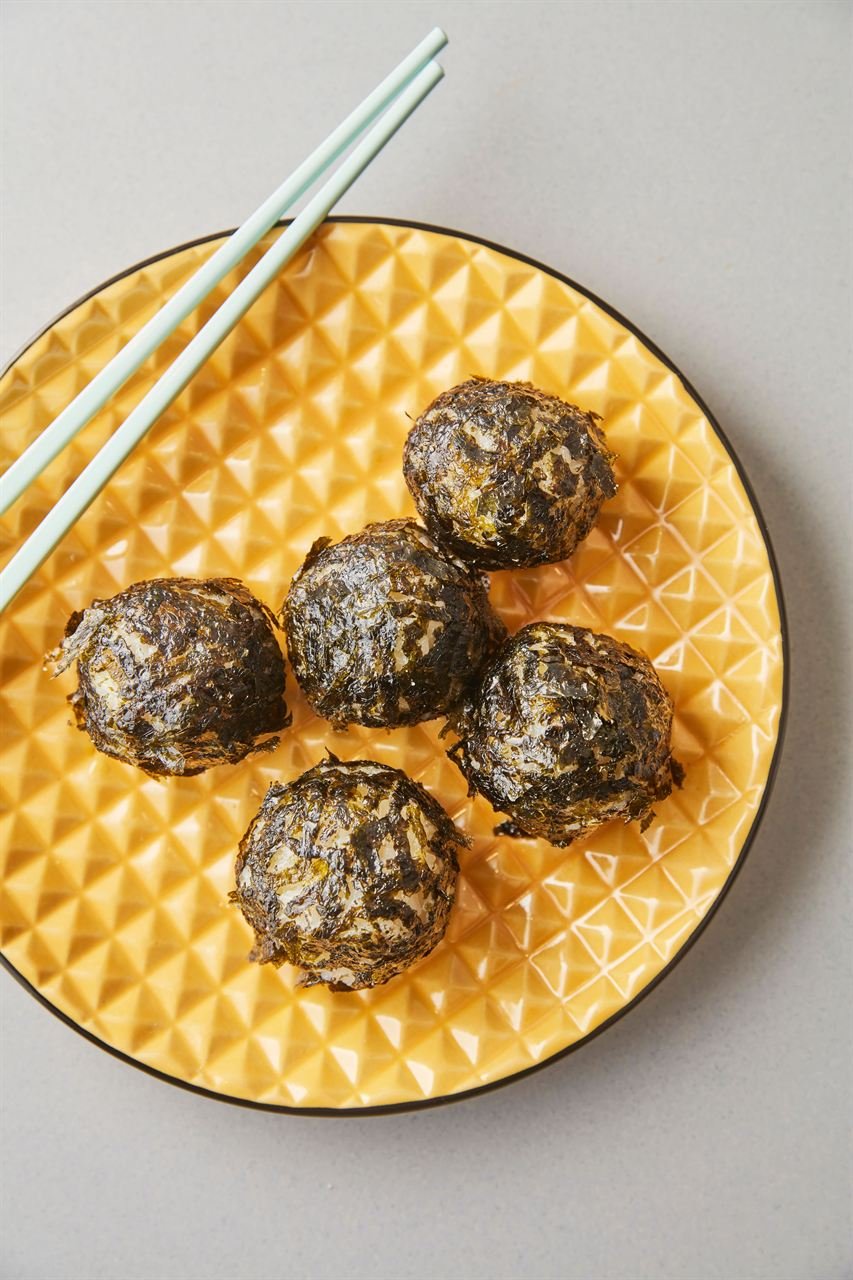
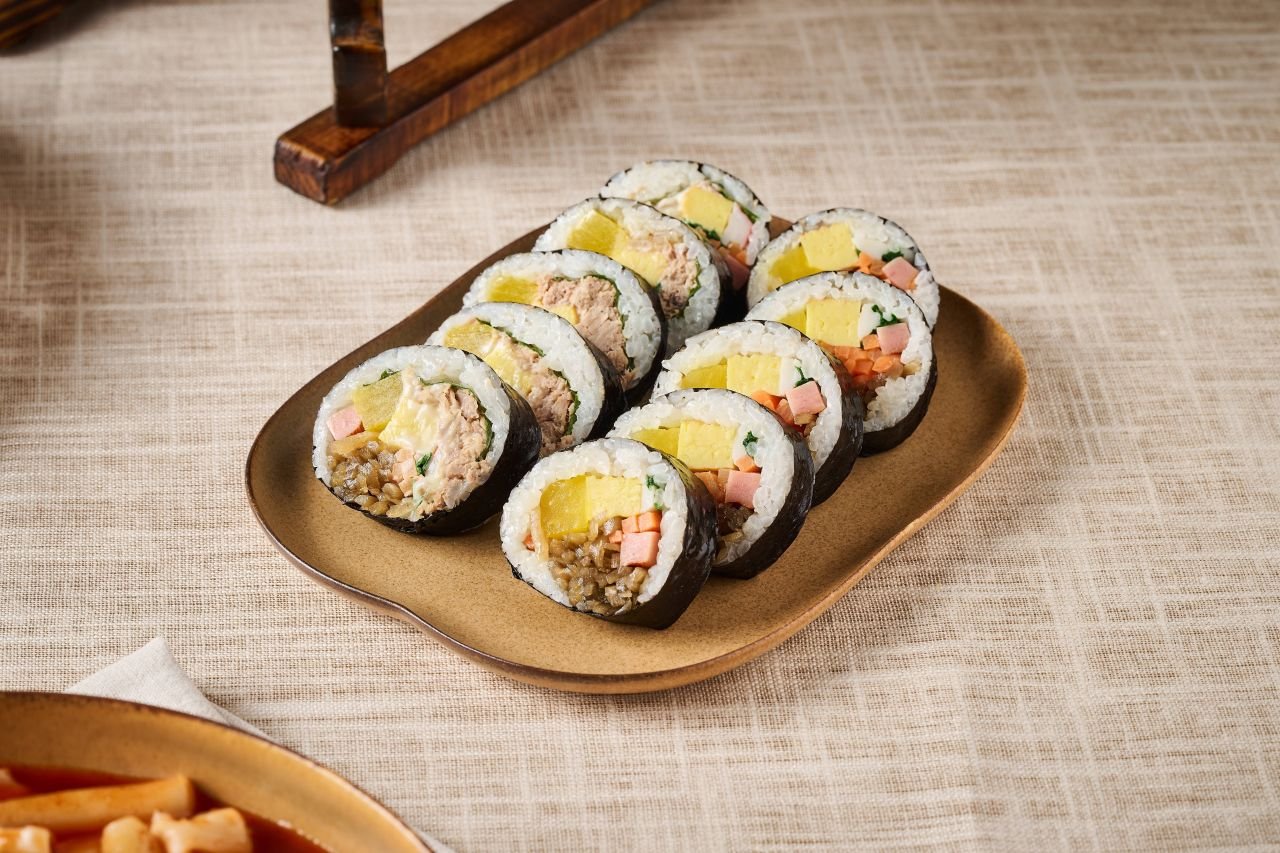
It goes into five triangle kimbap first, four of them named: 참치마요 (tuna mayo), 바싹제육불고기 (crisped pork bulgogi), 김치제육삼각 (kimchi pork) and 콘참치마요 (corn tuna mayo). Gimbap, dosirak and the rest of the rice-based convenience range are named as the next targets in Segye Ilbo's report. Kim Bae-geun, who leads the convenience-food team at BGF Retail, said the more familiar a convenience food is to shoppers, the harder the company works on its basic taste and quality.
Twenty percent, but measured where
A triangle kimbap sits in a chiller for the better part of a day before anyone buys it, and cold storage is where cooked rice turns hard and crumbly. CU measured its gain at the far end of that window, near the sell-by date.
Rice you cook at home for dinner gets eaten within minutes of the cooker beeping, and the staling problem CU spent ten months on barely starts in that time. Would the same water change a bowl of bap scooped straight from the cooker?
The testing is CU's own too, described as 자체 실험 (in-house experiment) in the Korean coverage rather than published work with a method anyone can inspect. Product launches usually work that way. I did not find an independent test of the same claim.
Find out what your own tap reads
The US Geological Survey keeps a hardness page with a map of mean hardness across US monitoring sites, and the bands under it run "0 to 60 mg/L (milligrams per liter) as calcium carbonate is classified as soft; 61 to 120 mg/L as moderately hard; 121 to 180 mg/L as hard; and more than 180 mg/L as very hard."
Getting your own number takes one more step, and the trail runs shorter than you would like. Your utility has to send you an annual Consumer Confidence Report by July 1, though hardness may not be in it, since EPA's own description of that report does not mention hardness anywhere. USGS says plainly that information about a specific home "should be provided by the local health agency or local water utility."
Many utilities publish a water-quality page with hardness on it, and searching your utility's name plus "hardness" gets you there fastest. In England and Wales, the Drinking Water Inspectorate's find-your-water-company map identifies your supplier by region. You get a supplier name out of it and no hardness figures, so the supplier's own site is where you go next.
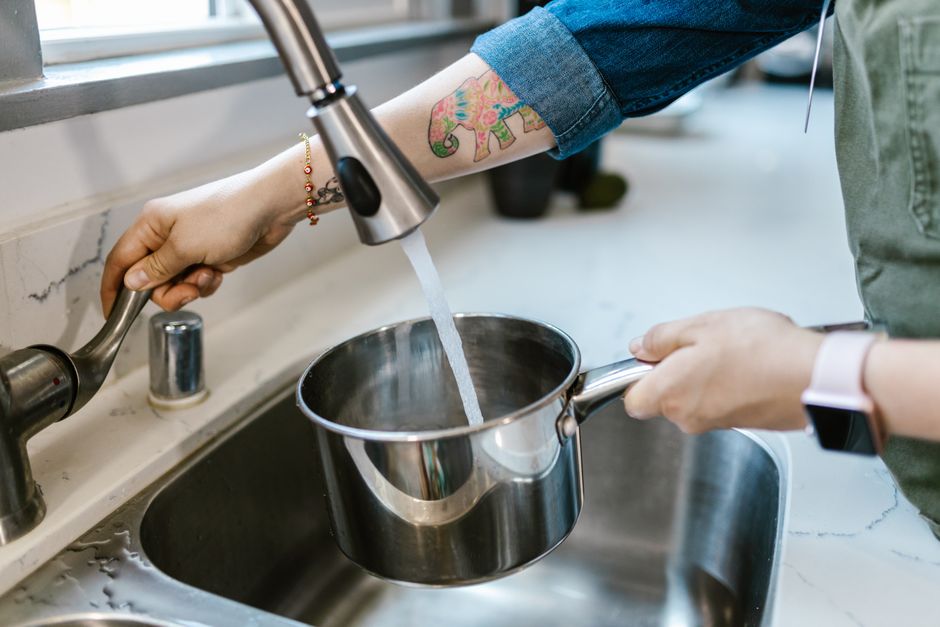
Nobody publishes a figure for your specific building. Pipes, and in many buildings a rooftop tank, sit between the treatment plant and your sink, and a zone average is as far as public data goes. The Korean factory water CU rejected, at 50 to 120 mg/L, counts as soft to moderately hard on the USGS scale. CU still pushed it to 5.
The research does not point one way
Sumiko Nakamura and colleagues, publishing in Foods in July 2024, soaked and boiled rice in hard water and reported quality improvements, writing that "the degree of quality improvement, such as final viscosities in pasting property, and textural properties of boiled rice, was more remarkable for high-amylose rice than low-amylose rice." They propose calcium binding to phosphorus in the amylopectin as the mechanism, and the rice came out carrying more calcium.
Their hard waters were Contrex at 1,468 mg/L and Evian at 304 mg/L, both well past the 180 mg/L the USGS page calls very hard. The improvement they describe as remarkable showed up most in high-amylose cultivars, and the chalky grain the paper opens on comes from high-temperature ripening, which the same paper says leaves grain with less amylose rather than more. None of it involved rice that then sits chilled for a day in a wrapper.
If you want to run the comparison
The comparison that would tell you something about your own kitchen is two batches of the same rice at the same ratio, one on your tap water and one on a low-mineral bottled or distilled water, tasted side by side. Your rice and your tap are the two variables CU controlled and you cannot. I have not run it myself.
Cation exchange softeners, the common household type, "remove the calcium and magnesium ions found in hard water by exchanging them with sodium (or potassium) ions," in the EPA's description. Softened tap water and low-mineral water are two different things, since the minerals have been swapped rather than removed, and the sodium ends up in your rice. The Korean reports name a 연수기, a water softener, on the plants' tap supply and stop there. Which type, none of them say.
Filtered or bottled water for one pot of rice costs little enough to test once. At 180 mg/L out of the tap, with a rice cooker you have been quietly blaming, the water is one variable you can change tonight.
This is a running series, not a one-off post — a new post goes up every day, at around 9am Korea time.
About · Contact · Privacy Policy
Read next: Korean Rice vs Japanese vs Jasmine: Which Swap Ruins the Dish · How to Read the Date on Korean Food Packages After the 2023 Law Change · Fish Sauce Substitutes r/fermentation Readers Use in Kimchi


Comments
Post a Comment