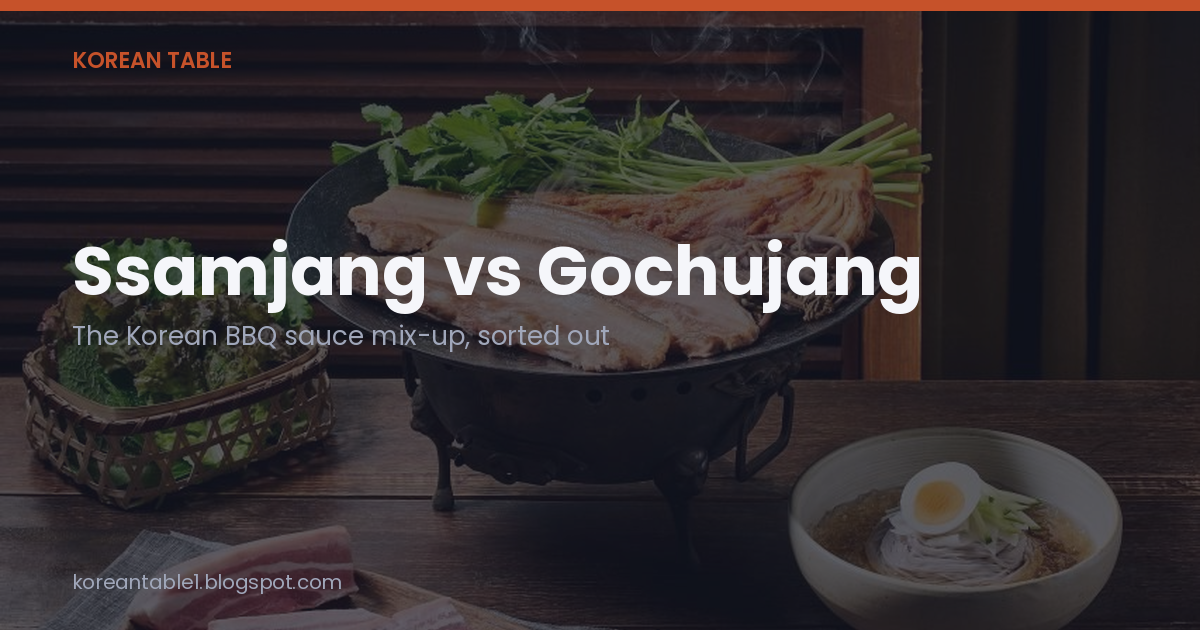
Ssamjang vs Gochujang: The Korean BBQ Sauce Mix-Up
Grabbed the reddish-brown tub sitting right next to your gochujang and assumed it was a milder cousin? At H Mart or your local Korean aisle, ssamjang and gochujang sit close enough in color, packaging, and shelf placement that mixing them up is easy to do. They don't do the same job, and using one where a recipe wants the other changes more about the dish than you'd think.
What's in Each One
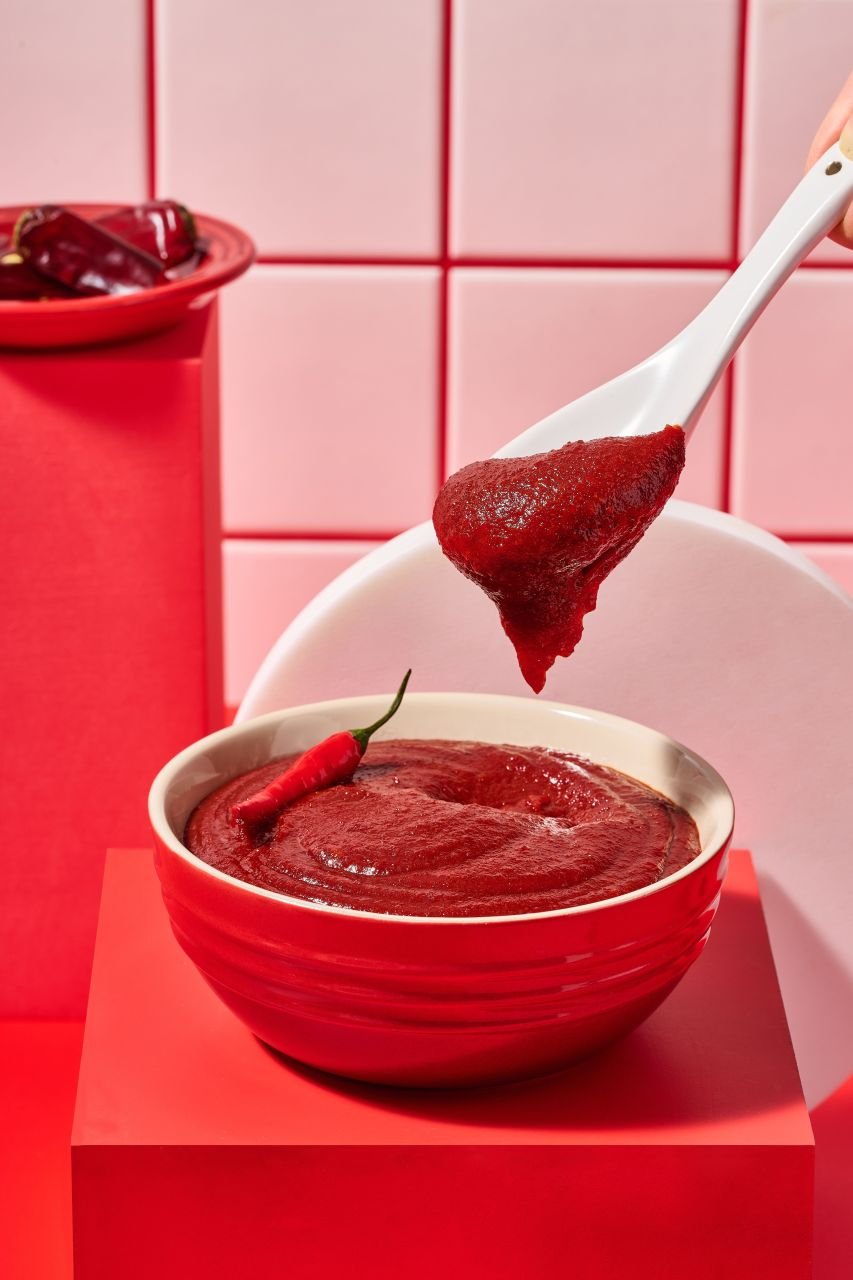
Gochujang is a fermented red chili paste — red pepper powder, glutinous rice, fermented soybean powder, and salt, aged until it turns sweet-hot and sticky. Ssamjang starts somewhere else. Per Wikipedia, ssam means "wrapped" and jang means "paste," and the sauce itself is built on doenjang — fermented soybean paste — with gochujang stirred in for heat, plus sesame oil, garlic, onion, and usually sugar. CJ Bibigo's own product page describes its version as built from "a cultured soybean base called Doenjang with the addition of chilli paste, fresh garlic, onions, scallions, and sesame oil." Doenjang comes first in that sentence for a reason.
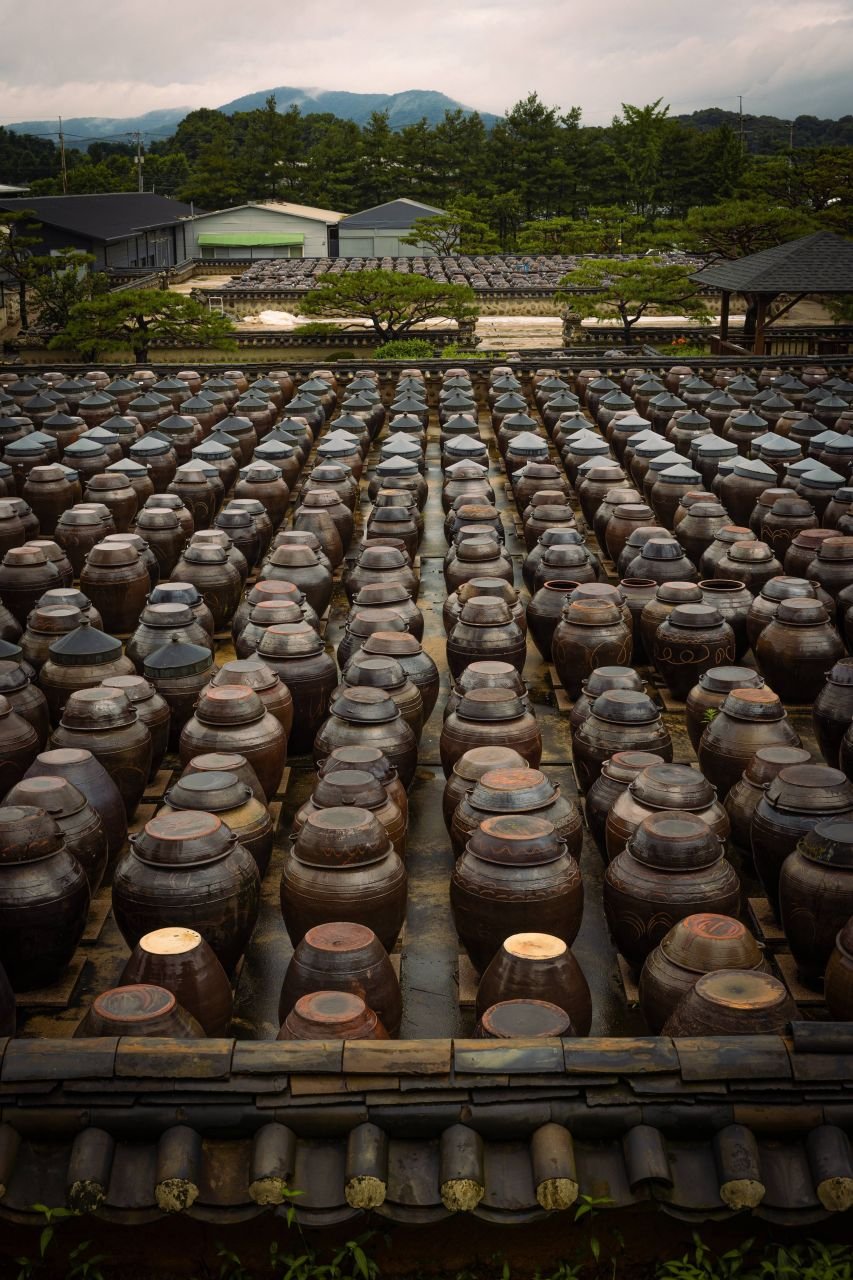
Both pastes start life fermenting in the same kind of onggi jar. Doenjang is the base of ssamjang; gochujang is there for heat, not the other way around.
Why the Mix-Up Costs You the Dish
Ssamjang gets spooned onto lettuce alongside grilled pork specifically because doenjang's salty, fermented depth cuts through fat in a way gochujang's sugar and chili can't. Swap in plain gochujang as your wrap dip and the sauce goes one-note fast — spicier, sweeter, and missing the savory backbone that made you want a dip in the first place.
I tried it straight once instead of digging the ssamjang tub out of the fridge: all heat, no weight behind it.
The reverse breaks recipes too. Use ssamjang in place of gochujang in a stew or marinade and you're adding a mostly-doenjang paste where the dish wanted concentrated pepper — it reads muddier and less spicy than intended, even if you use more of it.
Make Your Own Ssamjang: The 2:1 Ratio
If your gochujang jar outlasts your ssamjang, a batch takes five minutes and nothing exotic. Korean Bapsang's recipe, which I tested at these amounts, settles on 2 parts doenjang to 1 part gochujang "for a good balance of umami and heat":
- 2 Tbsp (36 g) doenjang
- 1 Tbsp (18 g) gochujang
- 1 tsp minced garlic
- 2 tsp (10 mL) toasted sesame oil
- 1 tsp toasted sesame seeds
- 1/2 Tbsp sugar or honey
-
1 Tbsp water or rice wine, to loosen
-
Stir the doenjang and gochujang together first — this ratio is what actually decides the flavor; everything after it is seasoning.
- Mix in the garlic, sesame oil, and sugar.
- Thin with the water or rice wine a teaspoon at a time until it's spoonable, not pasty.
- Fold in the sesame seeds last so they stay crunchy instead of going soft in the paste.
Push the ratio to 3:1 if you want it milder for kids or spice-shy guests; drop to 1:1 if your table wants more heat than umami. Skip the sugar and it's noticeably flatter — not bad, just missing a corner.
Can You Use One Instead of the Other?
In a pinch, yes, with adjustments. Out of ssamjang for a wrap dip? Stir a spoonful of gochujang into whatever doenjang or even white miso you have, add a little sesame oil and garlic, and you're most of the way there — straight gochujang alone isn't a real substitute, it just tastes like a different, thinner sauce sitting where the real one should be. Out of gochujang for a stew or marinade? Ssamjang will add some color and mild heat, but you'll need roughly double the amount plus a pinch of gochugaru to match the kick, since most of what's in the jar is doenjang, not chili. Don't try either swap in a recipe where the paste is the whole point, like a straight gochujang-based tteokbokki sauce — that's a case for buying the right jar instead of improvising.
Where to Buy Each, and What They Cost Right Now
Both live in the same aisle at any Korean grocery. H Mart's paste section had ssamjang tubs (450–500 g) running $4.99–$5.99 and O'Food doenjang at $4.99 for 500 g when I checked on September 12. In the UK, Oriental Mart lists the small 170 g CJ Bibigo tub at £1.45, the same day — smaller jars than the US ones, so check the gram weight before comparing prices across sites. No dedicated Korean grocer nearby? Most general Asian markets stock at least one ssamjang brand, usually shelved right next to the gochujang and doenjang tubs, and both ship through H Mart's or Oriental Mart's own online stores if a physical shelf comes up empty.
Both are salt-forward by nature — doenjang is a salted, fermented paste to begin with, and gochujang alone runs about 420–445 mg of sodium per tablespoon (18 g), according to tastekoreanfood.com's breakdown. Neither one is something to spoon on without noticing.
Buy both if you cook Korean food more than occasionally — ssamjang for the wrap plate, gochujang for pretty much everything else. If you've found a store-bought ssamjang that beats homemade, I want to know which one.
This is a running news series, not a one-off post — new stories go up twice a day, roughly 7am and 7pm Korea time.
More Korea coverage from our network: Hallyu Now · Korea Travel Planner · K-Sports Global · Seoul Skin Notes


Comments
Post a Comment