Does Gochujang Have Gluten? Which Brands Are Wheat-Free
In August 2025, Health Canada pulled a batch of Daesang-brand gochujang off shelves in Manitoba, Ontario, and Quebec. The problem wasn't spice level or an expired lot. It was wheat, sitting in a red chili paste, undeclared on the label, with one reported reaction on file. If you've ever squeezed gochujang straight from the tub without checking the ingredient panel, that's the exact question this post is answering: does gochujang have gluten, and which jars actually don't?
Why most gochujang isn't gluten-free
Gochujang (고추장) is Korea's fermented red chili paste, and the traditional recipe leans on barley malt powder to drive the fermentation that gives it that deep, almost caramelized sweetness. Barley malt has gluten in it, full stop, and that one ingredient is what trips up most commercial jars. Gluten Free Supper puts it plainly: "Traditional gochujang usually has barley malt powder, which isn't gluten-free."
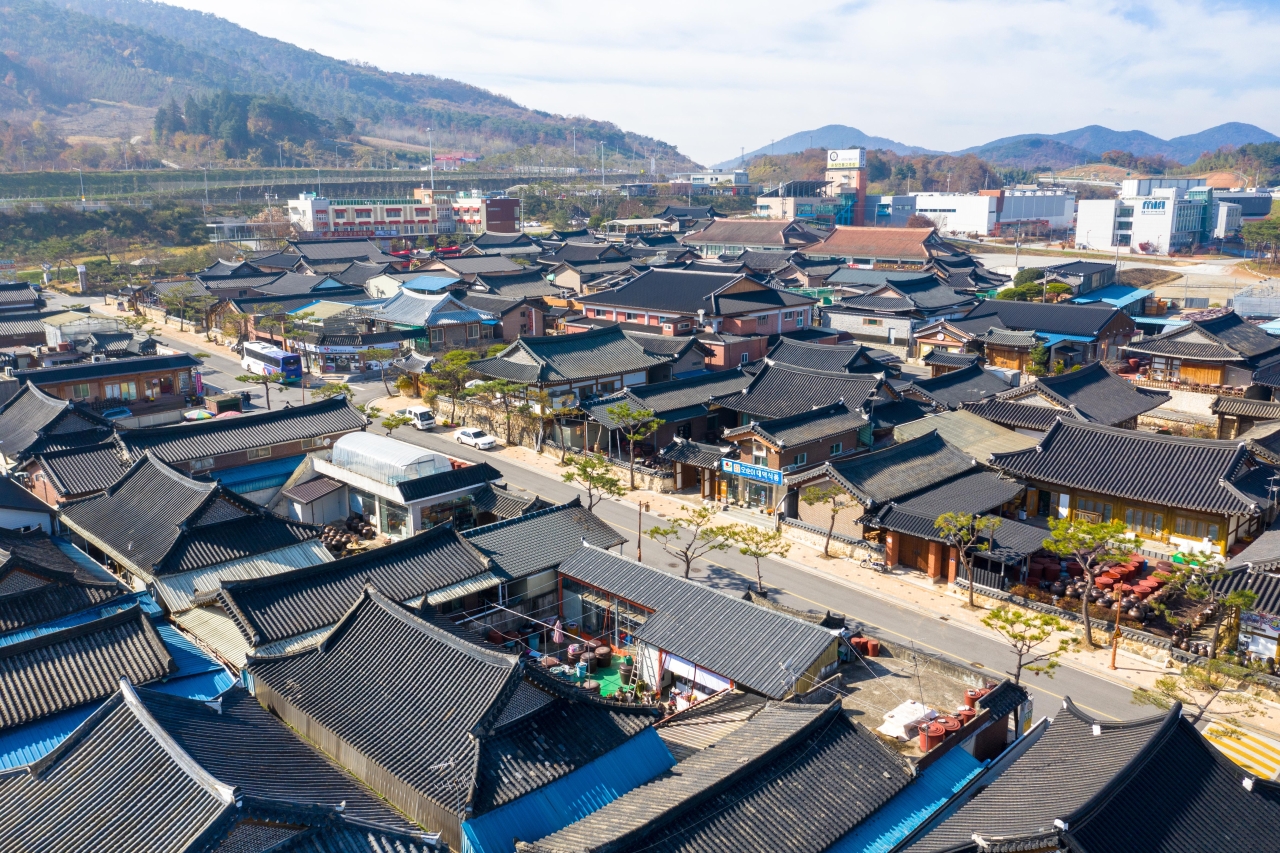
Sunchang, the county pictured above, is Korea's best-known gochujang-making region, built around exactly this kind of barley-malt fermentation. That's not a flaw in the recipe. It's just not automatically safe for a wheat-free kitchen the way "fermented chili paste" sounds like it should be.
CJ Haechandle, the brand you'll find in most Western grocery stores and the one most people mean when they just say "gochujang," lists it straight on the tub. The full ingredient panel reads: wheat flour, corn syrup, water, hot pepper powder, salt, wheat, distilled alcohol (contains barley, wheat), defatted soybean powder, koji.
Wheat shows up three separate times in one label. This isn't a trace amount or a "may contain" hedge — it's a listed ingredient, twice over, plus the alcohol used to stop the paste from puffing up in the tub.
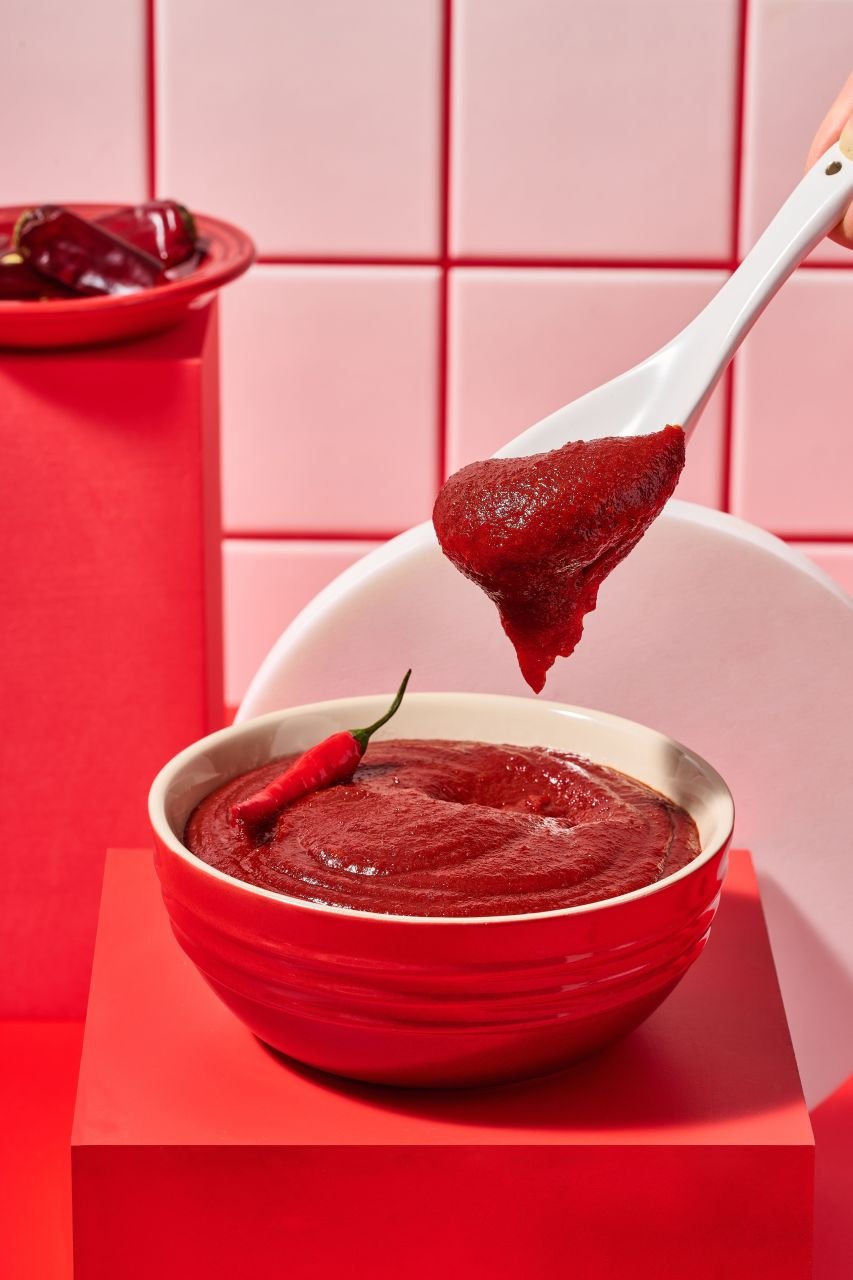
That's the ingredient list on the most common jar in the US, not a worst-case outlier. If you've been eating store-brand gochujang and haven't had a reaction, that's a reasonable sign it's not the paste. But if you're managing celiac disease or a real gluten sensitivity, "probably fine" isn't the bar. The Daesang recall exists precisely because a wheat-containing gochujang shipped without the allergen on the label at all.
The brands that skip the wheat
The part that surprised me doing the label check: Daesang, the same parent company behind that recalled jar, also owns Chung Jung One and its international line, O'Food — and O'Food sells a gochujang built specifically without barley malt. Its ingredient list runs water, rice flour, red pepper powder, rice syrup, cane sugar, rice wine, garlic, sea salt, vinegar, and onion. No wheat, no barley, and it says so on the label rather than leaving you to guess.
Smaller Korean brands do the same swap. Jinmi's gluten-free gochujang uses glutinous rice powder in place of the malt, chasing the same fermented flavor without the grain that causes trouble. The pattern across every gluten-free version I checked: swap barley malt for more rice syrup, glutinous rice flour, or extra fermented soy, and the rest of the recipe barely moves.
Reading the label yourself, not the front of the jar
Front-of-package claims aren't reliable here — plenty of gochujang tubs just don't mention gluten one way or the other, gluten-free or not. Flip it over and scan for two words: "wheat" and "barley." If either shows up anywhere in the ingredient list, including buried in a "distilled alcohol" or "malt" line, treat it as containing gluten. A jar that skips both and instead lists rice syrup, glutinous rice flour, or rice wine in that spot is your gluten-free signal.
Watch for one more wrinkle: some gluten-free jars swap in tapioca syrup rather than rice syrup as the sweetener. That changes the ingredient panel but not the gluten status; tapioca is naturally gluten-free too. Don't get thrown by seeing a syrup you don't recognize; check whether it's a grain-based one (wheat, barley) or not.
If you or anyone you're cooking for has celiac disease specifically, a "gluten-free" claim on the front is worth more than your own label-reading, since it usually means the product was tested to a threshold rather than just formulated without the obvious grains. For a milder sensitivity, reading the ingredient list yourself is normally enough.
If you can't find a gluten-free jar nearby
Gluten-free gochujang is still a special-order item at a lot of Asian grocery stores outside Korea, so you may end up ordering O'Food's or Jinmi's version online rather than finding it on a shelf. In the meantime, a gluten-free gochujang substitute in a pinch (not a full stand-in for the real fermented flavor, but close enough to save a dish) is white miso whisked with gochugaru and a spoon of rice syrup — the miso brings the fermented depth, the gochugaru brings the heat, and neither one carries wheat.
Whatever jar ends up in your fridge, don't take a "spicy" or "fermented" label at face value again after this. Check the back every time you buy a new brand. Formulations change without much notice, the way that Daesang recall proved the hard way.
This is a running news series, not a one-off post — new stories go up twice a day, roughly 7am and 7pm Korea time.
More Korea coverage from our network: Hallyu Now · Korea Travel Planner · K-Sports Global · Seoul Skin Notes


Comments
Post a Comment