Korean BBQ Etiquette: Who Grills, When to Flip, What Not to Do
Grab the tongs at a Korean BBQ table before anyone hands them to you, and there's a decent chance someone quietly takes them back. You just notice the shift in the room. Nobody says why.
Korean BBQ has real rules about who runs the grill, how often you flip, and how you eat what comes off it. None of it is posted on the menu; all of it is assumed. Whether it's a tabletop grill at home or an actual Korean BBQ restaurant for the first time, these are the rules that matter.
Who Runs the Grill
Nobody grabs the tongs by default. At a business dinner or with elders present, the youngest person at the table does the grilling. It's treated as a junior's job, the same way a junior clears plates. One writer at Koreapeek describes learning this the hard way in 1990, reaching for the tongs himself and immediately disrespecting the senior person at the table who'd expected to do it — or expected someone younger to.
Among friends, the rule loosens. The Daily Meal spoke to chef Solomon Lee and server Joon Lee, who put it more simply: whoever's best at grilling usually ends up with the job, though taking turns is fair. Once someone has the tongs, it's their grill for the rest of the meal, and reaching over to flip something yourself works only if they wave you in.
How Often You Flip It
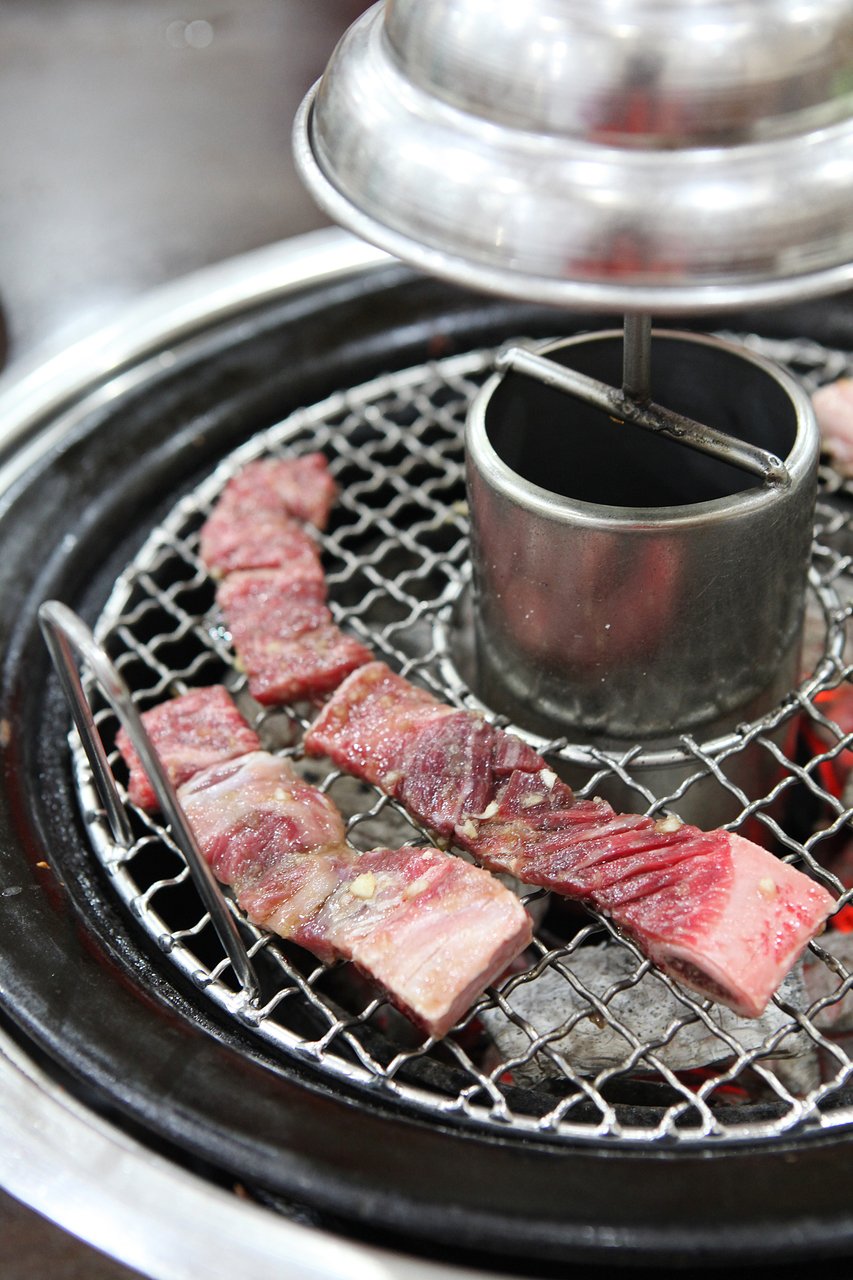
This is where the sources genuinely disagree. Koreapeek's guide says flip "only once or twice" and never press down on the meat. Pressing pushes out the juice you're trying to keep in. Solomon Lee and Joon Lee, over at The Daily Meal, land on three flips for most cuts, thin brisket included, and say flipping less gets real char instead of gray, boiled-looking pork.
No stopwatch here.
Underneath the disagreement, both sides agree that constant flipping is the wrong move. Every flip resets the sear you're building, and constant turning is the single fastest way to end up with meat that's cooked through but never charred.

The Scissors Aren't a Gimmick
Kitchen scissors show up at the table specifically to cut cooked meat into bite-sized pieces, a habit that looks unusual to a first-timer used to a steak knife and turns out to be more efficient once you've tried it. The Daily Meal's chef sources confirm the scissors are for cutting larger cuts like samgyeopsal down into bite-size pieces once they're off the grill, never for prepping raw meat beforehand.
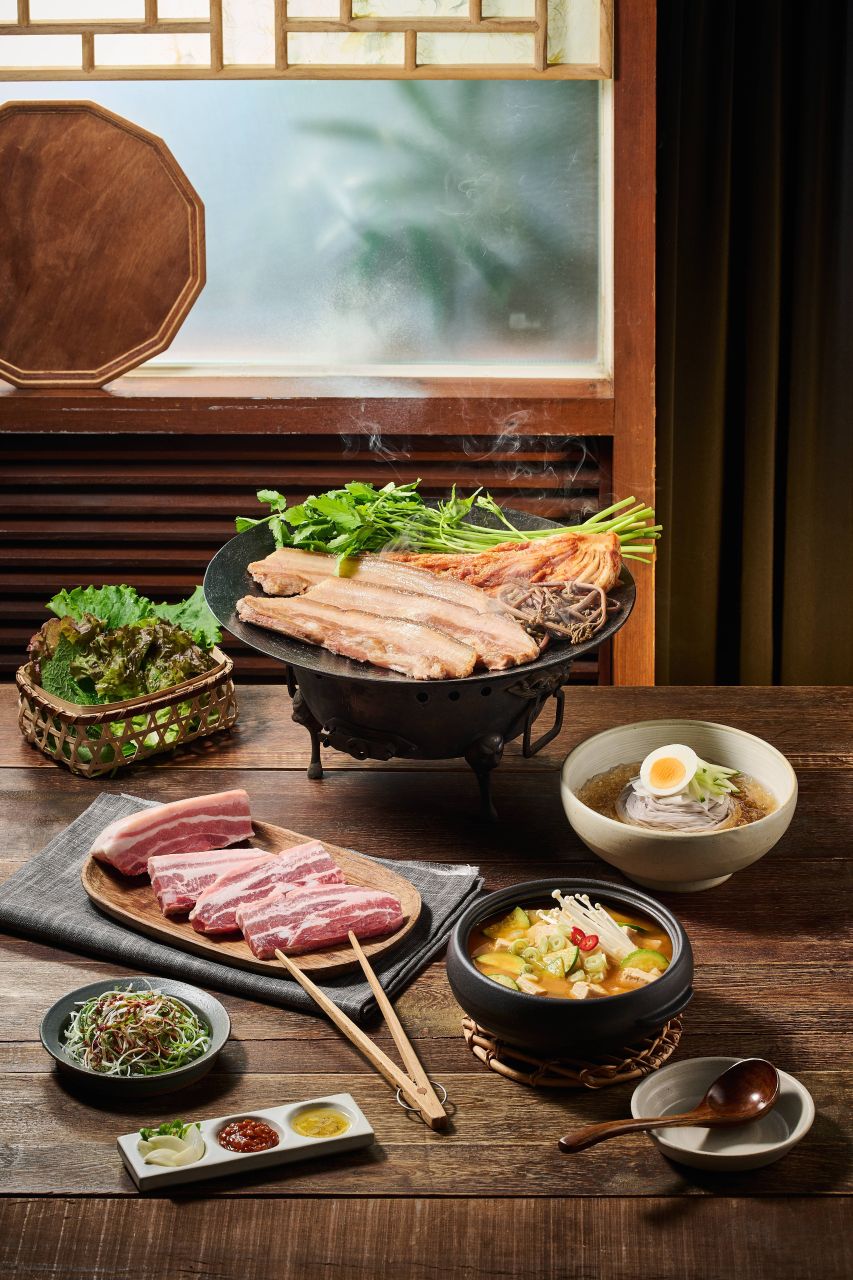
If you're setting up a grill at home and don't already own a pair, don't reach for regular kitchen shears. They bend under a fatty cut, and the handle grip is wrong for a hot table surface. A dedicated set (stainless, spring-loaded handle) runs about $10–15 at any Korean grocery chain like H Mart, and doubles as a handy tool for portioning kimchi and dry noodles once BBQ season's over.
The Ssam Is a One-Bite Deal, Not a Sandwich
Wrapping meat in lettuce or perilla leaf (ssam) comes with one hard rule: it's a single bite, not two. Koreapeek says: "Taking two bites looks awkward and ingredients fall out." Solomon Lee's version at The Daily Meal is the same instinct stated as a test: "If it looks like it's too big to fit in your mouth, it probably is." His server colleague Joon Lee's fix, when a leaf runs oversized, is tearing it into a smaller piece before wrapping the meat.
That means the discipline is in how the wrap gets loaded. Add a slice of meat, a thin swipe of ssamjang, maybe one piece of garlic or a scrap of scallion salad, then stop. Piling it like a burrito guarantees a second bite you weren't supposed to take.
The little ssamjang dish on most tables is shared. Dip once and don't go back in with a piece you've already bitten. Think shared salsa bowl.
Pouring, If There's Soju on the Table
If the meal includes drinking and anyone significantly older is at the table, the two-handed pour matters more than the wrap technique. Go Farther's etiquette guide spells out both directions. When you pour for an elder, one hand holds the bottle and the other lightly supports your own pouring arm or elbow. When an elder pours for you, you receive the glass with both hands. Right hand goes on the glass, left hand supports the bottom or your own right wrist. None of this applies with friends your own age; it's for anyone old enough that the gesture would register.
Banchan Refills Are Free — Ask
The side dishes are refillable at no extra cost at almost every Korean BBQ restaurant, and most staff expect you to ask rather than wait to be offered more. If you want to sound like you've done this before, "반찬 더 주세요" (banchan deo juseyo) gets a server's attention faster than pointing at an empty dish. Running out of lettuce mid-meal is the most common reason people quietly stop eating ssam and switch to eating meat plain. It costs nothing.
Set up a grill at home with these rules in mind, and the whole thing runs smoother than winging it. Hand someone the tongs, let the char build before touching anything, and keep the ssam to one bite. Nobody at the table will say a word. That's exactly the point.
This is a running news series, not a one-off post — new stories go up twice a day, roughly 7am and 7pm Korea time.
More Korea coverage from our network: Hallyu Now · Korea Travel Planner · K-Sports Global · Seoul Skin Notes


Comments
Post a Comment