Soju Alcohol Content Just Dropped Below 16% — Again
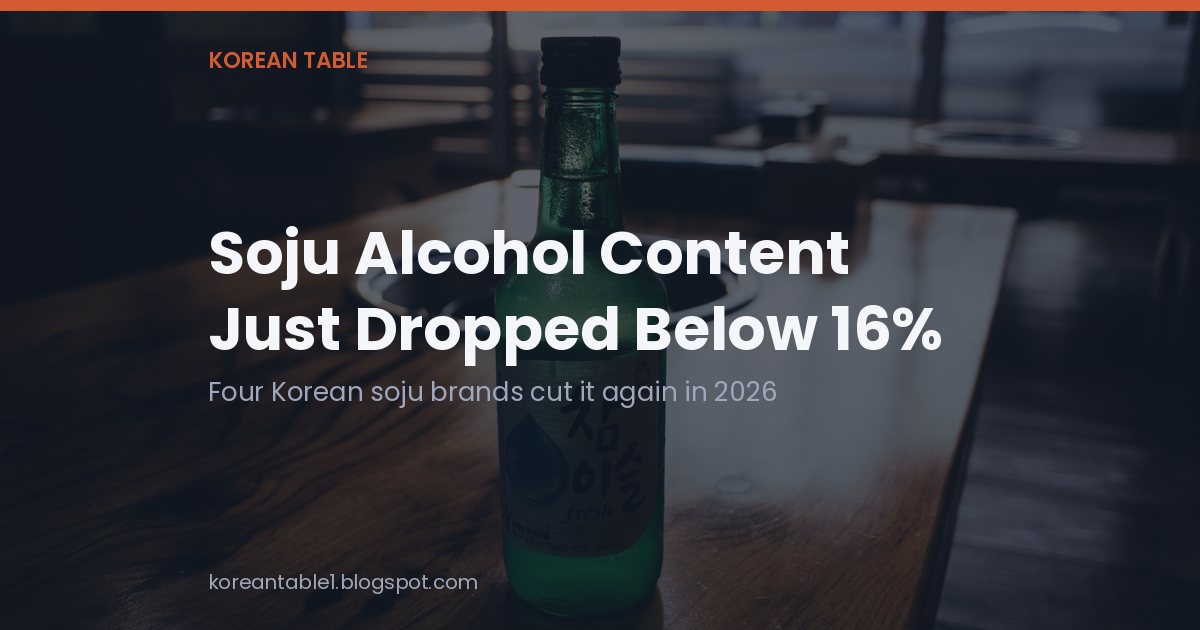
On September 1, 2026, Lotte Chilsung told Edaily it was cutting Chum Churum's alcohol content from 16% to 15.7%. That wasn't a one-off. Hite Jinro had already taken Chamisul Fresh from 16% to 15.7%, rolling that out from mid-June, according to Asia Economy. By the end of this month, OB's new "Chalrang" soju launches at 15%, and Hite Jinro's low-calorie "Jinro Light," on shelves since July, already sits at 11.7%, the lowest ABV a mainstream green-bottle brand has carried. Hankook Ilbo laid all four out in a piece published September 20.
| Brand | Product | Old ABV | New ABV | When |
|---|---|---|---|---|
| Lotte Chilsung | Chum Churum | 16% | 15.7% | Announced Sept 1, 2026 |
| Hite Jinro | Chamisul Fresh | 16% | 15.7% | Rolled out mid-June 2026 |
| OB | Chalrang (new) | n/a | 15% | Launching late Sept 2026 |
| Hite Jinro | Jinro Light (new) | n/a | 11.7% | On shelves since July 1, 2026 |
A Century Headed the Same Direction
Soju wasn't always this gentle. Jinro's original 1924 release sat at 35%, close to a mid-strength whisky, and the number held for four decades. Not by choice; nobody had a cheap way to blend it down yet. That changed in 1965, when a revised Grain Management Act banned using rice and other grains to distill soju — Korea was still short on food two decades after liberation, and grain going into a bottle was grain not going onto a table. Most distilled-soju makers went under within the year, according to a drinks-history column in Gangwon Ilbo. What survived was the diluted method, distilled ethanol cut with water and sweeteners, and that's what "soju" has meant on Korean shelves ever since. Rice wasn't legally allowed back into soju production until 1990.
Once lowering the number became a matter of adjusting a ratio instead of reinventing a process, the cuts kept coming. Jinro settled at 30% after 1965, then 25% in 1973, a level one retrospective on the brand's own numbers treats as the working definition of soju for a quarter-century. Chamisul broke that formula in 1998 at 23%, and from there the drops got smaller and far more frequent: 21% by 2004, 19% by 2012, 17.8% by late 2014, 16.9% by 2020, 16.5% in 2021. Set next to 1924, this month's 15.7% is less than half.
Why Four Brands Moved in the Same Few Months
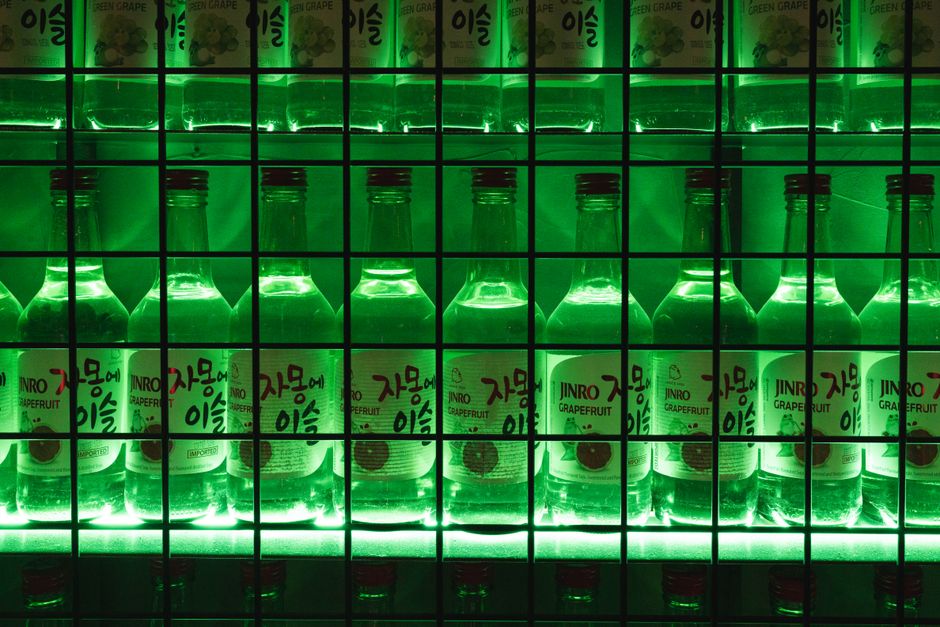
Lotte Chilsung and Hite Jinro each gave their own reason in their own announcement. Lotte Chilsung called it a push toward "smoothness" timed to Chum Churum's 20th anniversary. Hite Jinro cited consumer research into what it called "a clean drinking sensation." Neither statement mentioned who's actually still buying the stuff.
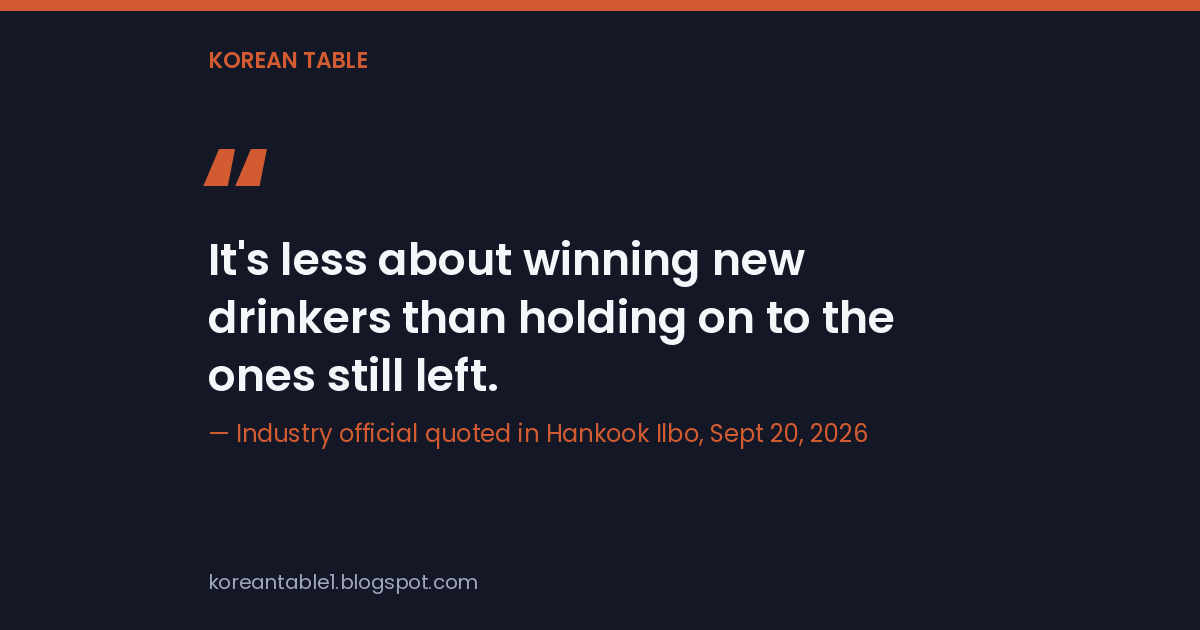
Hankook Ilbo got a blunter answer from an unnamed industry source. Korea's core drinking-age population is shrinking, and a 15.7% bottle costs the same to make as a 16.9% one did. What changes is whether the person already buying it orders a second round. Nobody at any of the four companies used the phrase "shrinking customer base" on the record. The quote above is the closest anyone came.
Diluted Soju and "Real" Soju Are Different Drinks
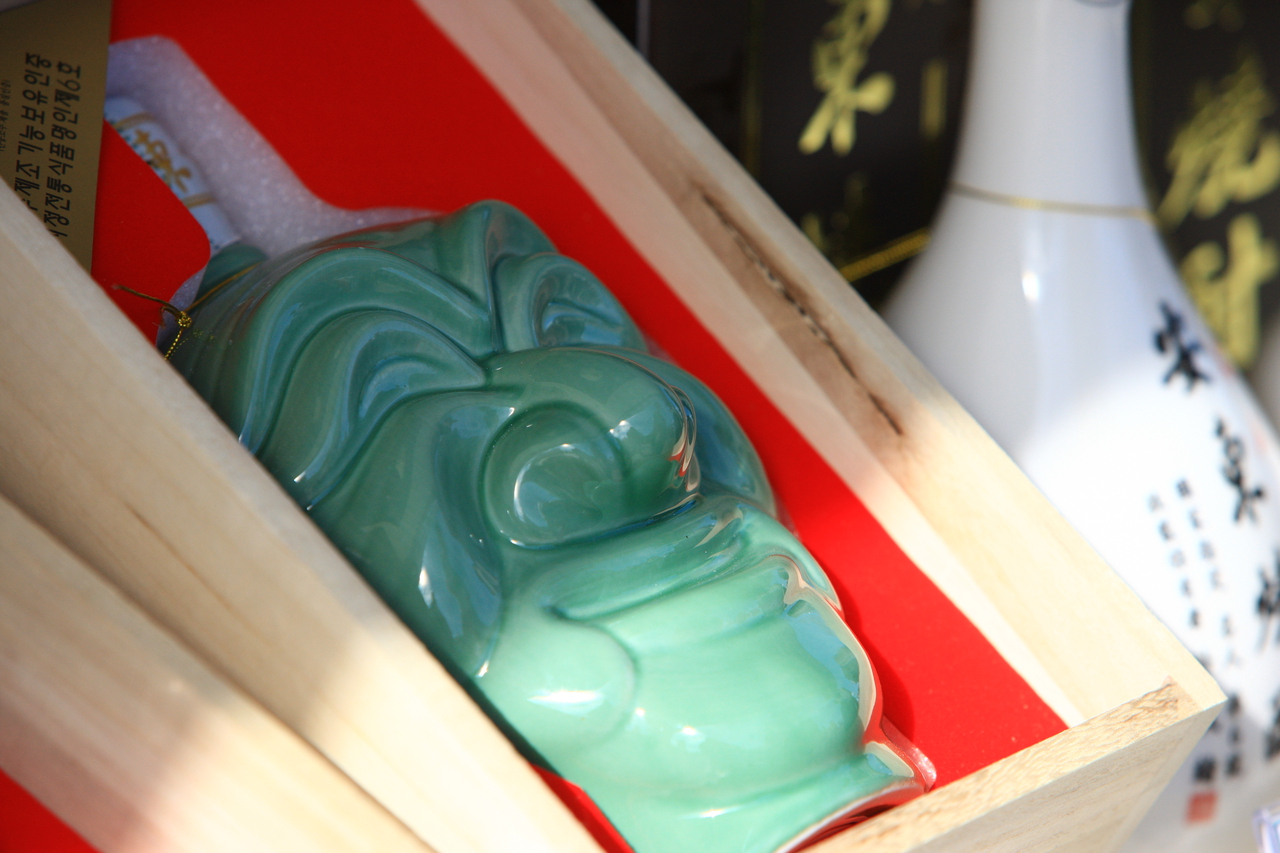
None of the above touches the other kind of soju still sitting on Korean shelves. Distilled soju, banned in 1965 and legal again since 1990, never dropped with it. Andong soju, one of the better-known regional versions, runs at 45%, roughly triple this month's Chum Churum. 증류식 on the label means distilled; the plain green-bottle default is 희석식, diluted.
If You've Had Soju Outside Korea, Check the Number
Soju bought outside Korea can carry a different number altogether. California's own alcoholic beverage code lets any restaurant with a beer-and-wine license pour soju at up to 24% ABV, more than eight points above what Lotte Chilsung is now selling in Seoul. That's the actual ceiling written into the statute a wine-license restaurant operates under, set that high because 24% covers soju stronger than anything on a Korean shelf right now. Retail listings back it up: a UK grocer currently sells Jinro's Chamisul Classic at 20.1% ABV, 4.4 points above the Chamisul Fresh now selling in Seoul. The number printed on the bottle in front of you is the one to trust.
That same gap changes the math on a soju-beer mix. A somaek built on last year's 16% soju pours differently than one built on this month's 15.7%, and differently again from a 24% import, even at the exact same ratio. The label has moved at least five times in the last decade.
Hankook Ilbo's reporting gives no reason to think September's the last of it.
This is a running series, not a one-off post — a new post goes up every day, at around 9am Korea time.
About · Contact · Privacy Policy
Read next: Why Your Kimchi Isn't Fermenting (It's Probably Not Ruined) · Korean Fried Chicken Double Fry: Why Twice, and How Hot · Is MSG Bad for You? What the Double-Blind Trials Found


Comments
Post a Comment