Is MSG Bad for You? What the Double-Blind Trials Found
Mi-won's ingredient panel is short. On the bulk bag Korean restaurants buy by the kilo, the listed raw material is L-glutamic acid, sodium salt, 99% or more. The product listing for Mi-won S prints it as "원재료명: L-글루탐산나트륨 99% 이상." That single-ingredient purity is what makes people nervous about it, and it's also why "is MSG bad for you" keeps showing up in the same breath as Korean cooking.
The question has a specific starting point, and it isn't Korean. On 4 April 1968, a Maryland pediatrician named Robert Ho Man Kwok wrote a short letter to the New England Journal of Medicine, volume 278, page 796, describing numbness, weakness and palpitations that started 15 to 20 minutes after eating at a Chinese restaurant. The letter itself, reproduced here, lists four possible causes: soy sauce, cooking wine, monosodium glutamate, high sodium content. It settles on none of them. NEJM titled it "Chinese-Restaurant Syndrome." Of Kwok's four guesses, only MSG kept getting singled out afterward, which the Science History Institute ties to timing more than chemistry: "Only when MSG was linked to Chinese cuisine did Americans panic."
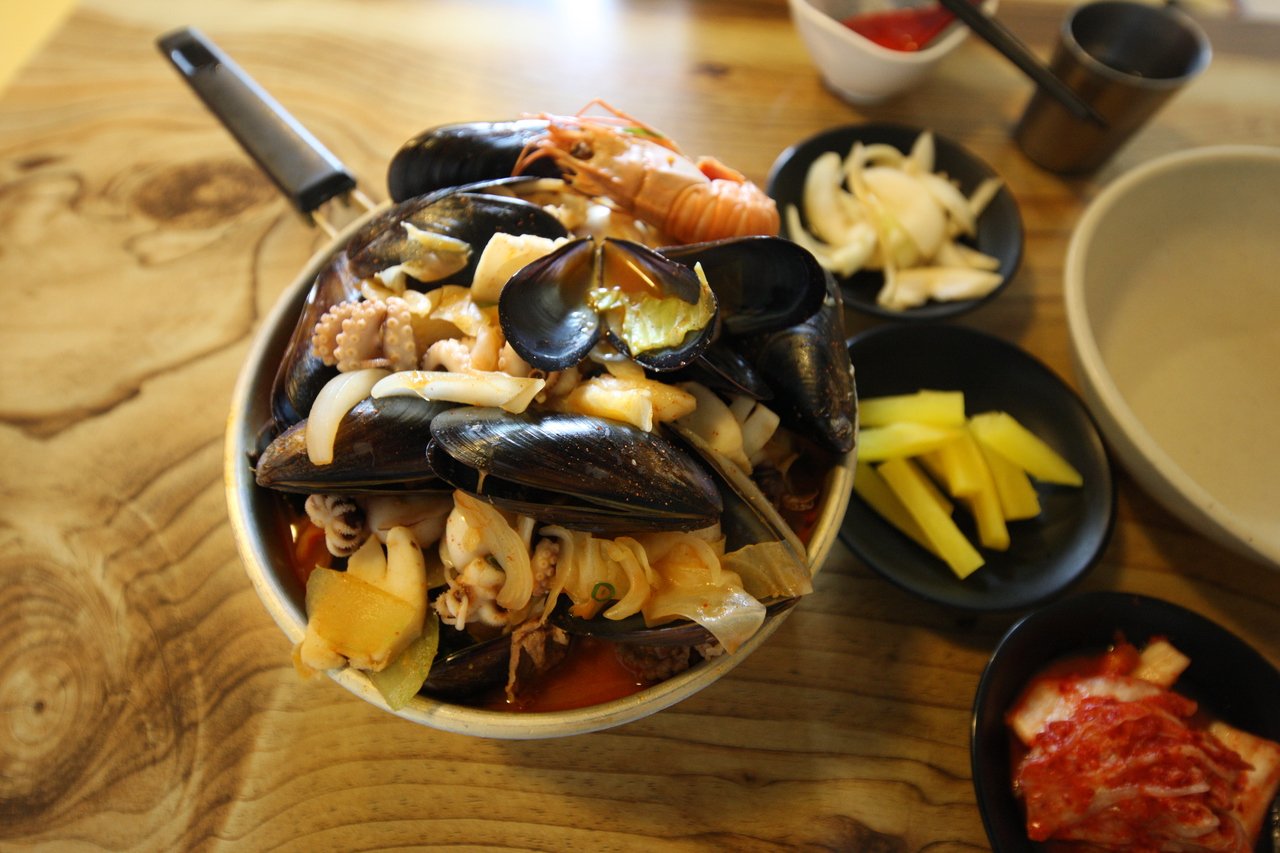
Jjamppong is exactly the kind of dish that made the 1968 letter land where it did. Korean-Chinese restaurants season their broths heavily, and MSG is a normal part of that kitchen's shelf, the same as at the Chinese-American restaurants Kwok was writing about.
What happens when researchers give people MSG and don't tell them
The way to test this is a double-blind, placebo-controlled challenge. Give someone MSG or a matching placebo without either the subject or the person handing it over knowing which, then see if symptoms track the MSG. A 2019 review in Comprehensive Reviews in Food Science and Food Safety, by Zanfirescu and colleagues, collects four such trials in adults who had already reported reacting to MSG:
- Geha et al., 2000: 130 self-reported reactors, 5 g MSG, multicenter multiphase crossover design. Headache frequency was significantly higher in the MSG group than placebo (p<0.05).
- Yang et al., 1997: 36 subjects at 1.25 g, 2.5 g and 5 g. Headache only reached significance at 2.5 g and above.
- Baad-Hansen et al., 2009: 14 subjects at 75 mg/kg and 150 mg/kg. Headache frequency was significantly higher at the lower dose — but not at the higher one, the opposite of what a dose-response pattern would predict.
- Shimada et al., 2016: 14 subjects at 5 g. Same result.
Four separate teams, and at a high enough dose on an empty stomach, MSG does produce more reported headaches than a placebo does, in people primed to expect one. Group-level statistics and one person's own headache are different claims, though, and that gap is where the trials stop being reassuring in either direction. The FDA's own summary states it plainly: "in studies with such individuals given MSG or a placebo, scientists have not been able to consistently trigger reactions." Nobody has produced a subject who reacts to MSG, and not placebo, on every repeat of the test.
Why regulators stopped capping it
The UN/WHO Joint Expert Committee on Food Additives reviewed glutamic acid and its salts in 1987 and assigned a group "ADI not specified." JECFA uses that category when total dietary intake of a substance doesn't represent a hazard, so there's no numeric daily ceiling to track. The FDA classifies added MSG as generally recognized as safe, a status the same Q&A page backs with a Federation of American Societies for Experimental Biology review from the 1990s.
South Korea's Ministry of Food and Drug Safety put its position in writing too. A 2014 government release quotes an MFDS official saying MSG had been evaluated by JECFA as "별도로 섭취량 제한이 없는 품목" (a product with no separate intake restriction). It states outright that "MSG는 평생 섭취해도 안전하다," MSG is safe to eat for a lifetime. The same release cites the 1987 JECFA finding of no health risk, a 1995 FDA statement that current usage levels show no evidence of harm, and a WHO finding of no correlation between food containing sodium glutamate and Chinese-restaurant syndrome.
None of these bodies requires a warning label. The FDA does require disclosure. Added MSG has to appear on the ingredient panel as "monosodium glutamate," spelled out, and you can check for that word on any shelf yourself.
The chemistry underneath the brand copy
Mi-won's own site makes a specific claim: "글루탐산나트륨은 우리 몸에서 자연적으로 발생하는 물질대사의 산물로, 체내에서 실제로 하루 약 50g씩 생산된다." Sodium glutamate is a byproduct of normal metabolism, and the body produces roughly 50 g of it a day on its own. The same page adds that breast milk carries glutamate at a higher concentration than most seasoned food does, and that "우리의 소화기계통은 토마토 같은 식품에서 섭취하는 글루탐산나트륨과 조미료에서 섭취하는 글루탐산나트륨을 구별하지 않는다." Glutamate from a tomato and glutamate from a seasoning packet get digested the same way. This is Mi-won's own marketing page, so keep the source in mind while reading it. The underlying chemistry claim still matches the JECFA and FDA material above.
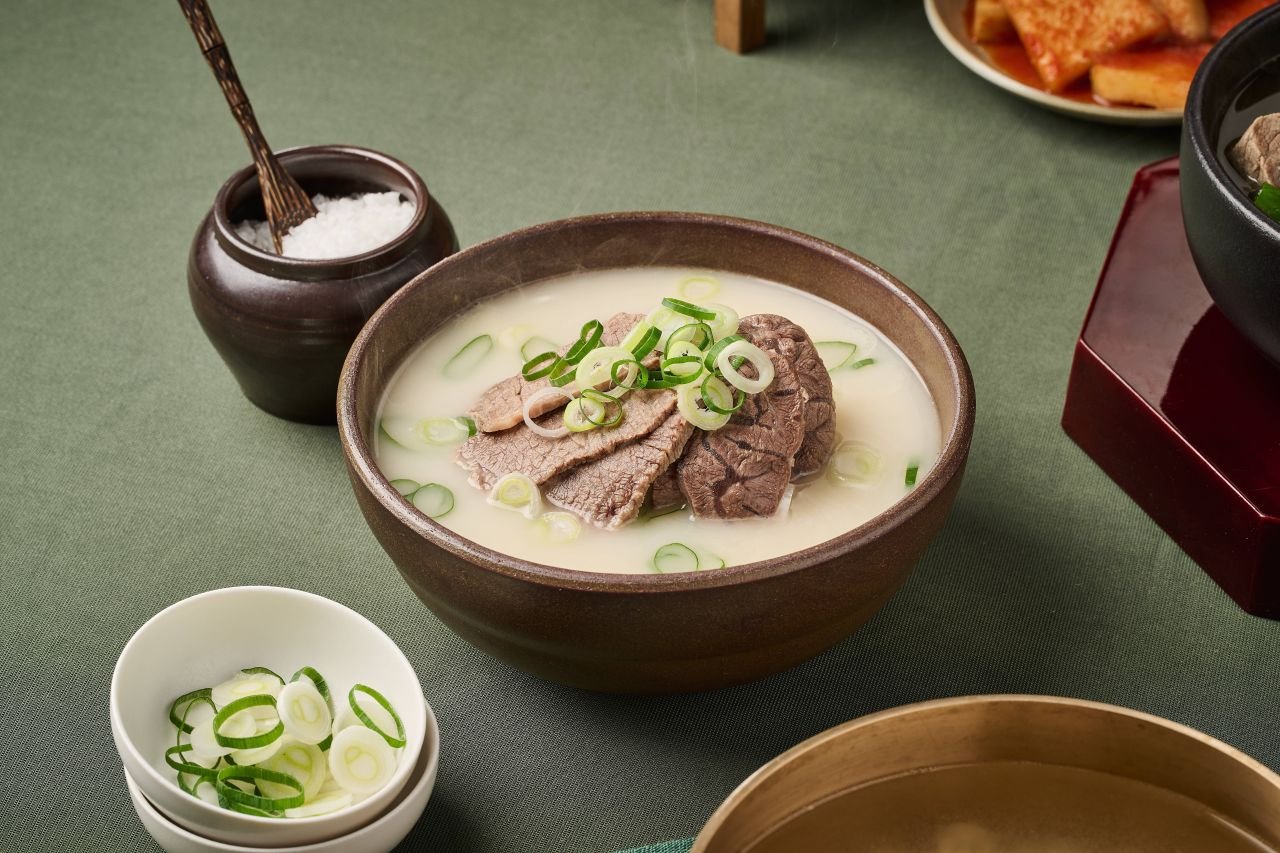
Mi-won itself is made by fermentation. The company's own history page describes making glutamate by fermenting sugarcane, 사탕수수(원당)을 발효시켜, and says the current process is built on "60여년간 축적한 발효기술" — sixty-plus years of accumulated fermentation know-how — and sold in roughly 60 countries.
What the 20-year slump and comeback track
Mi-won launched on 31 January 1956 as Korea's first domestically made seasoning, and by the 1990s "no MSG added" had become its own marketing claim on Korean packaging, same as it had in the US. The brand went through what that same report calls roughly two decades of stagnation, "약 20년에 걸친 정체기."
The recovery tracks the regulatory reassurance rather than any change in the product. Once "식품의약품안전처가 MSG의 안전성에 문제가 없다는 입장을 내놓"자 (the Ministry of Food and Drug Safety put out its no-problem position), Mi-won leaned into it instead of away from it. A 2014 relaunch called "발효미원" (Fermented Mi-won) put sugarcane on the front of the package. In 2023 the company started selling single-use 0.3 g sachets sized for one serving, the amount Mi-won calls its normal single dose. Annual domestic sales now run in the 300 billion-won range.
I couldn't confirm a specific consumer-survey percentage for how many Koreans still avoid MSG. The one figure I found circulating online traces back to a news article that returned a 403 error every time I tried to open it, so I'm leaving the number out rather than repeating something I never actually read.
I also couldn't pin down a verified MSG percentage for CJ's Dashida-style blended seasoning. Ingredient labels I could reach list L-glutamate a few places down the panel, after salt and beef seasoning powder, with no percentage printed anywhere I checked. Unlike Mi-won's near-pure 99%, Dashida is MSG blended with a lot of other things, and that's as specific as the label lets me be.
Where that leaves your own pot
If you already avoid it, the trials above don't really argue you out of that. A genuine minority reports more headaches at 2.5 g or more of MSG on an empty stomach, and that's a real amount, more than a normally seasoned bowl of guk or jjigae delivers in one sitting. If you've been adding a pinch to your broths without a second thought, the JECFA and FDA reviews above are the paper trail behind that habit.
Do you still avoid it, or does your own kitchen use it the way Mi-won's sales numbers say most of Korea now does?
This is a running series, not a one-off post — a new post goes up every day, at around 9am Korea time.
About · Contact · Privacy Policy
Read next: Is Kimbap Really the Risk? What Korea's Salmonella Numbers Show · How to Read the Date on Korean Food Packages After the 2023 Law Change · Why a Seoul Michelin Restaurant Just Paid 25 Million Won in Fines


Comments
Post a Comment