Korean Fried Chicken Double Fry: Why Twice, and How Hot
Order dak-gangjeong at an actual Korean chicken-and-beer spot and the crust survives ten minutes drowned in sweet-spicy sauce without going soft. Try to hit that same texture in your own kitchen and the coating you spent twenty minutes getting right can turn leathery before the plate even reaches the table. Every recipe blames one step for the gap: the double fry. Skip it, the story goes, and you get gas-station fried chicken instead of the real thing.
That story holds up better than most kitchen folklore. It's also not the whole story. A working Korean-American chef has been pushing back on it in interviews, and her argument is worth knowing before you commit to frying a whole chicken twice on a weeknight.
The Two-Fry Routine, Step by Step
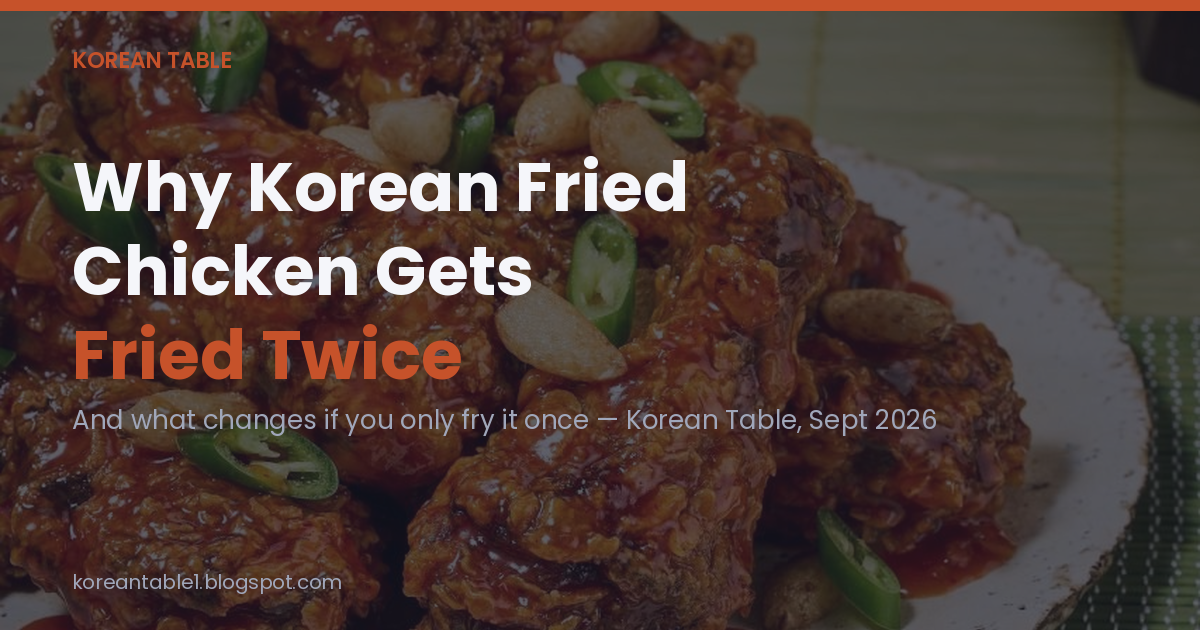
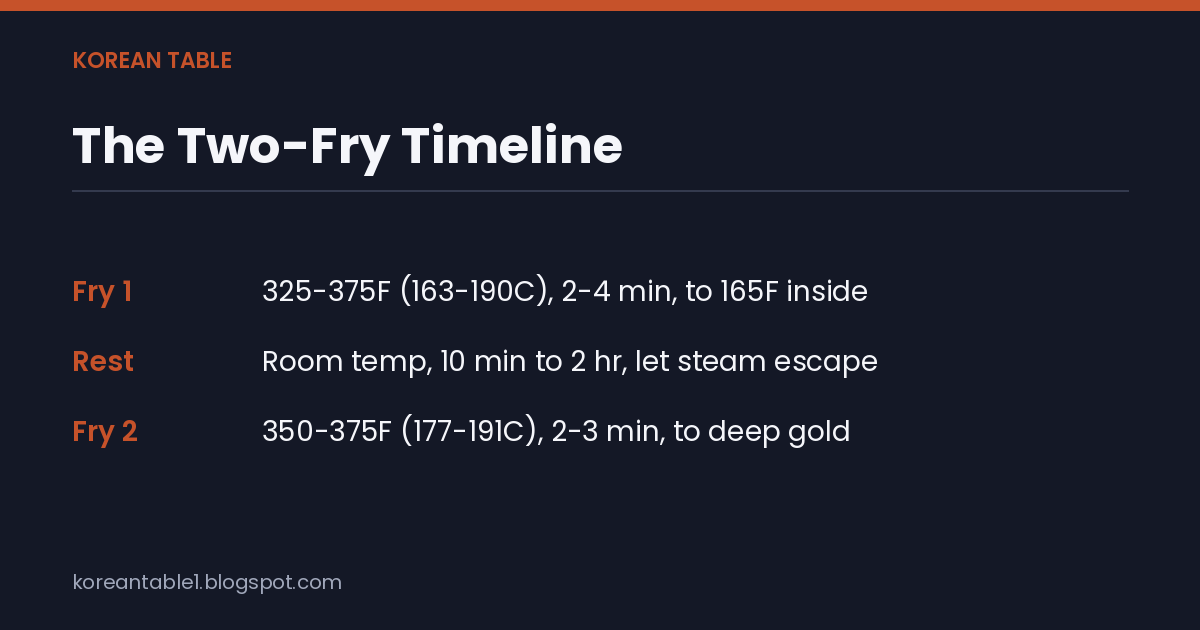
Hungry Huy's Korean fried chicken recipe, one of the more carefully tested English-language versions online, runs the standard sequence. Coat the chicken in a two-to-one mix of potato starch and all-purpose flour, fry at 375°F (190°C) for two to four minutes until it hits 165°F (74°C) inside and looks pale gold, then pull it out completely and let it cool. Once the batch is back to room temperature, it goes into that same oil again for two to three more minutes, until the color turns a noticeably deeper brown.
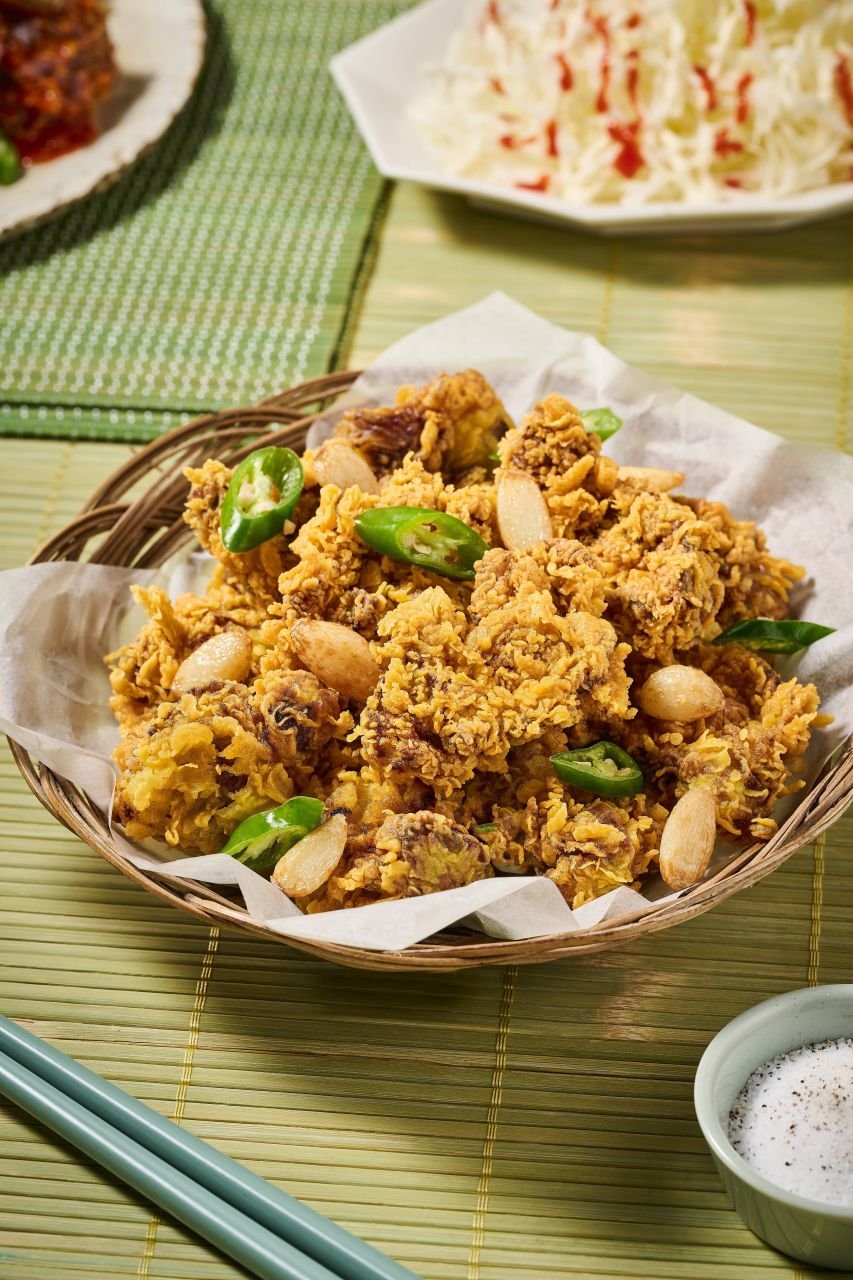
Professional kitchens run the same idea with different numbers. A breakdown from a working line cook, republished on AOL, keeps the first fry lower, at 325 to 350°F (163–177°C), with a rest that can run anywhere from thirty minutes to two hours before the chicken hits hotter, 350 to 375°F (177–191°C) oil for a final minute or two. Restaurants like this version for a second reason that has nothing to do with crispiness: it lets them fry a big batch partway ahead of the dinner rush, hold it, then finish each order fast once it's actually ordered.
You'll find both versions online, and they disagree on the exact numbers.
What they don't disagree on is the shape of it: cook it through at a gentler heat first, let it sit, then finish hot. That rest in the middle isn't dead time. Chicken skin is mostly fat and water, and America's Test Kitchen explains that boiling off all of that water in one continuous fry means the meat overcooks long before the crust finishes browning. Splitting the cook in two gets around that. The first fry sets the coating and starts drying the surface, the rest lets more moisture migrate out of the skin and evaporate at room temperature, and the second fry only has to finish the job. It can run hot enough to brown fast without turning the breast meat to cardboard.

One Chef Says the Batter Is Doing the Real Work
Here's the part most double-fry explainers skip. Ji Hye Kim, the James Beard semifinalist behind Miss Kim in Ann Arbor, Michigan, told Tasting Table that home cooks don't need two trips through the oil to get a shattering crust. They need the right batter. Her fix skips wheat flour almost entirely. "Rice flour, corn starch, potato starch or any mix of those" work, she says, because they're "lighter and without gluten," which is what produces a "thinner, more crispy fried batter" even on a single pass. For the wet half of the batter, she swaps in half water and half a clear liquor like vodka, specifically to limit gluten development, the same trick tempura cooks have leaned on for decades with ice water and a light hand.
Kim isn't saying the double fry does nothing.
She's saying it's solving a problem: soggy, gluten-heavy batter that a better recipe avoids in the first place. Gluten is exactly what makes a flour-based coating chewy and prone to going soft once sauce hits it. A starch-only coating doesn't build that structure to begin with, so there's less for a second fry to have to rescue.
That tracks with what Korean fried chicken's own coating already leans on. Tasting Table's separate breakdown of potato starch notes it "traps less moisture" than cornstarch and "doesn't soften as quickly... after cooking," while cornstarch "does its job of absorbing moisture too well." That's why an all-cornstarch coating goes soft faster than a potato-starch one. Potato starch shows up at any Korean grocery, H Mart included, usually labeled 감자전분 and shelved near the other starches and pancake mixes; it's also turning up in the Asian aisle of a lot of regular supermarkets now. If neither is around, plain cornstarch is the one-for-one swap most recipes point to. It'll fry up crisp on the day; just don't expect it to hold that snap through a whole meal the way potato starch does.
So Should You Skip the Second Fry?
If you're eating it the moment it comes out of the pan, standing at the counter, alone: probably fine. A well-battered single fry, potato starch leaning over flour, cooked through and browned in one go, will be crispy enough that nobody's complaining in the first five minutes.
Where the double fry earns its extra pan and extra twenty minutes is anything that happens after the frying: a heavy gochujang glaze, a serving platter that sits out, leftovers reheated the next day. That's exactly the scenario Korean fried chicken is built for. It's meant to survive a hard toss in sauce without wilting, and a single fry with a flour-heavy batter won't hold up to that the way a proper double fry will. Lean into a starch-forward batter the way Kim recommends and you narrow that gap considerably. It doesn't fully close it, not on a home stovetop that's rarely holding oil temperature as steadily as a restaurant fryer does.
How to Reheat Leftovers Without Losing the Crunch
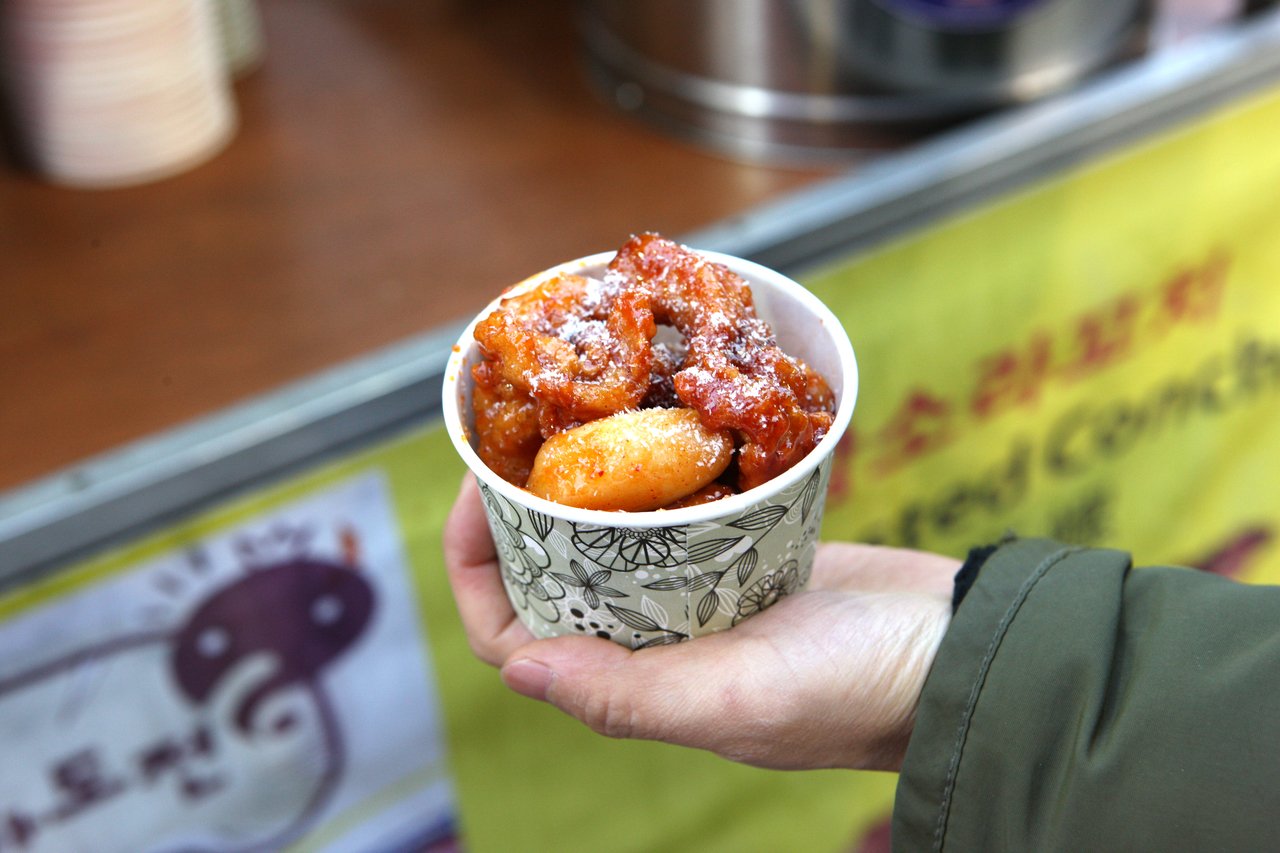
Whichever way you fried it, don't reach for the microwave the next day. Alphafoodie's reheating guide is blunt about why: microwaving turns the crust "soft and soggy" and can leave the inside unevenly heated. An air fryer at 375°F (190°C) does the job properly: five to seven minutes for wings and smaller pieces, eight to ten for bigger ones, flipped halfway so both sides crisp evenly. It's the closest a home kitchen gets to that second fry, minus the pot of oil.
The practical split, based on what each camp is actually solving for: single fry, starch-heavy batter, if you're eating the chicken unsauced and right away. Double fry, no exceptions, the moment sauce or a serving tray longer than fifteen minutes enters the picture. And if you already went single-fry and regret it the next morning, the air fryer is your second chance, not the microwave.
This is a running news series, not a one-off post — new stories go up twice a day, roughly 7am and 7pm Korea time.
More Korea coverage from our network: Hallyu Now · Korea Travel Planner · K-Sports Global · Seoul Skin Notes


Comments
Post a Comment