Does Gochujang Need to Be Refrigerated After Opening? Yes, Mostly
Does gochujang need to be refrigerated after opening? Yes. The tub says so, and the tub is right. But it's a quality rule more than a safety panic, and the difference matters when you're standing in the kitchen at midnight wondering whether the paste that sat out through dinner is now a biohazard. It isn't.
Why this post exists: "does gochujang need to be refrigerated" fills in on Google's autocomplete before you've finished typing it, and the answers online range from "three months, tops" to "basically forever." Both camps are quoting something real. Here's how they fit together.
Why the label says fridge, and what happens if you ignore it
Flip over a tub of CJ Haechandle, the brand most of us end up with, and read the storage line. One retailer's listing for the 1 kg tub transcribes it as "Store in a cool, dry place. Refrigerate after opening and consume within the recommended period. Keep lid tightly sealed."
Nothing in that tub is going to grow botulism on your counter. Gochujang is a salted, fermented paste, and the commercial versions carry more insurance on top. Look at a UK label for Haechandle: "Corn Syrup, Red Pepper Paste 25% [...], Water, Wheat Flour, Rice Powder, Wheat, Salt, Distilled Alcohol (Contains Wheat, Barley), Soybean, Soybean Powder, Glutinous Rice, Koji," per Tradewinds Oriental Shop. The US ingredient list is shorter but the distilled alcohol is still there. Neither label explains it. The explanation I've seen most often is that the alcohol keeps yeast quiet, so the sealed tub doesn't keep fermenting and puff up in the warehouse. I couldn't find CJ saying that in its own words, so file it as the likely reason rather than a confirmed one.
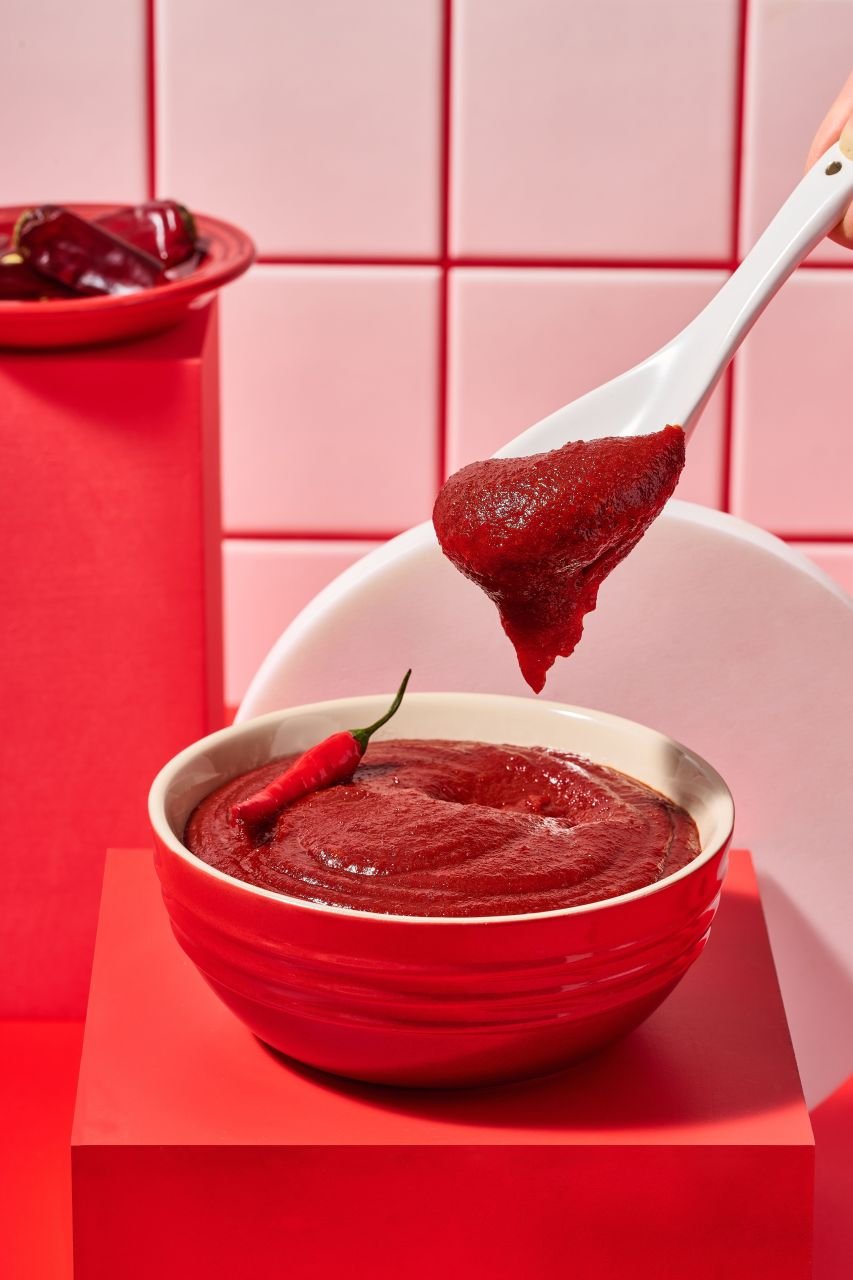
So what does the fridge protect? Colour and flavour, mostly. A 1997 study in the Journal of the Korean Society of Food Science and Nutrition held gochujang at 10°C, 20°C and 35°C and matched the chemistry against taste panels to find the cut-off. The predicted shelf life came out at 467 days at 10°C, 261 days at 20°C and 133 days at 35°C. Lightness dropped and pH fell the whole way through. Every 10°C warmer cut the time before the paste went dark, sour and flat by close to half (the paper's Q10 is 1.8). A fridge at 4°C sits below the coldest condition they tested, which is the whole argument for it.
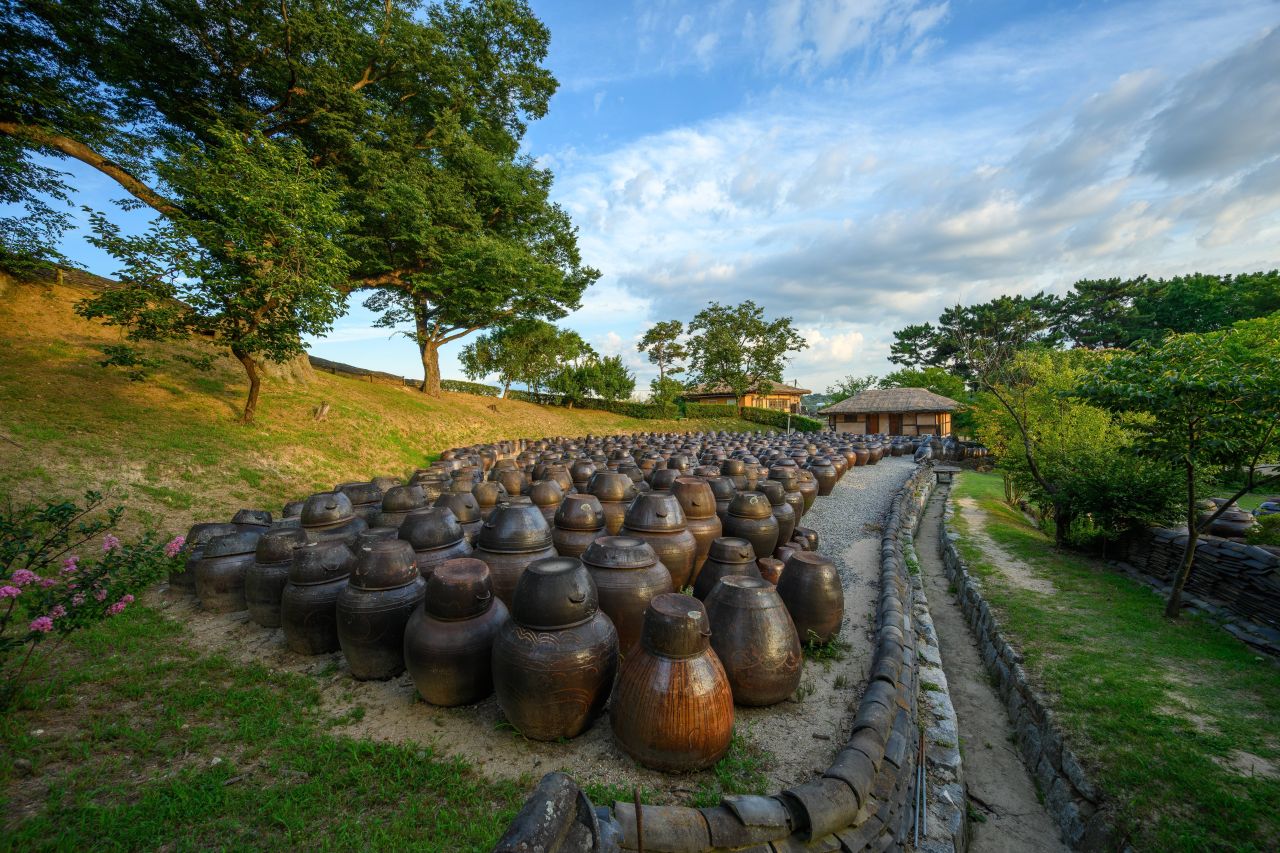
Before fridges, Korean households kept jang in onggi/earthenware crocks outdoors, lids on, and they lasted. That's the "basically forever" camp, and they're not wrong about a crock of heavily salted homemade paste sitting through a Korean winter. A plastic tub of sweetened commercial paste in a centrally heated flat is a different object.
How long opened gochujang lasts in the fridge
The sources disagree, so here's the spread as I found it on September 8. Maangchi's ingredient page says: "Keep in the fridge after opening and use within 3 months. The top of the paste may become darker or dry out, but it's still edible." Nigella.com also lands on three months from opening, refrigerated, if the printed date has worn off. The Takeout says an opened tub "usually stays good for around a year, but can last even longer than that."

Both are right because they're measuring different things. Three months is the window in which the paste tastes the way it did on day one, bright red and rounded. A year is how long it stays safe and usable in a stew. My own rule sits between them. Cook from an open tub for six months without thinking about it. Past six, sniff it, look at the surface, and reserve it for jjigae and marinades, where a duller paste hides fine. Past a year, replace it, not because it will hurt you but because you paid for flavour that has left.

Two things shorten every one of those numbers. Water, from a wet spoon or a rinsed lid, and warmth, from the fridge door. The door shelf warms every time it opens; the back of the bottom shelf barely moves. Put the tub there.
The white film, the dark crust, and the one that means bin it
The dark, leathery layer on top is the one people email about, and it's the least worrying. The paste has oxidised where it met air. A Korean home-cooking guide on watisnew puts it plainly: the darkening comes from oxidation on contact with air and isn't spoilage, so it's safe to eat. Scrape it off if it's hard, stir it in if it's just dull. Flavour underneath is unchanged.
A thin white film is the second thing, and this one splits into two cases. If it's a smooth, filmy layer, it's what Koreans call golmaji, a surface yeast, not a mould. Health Chosun (Lee Seul-bi, 24 March 2024) describes it as a product of yeast reacting with oxygen, harmless to people (my translation), and says you can lift it off and eat the rest. If instead the white is fuzzy and threadlike, or there's any blue, green or black in it, that's a mould colony. The same article's line on blue mould is that it's unmistakably mould, so binning the whole tub is the safe call.
Should you scrape a moulded tub and keep going, the way your grandmother might have with a jar of jam? I wouldn't. The USDA's mould guidance notes that moulds "tolerate salt and sugar better than most other food invaders," which is why they can grow in refrigerated jams. Its advice for jams and jellies is a flat "Discard," because "the mold could be producing a mycotoxin." Gochujang is a sweet, salty, high-moisture paste, so it gets the same answer. It's a cheap tub. Don't play hero with it.
A watery layer on top or a boozy, vinegary smell means the yeast got going. Still edible, but the taste has moved on. Use it in something cooked.
How to store gochujang after opening so it doesn't dry out
The drying is mechanical, not microbial, so the fix is mechanical too. This is the routine I'd hand anyone opening their first tub.
- Level the surface after every scoop. Peaks and craters expose more paste to air than a flat top.
- Press a square of cling film/plastic wrap directly onto the surface, then put the lid on. Nigella's advice is to wrap the whole container; contact wrap on the paste itself does more.
- Wipe the inside of the lid. Condensation drips back onto the paste and that's your water source for mould.
- Dry spoon, EVERY time. If it went in the rice, it doesn't go in the tub.
- Back of the bottom shelf, not the door.
The Korean home trick is a sheet of dried gim/nori laid flat on the paste under the lid. Korean guides such as the watisnew one above recommend it; that guide says the sheet blocks air and moisture and credits the seaweed's iodine for keeping mould off. I haven't seen a lab test of it, and I'd credit the air barrier more than anything in the seaweed. It costs one sheet, so try it if you like. Cling film does the same job and doesn't taste of the sea.
One trick I'd skip: a slick of sesame or neutral oil on top. It seals the surface, but every scoop drags oil down through the paste, and a tub treated that way ends up smelling of old oil rather than chilli.
Freezer, big tubs, and buying the small one
If you bought the 1 kg or 3 kg tub because the price per kilo looked better, split it. Decant half into a small airtight container for the fridge and put the rest, still sealed as well as you can manage, in the freezer. Korean home-storage guides such as Momtrick say the paste doesn't freeze solid at −18°C because of the salt, just stiffens, so you can spoon from it straight from the freezer. That matches how salted pastes behave, but I haven't frozen a tub myself, so treat the "spoonable" part as reported until you check your own.
The cheaper move is to stop buying big. Haechandle's 200 g tub exists for exactly this reason. At a tablespoon or two per meal, one Korean dinner a week, 200 g is gone in six to ten weeks, well inside the freshness window. Look for the small tub at a Korean grocer (H Mart in the US, Oseyo in the UK) or on whichever online shop sells you the 500 g. If you only see the 500 g, it's still the right buy over the kilo tub. It's gone before the colour turns.
Enjoy the paste while it's still that first-day red. And if you've got a tub in the fridge door older than a year, open it, look at the surface, and tell me what you found. I want to know how far past the label people are really cooking.
This is a running news series, not a one-off post — new stories go up twice a day, roughly 7am and 7pm Korea time.
More Korea coverage from our network: Hallyu Now · Korea Travel Planner · K-Sports Global · Seoul Skin Notes


Comments
Post a Comment