Kimchi Too Sour? How to Fix It, and What to Cook With It Instead
Got a jar of kimchi too sour to eat straight from the fridge? How to fix it depends on what you want it for. You can knock the acid back a little in the jar itself (sugar, a pinch of baking soda, a rinse), or you can stop fighting it and cook it, which is what most Korean home kitchens do with that jar anyway.
The in-jar fixes buy you a milder side dish, not a fresh one, and I'd rather say that before the tricks. The stew pot gives you something better than what you started with.
Why It Went Sour Faster Than You Expected
Kimchi doesn't go off when it turns sour. It keeps fermenting. The lactic acid bacteria that give it its taste never stop working; cold only slows them down, and how much cold matters more than most people think.
A 2022 study in Foods tracked packaged kimchi at four storage temperatures. At 20°C (68°F) the pH fell to 4.11 within 2 days. At 10°C it took 6 days to reach a similar point. At 5°C, close to where a household fridge sits, it held fairly steady through day 6 and then dropped to 4.50 by day 9. Only the kimchi held at 0°C stayed put, keeping its pH for 15 to 18 days before the same fall began. A separate 2025 paper in the same journal found kimchi stored at 15°C reached a ripe pH in 3 days; at 4°C the same recipe took 47 days.
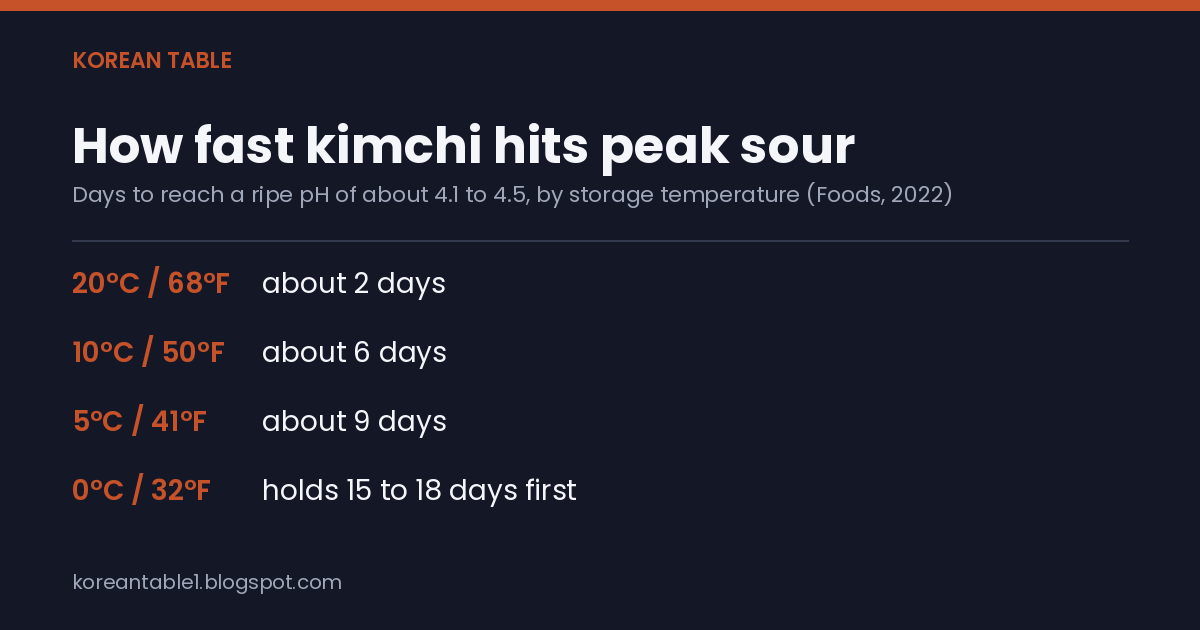
The 2025 paper also notes that many earlier studies define kimchi's optimal fermentation as a pH between 4.0 and 4.5, with anything below 4.0 counted as over-ripe. That's the scientific way of saying the jar you're frowning at is somewhere past that line, and it kept going because the fridge door opened forty times a week and the jar was sitting in the door shelf, usually the warmest spot in there.

Sour and spoiled are different things. Over-fermented kimchi smells sharply vinegary and the cabbage goes soft; that's edible. Fuzzy mold on the surface, a slimy film, or a smell that reads as rotten rather than sour is a different jar, and that one goes in the bin. I'm not a food-safety authority, so when it's genuinely ambiguous, toss it.
The In-Jar Fixes, and What Each One Costs You

Sugar is the fix everyone reaches for first, and it works the way you'd expect: it covers the acid rather than removing it. Start at a teaspoon per cup of chopped kimchi, toss it, wait ten minutes, taste. Stop there. Past that you get sweet sour kimchi, which is worse than the problem you had. Korean Bapsang gives the same ceiling for the stew version: "If the kimchi is overly sour to your taste, add a teaspoon or two of sugar to the stew to balance out the sour taste."
Baking soda is the one that changes the chemistry. It's alkaline, lactic acid is an acid, and the two cancel each other out with a small fizz. A Korean home cook's recipe on 10000recipe stir-fries a quarter head of sour kimchi with a spoon of sesame oil, half a spoon of sugar, and half a teaspoon of soda before it goes into a canned-saury stew. Treat that half teaspoon as the ceiling, not the starting point. Past it the kimchi starts tasting soapy and flat, and soda softens the cabbage further, so use it on kimchi you're about to cook, not kimchi you want to eat crunchy.
Rinsing under cold water and soaking works on the same logic as rinsing salt off anything. It pulls acid out. One answer on the Korean Q&A site a-ha puts the caveat plainly: "신맛만 빠지는게 아니라 짠맛도 같이 빠진다" (it isn't only the sourness that leaves; the salt goes with it). Rinsed kimchi is bland kimchi. It's the right move for exactly one dish, kimchi pancake, where the batter brings the salt back.
Then there's the eggshell trick, which circulates in Korean food media. A 마시씀 write-up describes boiling one or two raw eggshells for at least five minutes, wrapping them in cheesecloth and tucking them into the kimchi, and waiting half a day to a day for the calcium carbonate to neutralize the acid. The chemistry is plausible; calcium carbonate is a base. I still wouldn't do it. Boiled or not, you're leaving eggshell in a jar of food for a day to get the result a pinch of baking soda gives you in thirty seconds.
The last option is to dilute rather than treat. Jin Kimchi's tips page suggests "combining it with non-fermented vegetables like lettuce, cucumber, or carrots" to temper the sharpness. Shredded cucumber, a drizzle of sesame oil, and a too-sour jar becomes a decent salad. It isn't kimchi anymore. But it gets eaten.
Slowing It Down Next Time
LG's support page for its kimchi refrigerators is unusually direct about the cause. When kimchi has fermented too quickly, LG says to "switch the storage temperature from [Medium] to [High] cooling or from [Low] to [Medium] cooling," keep the kimchi "completely submerged in the kimchi juice," and lay "a plastic deli sheet" over the surface so no cabbage sits exposed to air.
Most of us outside Korea don't own a kimchi fridge, so translate that. Back of the bottom shelf, never the door. Press the cabbage down under its own brine every time you take some out. A square of parchment or plastic wrap pressed flat onto the surface does the deli sheet's job. In that 2022 study the difference between 5°C and 0°C was nine days versus two and a half weeks before the acid took off, and a back corner of a cold fridge sits a good deal closer to the second number than the door does.
TigerSalad's troubleshooting page has the other half: make less. "Consider making smaller batches so you can finish it before it gets too sour. It is fine to cut recipes in half to always have a fresh batch on hand." A half batch that's gone in ten days beats a full batch you're rescuing on day thirty.
What to Cook With It Instead
In a pot, sour stops being a problem.
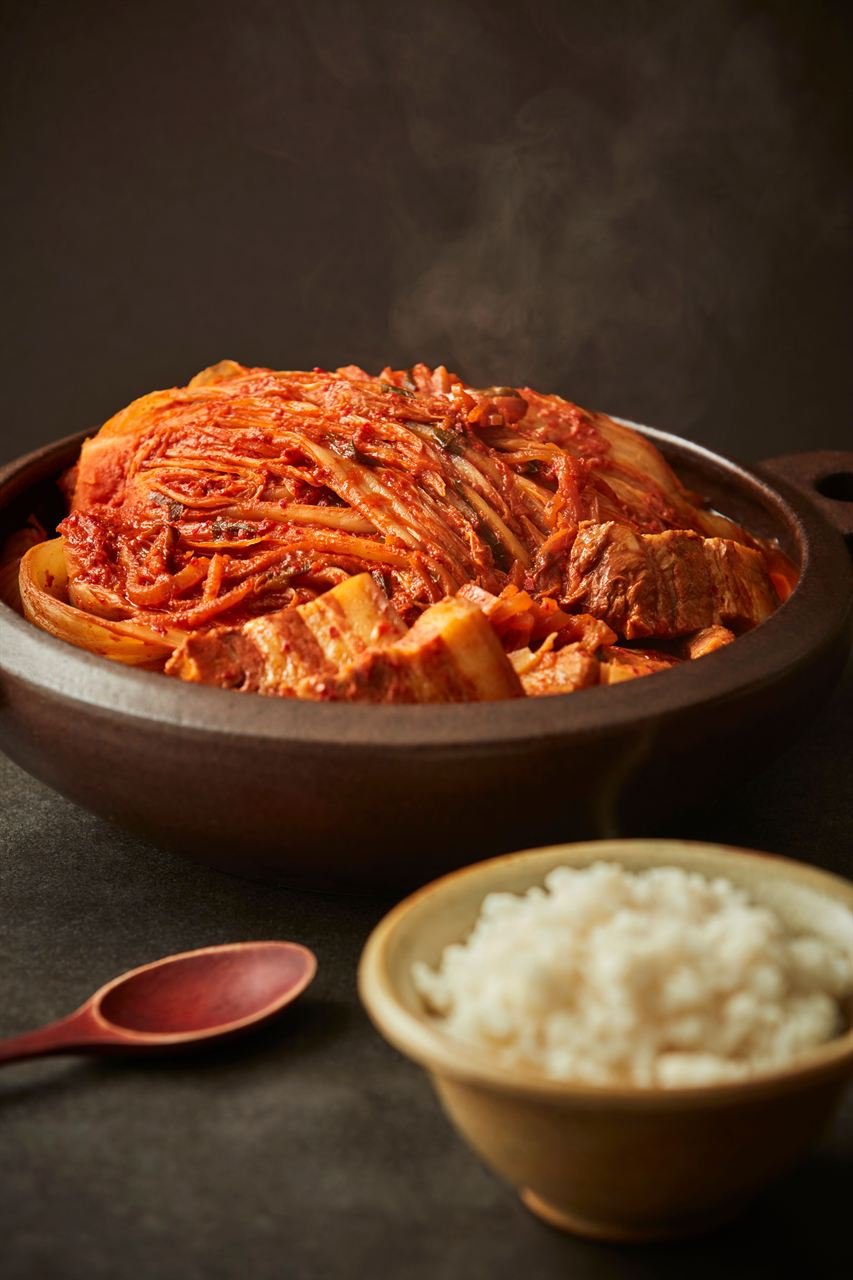
Kimchi jjim (김치찜), whole quarters of aged kimchi braised with pork belly until both collapse, is the dish that exists for exactly this jar. It wants kimchi that's been sour for weeks. A fresh batch comes out of an hour-long braise still crunchy and tasting raw; an old one softens into the pork fat and gives up its acid to the broth. There are more precise recipes out there, but the shape of it is simple: kimchi in big pieces, pork belly in thick slabs, water to come halfway up, a spoon of gochugaru if the kimchi has faded in color, and an hour or more at a low simmer with the lid on.
Kimchi jjigae is the faster version. Korean Bapsang's recipe runs on 2 cups of packed, bite-sized kimchi, 4 ounces of pork belly, 2 to 2½ cups of water or broth, and, if you have it, half a cup of the kimchi juice from the jar. Five minutes at a hard boil, fifteen covered on medium, then five more with the tofu in. The line at the top of that page is the one to keep: "When cooking with kimchi, you should always use fully fermented, sour kimchi. The older the better!"
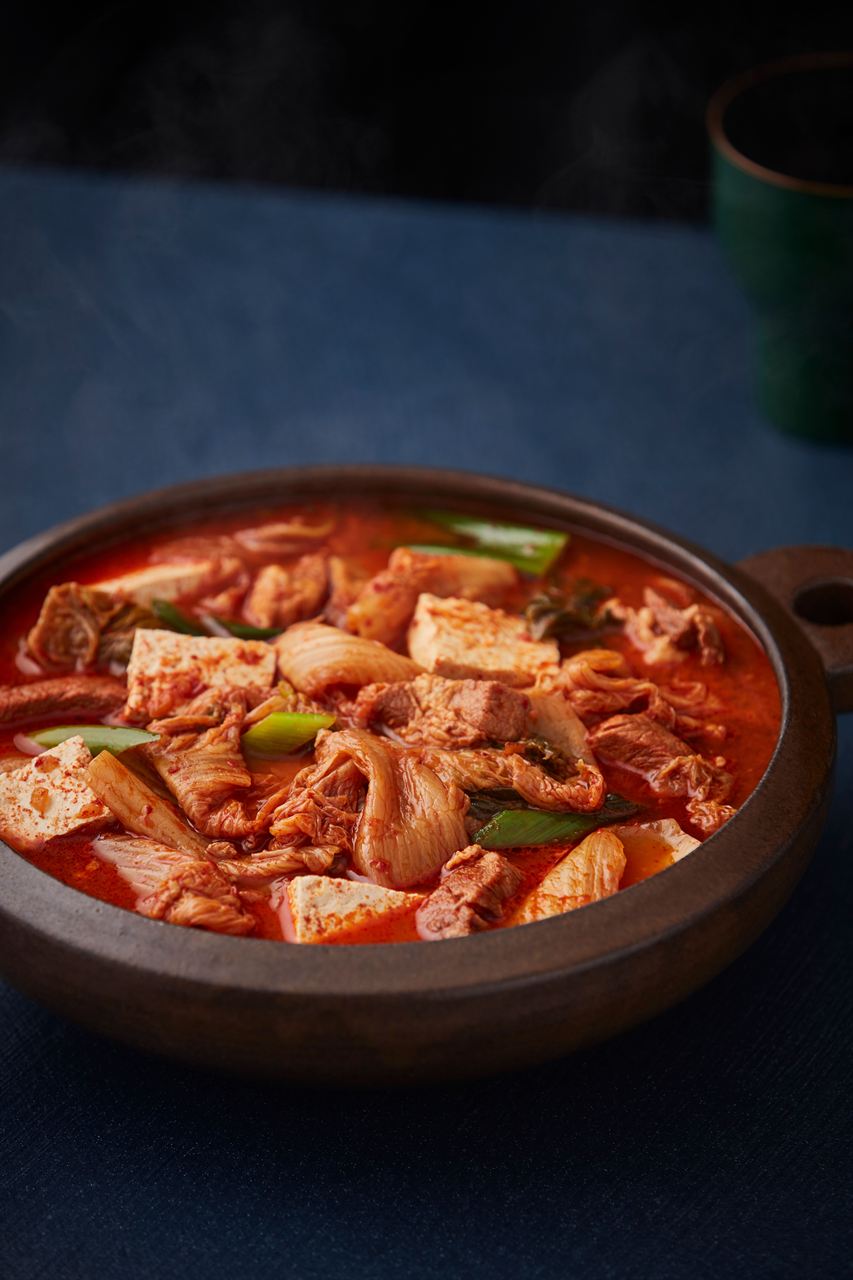
Don't skip the kimchi juice. Half the acid and most of the seasoning went into it, and a jjigae made with drained kimchi and plain water tastes thin no matter how long it simmers.
Kimchi fried rice and kimchi jeon take whatever's left. For fried rice, squeeze the kimchi first, chop it small, and fry it in the fat before the rice goes in; a sour jar gives you a sharper, cleaner fried rice than a fresh one ever will. For jeon, this is where the rinsed kimchi from earlier finally earns its keep.

If You Want Sour Kimchi on Purpose
Korean grocers sell it. Look for mukeunji (묵은지), literally "old kimchi," which is sold sour by design for stews and braises. When I checked on September 7, H Mart's US site lists Jongga's Muk Eun Ji at $11.99 for a 1 kg (2.2 lb) pouch, and Bibigo's Aged Kimchi at $5.99 for 400 g. Either makes a better jjigae than a fresh jar you've tried to hurry along on the counter.
And if what you've got is a regular jar that has simply crossed the line, you're already holding the right ingredient. A slab of pork belly, half a cup of the juice, twenty minutes. Serve it bubbling with plain rice and stop apologizing for the jar.
This is a running news series, not a one-off post — new stories go up twice a day, roughly 7am and 7pm Korea time.
More Korea coverage from our network: Hallyu Now · Korea Travel Planner · K-Sports Global · Seoul Skin Notes


Comments
Post a Comment