What to Add to Ramyeon: Cheese, Egg or Mandu, Tested
A packet of Shin Ramyun already works fine on its own, but an add-in can wreck a bowl of ramyeon just as easily as it can improve it. Cheese, egg, and frozen mandu are the three add-ins everyone reaches for first. Only one of them is close to foolproof.
This is a rundown of what each ingredient actually does under heat, not a ranking of whichever combination photographs best. It also skips how to boil the noodles themselves. If you're here, you already have that part handled.
The Cheese Question
Cheese is the add-in most likely to go wrong, and the reason is chemistry, not taste. American cheese and other processed cheese slices — Kraft Singles, Land O'Lakes deli slices, the orange squares sold at nearly every supermarket outside Korea too — contain sodium citrate or a similar melting salt. That salt keeps milk proteins from clumping as they heat, so the cheese turns into a smooth, pourable film instead of separating into grease and rubber.
Natural cheese doesn't get that help. Block mozzarella can work if you shred it yourself and stir it in off the heat until it disappears. Pre-shredded mozzarella from a bag is a worse bet. It's coated in potato starch or cellulose to stop the shreds from clumping in the bag, and that same coating is what keeps it from melting cleanly into broth instead of clumping on top.
Cheddar is worse than both. It breaks into an oily film almost every time.
Timing matters as much as the type. Broth at a full boil sits around 212°F, well past where processed cheese wants to melt smoothly, and dropping a slice in mid-boil risks a slick of orange oil instead of a creamy broth. Pull the pot off the heat, let it sit about thirty seconds, then stir in one slice, roughly 20 grams, until it's gone. That's the difference between a bowl that looks like carbonara and one that looks like an oil spill.
When Does the Egg Go In?
Sources disagree on the exact percentage of cook time to wait, so here's what's actually confirmed by how egg proteins behave: whites firm up around 145–150°F, yolks stay runny until closer to 158°F. That gap is the whole timing question.
For a jammy yolk, crack the egg in whole once the noodles are about thirty seconds from done, cover the pot, and pull it off the heat for sixty to ninety seconds before serving. Residual heat sets the white while the yolk stays loose enough to run into the broth. Crack the same egg into water that's still at a hard boil from the start, and by the time the noodles are ready the white has gone rubbery and the yolk has already firmed past runny.
A fried egg on top skips this whole calculation and is close to foolproof. You just lose the yolk mixing into the broth.
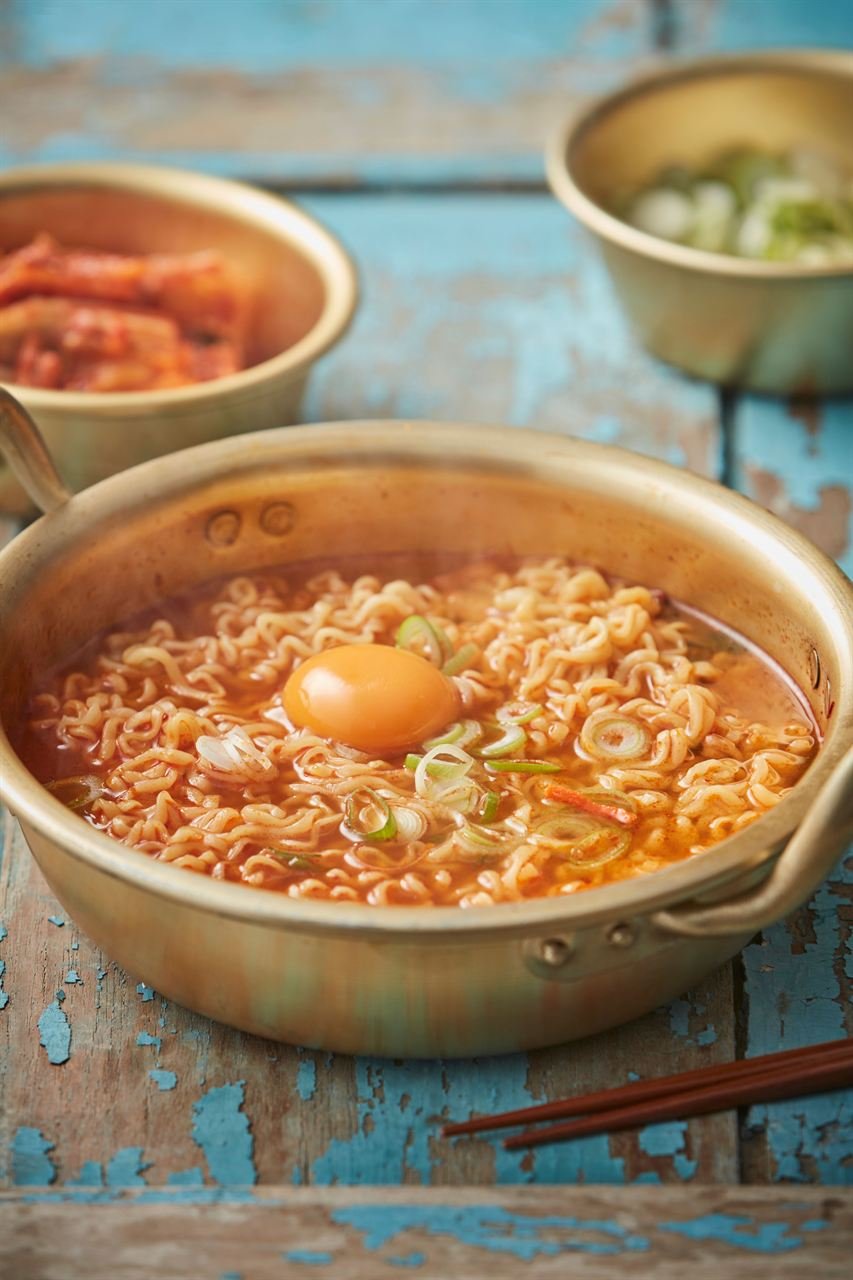
If you want the broth-thickening egg-drop effect from budae-jjigae instead of a whole egg, whisk it first and drizzle it in a thin stream over the last ten seconds, off the heat, stirring gently as it goes in. Pour a raw egg in unwhisked and you get big rubbery flakes instead of ribbons. That part actually is taste, not a mistake. Pick based on whether you want texture in the broth or a smoother one.
Frozen Mandu Dropped Straight Into the Broth Ruins the Soup
This is the part people get wrong the most. Frozen dumplings — Bibigo, CJ's other lines, the generic bags at any Asian grocery store — are built to be boiled or steamed on their own, in plain water. Ramyeon broth is neither plain nor abundant. A single packet already carries somewhere around 1,700–1,800 mg of sodium, and simmering four or five frozen dumplings in it for the five-plus minutes they need pulls starch off the wrapper while salt leaches out of the filling into broth that's already salty. It goes cloudy and thinner-tasting at the same time, which sounds contradictory until you've watched it happen in the pot.
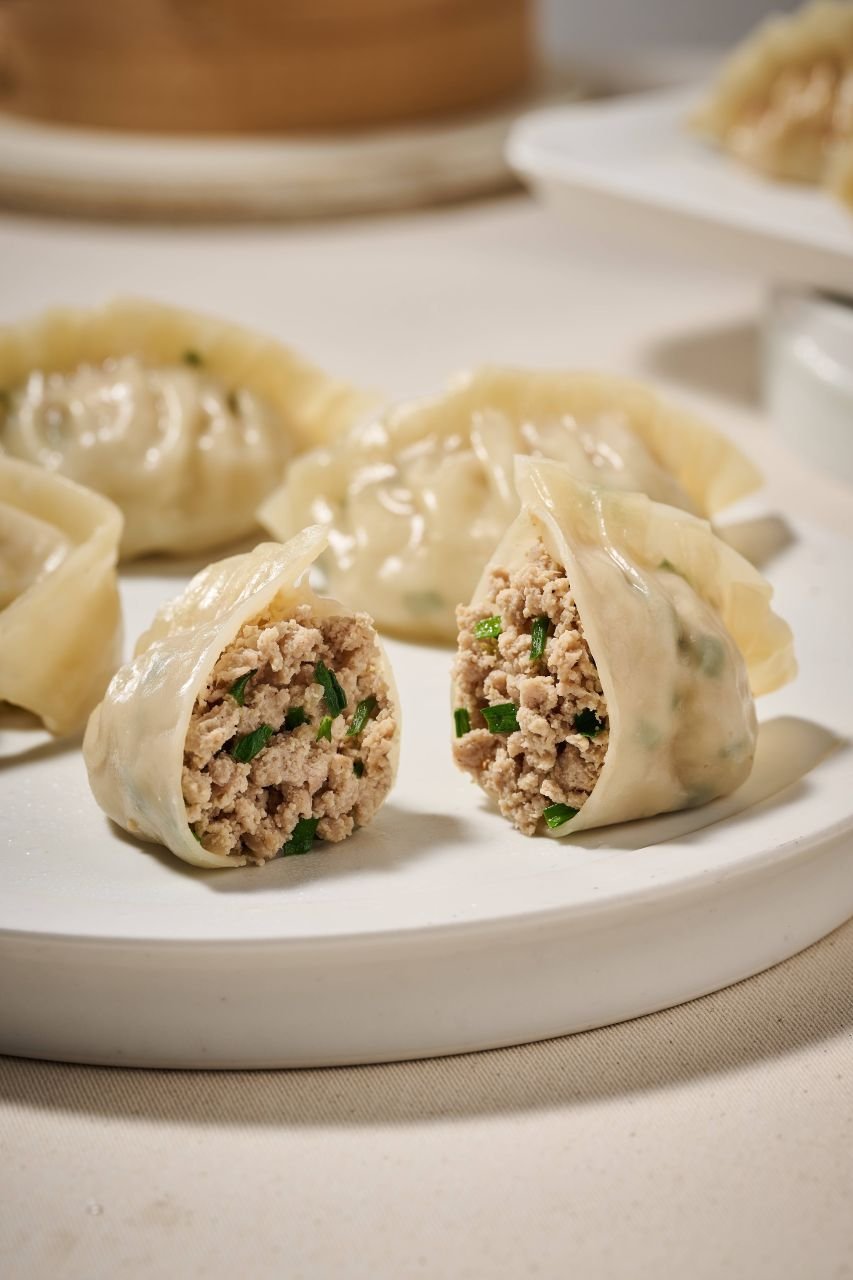
Steam the mandu separately instead. Balance two chopsticks across the rim of the pot, set the frozen dumplings on top, cover, and let them steam over the boiling broth for about five minutes while the noodles cook underneath. Drop them into the finished bowl for the last thirty seconds, just long enough to pick up the broth's flavor on the outside. The dumpling tastes like the broth without the broth losing anything to the dumpling.
Skip mandu entirely if there's no way to steam it separately. A thinned-out bowl of ramyeon is worse than a bowl without dumplings in it.
Sourcing the Add-Ins Outside Korea
H Mart covers all three add-ins in one trip where there's a branch nearby: deli cheese slices near the dairy case, Bibigo mandu in the frozen aisle, eggs at the front. Zion Market and 99 Ranch Market stock the same Bibigo bags even though they're pan-Asian rather than Korean-specific. Without an Asian grocery store nearby, Walmart, Target, and Costco all carry Bibigo mandu in the frozen section in most US markets, and Kraft Singles or Land O'Lakes American slices cover the cheese from any regular supermarket.
- Cheese: Kraft Singles or Land O'Lakes American slices work exactly like the Korean version. Skip pre-shredded mozzarella and cheddar.
- Mandu: Bibigo pork-and-vegetable or kimchi mandu is closest to what's used in Korea. Trader Joe's or Ling Ling gyoza works too, though the wrapper is thinner, so it needs about three minutes steaming instead of five, or it turns to mush.
Gyoza is a real substitute here, not an inferior one, as long as the timing changes with it.
Put all three together and the order matters more than the combination: cheese off the heat at the very end, egg cracked in with thirty seconds left, mandu steamed the whole time and dropped in last. Get that order wrong and you can pick the right ingredients and still end up with a bowl worse than the one you started with.
This is a running news series, not a one-off post — new stories go up twice a day, roughly 7am and 7pm Korea time.
More Korea coverage from our network: Hallyu Now · Korea Travel Planner · K-Sports Global · Seoul Skin Notes


Comments
Post a Comment