Kimchi Container Bulging? Why This Viral Jar Got Called a Grenade
A video of someone fermenting kimchi in a fully sealed glass jar has picked up more than 5.3 million views since late August, and the comment section isn't complimenting the technique. It's warning the poster to get that jar into something else before it turns into what one commenter called a "kimchi grenade."
The person behind the clip captioned it as "the appearance and sound of successfully made kimchi after 2.5 days," pointing out that store-bought kimchi doesn't fizz like that. They're right about the fizz. That's real, active fermentation happening. What the caption skipped over is that it was fizzing inside a jar with a tightly screwed metal lid and nowhere for the gas to go.
Korean outlets have now covered versions of this clip twice in about a week (Asiatoday on August 27, then Asiae on September 4, as the view count kept climbing), and both times the top replies say some version of the same thing: move it to a plastic container, or "if it stays sealed, it could become a kimchi grenade."

The Chemistry Nobody's Arguing About
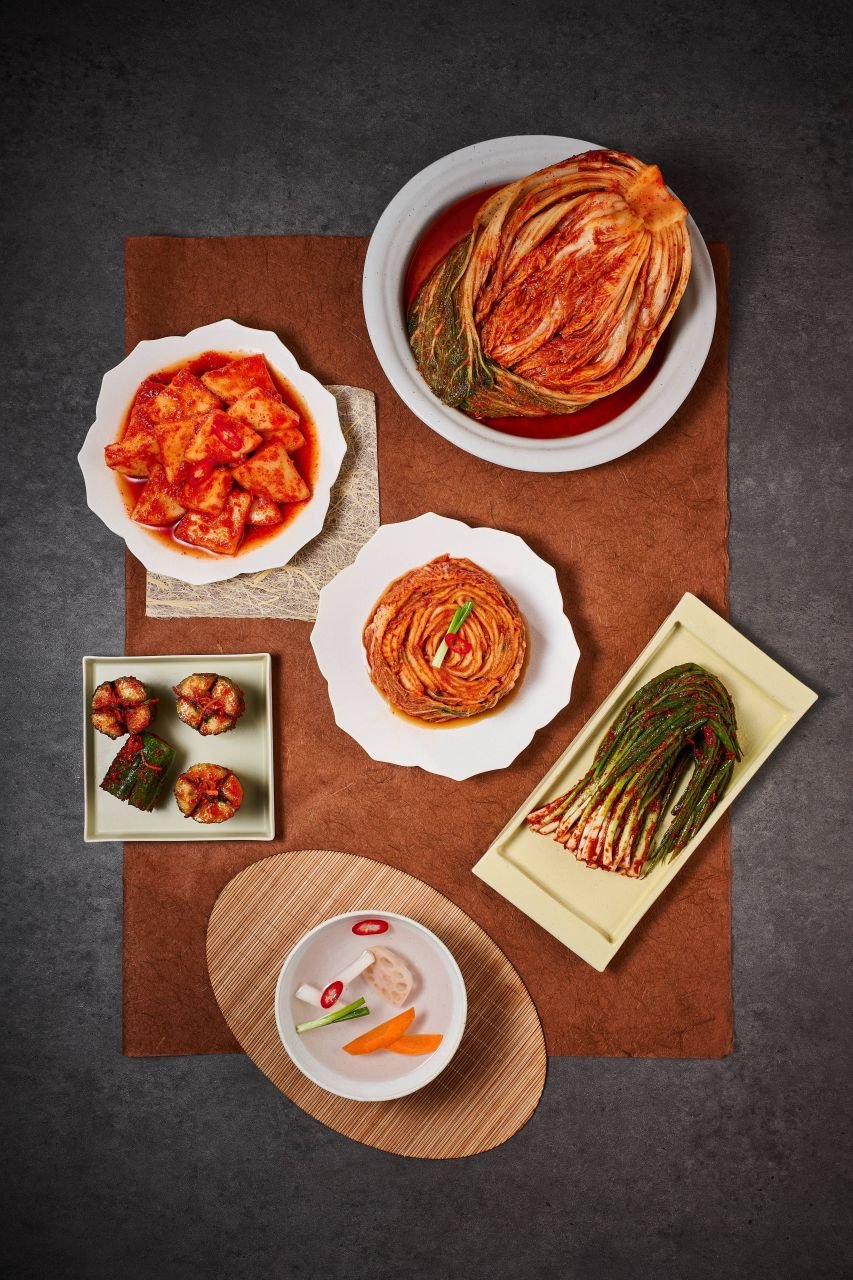
Kimchi ferments because lactic acid bacteria eat the natural sugars in cabbage and radish and give off carbon dioxide as a byproduct, the same basic reaction that makes sauerkraut, dill pickles, and kombucha fizz. That gas has to go somewhere. In an open container it just leaves. In a jar with a loose lid it seeps out slowly. In a jar closed as tightly as a canning jar, it keeps accumulating until the pressure exceeds what the glass and lid can hold, and something gives: usually the lid popping with enough force to fly across a counter, occasionally the jar itself cracking.
This isn't Korean netizens being dramatic. Every fermentation guide written for sauerkraut or pickles carries the identical warning about sealed jars; they just don't reach for the word "grenade" to say it.
So Why Doesn't This Happen in a Korean Kitchen?
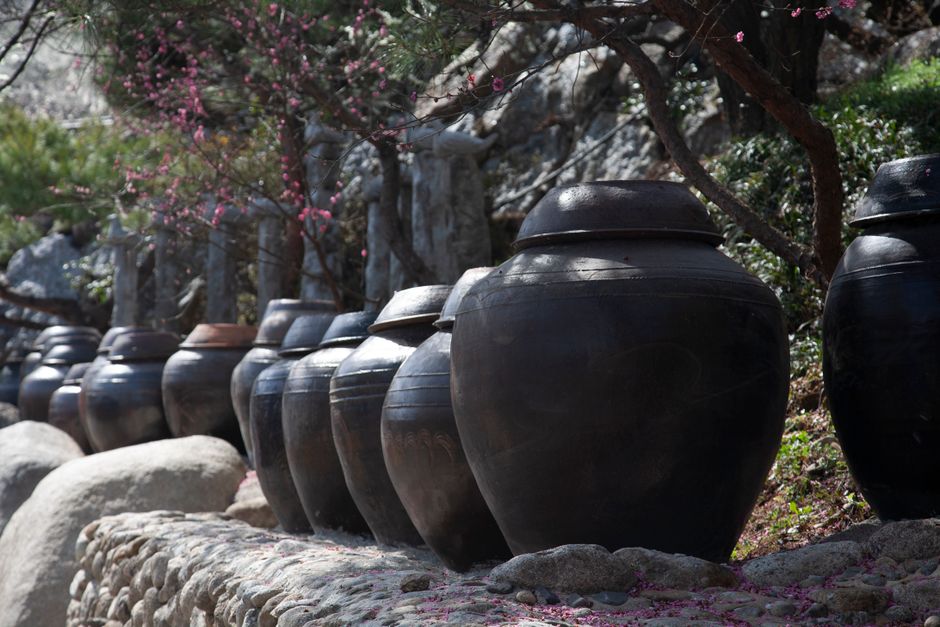
A few things stack together. The standard plastic kimchi containers sold across Korea use snap-lock lids designed to flex slightly under pressure rather than hold a hard seal. The lid gives a little before the container does. Most households also keep one appliance a lot of foreign kitchens don't: a dedicated kimchi refrigerator that holds the containers a couple of degrees above freezing, which slows the bacteria enough that gas production nearly stops. And the older method, burying crocks or storing kimchi in onggi (the traditional unglazed earthenware pots), sidesteps the whole issue because the clay itself is porous enough to let gas seep through the walls.
Fermenting Kimchi Without a Kimchi Fridge
None of this means you were wrong to reach for a glass jar. Plenty of good kimchi gets made in mason jars, especially if your kitchen doesn't have a proper kimchi tub sitting around.
The actual mistake is closing the jar the way you'd close a jar of jam.
A few setups that don't build dangerous pressure:
- A wide plastic deli container with the lid pressed on but not locked at every tab. This is the easiest fix, since most quart containers already default to a loose seal.
- A mason jar fitted with a silicone fermentation lid (sold for home pickling under names like Pickle Pipe, typically $20 to $34 for a 4-pack online, roughly $5 to $8 per lid) that vents gas through a one-way valve without needing to be checked daily.
- A plain mason jar with its metal lid rested on top but not screwed down, opened once or twice a day to let the hiss out.
What doesn't work is screwing a canning-style lid down tight and forgetting about it for a week, which is exactly the setup in the viral clip.
Leave a couple of inches of empty space at the top of whichever container you pick. The cabbage releases brine as it compresses, and that brine needs somewhere to go besides over the rim. At room temperature in the 68–72°F range, most home batches need venting once or twice a day for the first two to five days; a warm kitchen moves faster and needs more frequent checks, a cool one can go closer to a full day between them. Once the tang tastes right, move the container to the regular refrigerator. Cold slows the bacteria down enough that the pressure problem mostly disappears on its own.
For a first batch, the loose-lid plastic container is the better bet over the airlock lid. It's harder to get wrong and costs nothing extra; save the fermentation lid for once you're making kimchi often enough that daily venting gets old.
A little fizzing and a little brine leaking down the side is the ferment working, not a warning sign. A fuzzy colored patch is a different story and means that batch is done. The thin white film that sometimes forms on top (kahm yeast) is harmless and can just be skimmed off.
Finding the Ingredients Outside Korea
Napa cabbage is easier to track down than most first-time kimchi makers expect. It's sold as "wombok" in Australia, "won bok" in New Zealand, and simply "napa cabbage" or "Chinese cabbage" in most North American and European supermarkets now, not only at Asian grocers.
Gochugaru is the one ingredient with no honest substitute. It's sweeter and less sharp than cayenne, milder than standard chili powder, and its coarse flake does real texture work in the finished kimchi. Nothing on a regular spice aisle replicates all three at once. A Korean grocery chain or general Asian market is the first stop; if neither is nearby, Korean grocery sites and Amazon ship it in most countries. Genuinely stuck without it, Aleppo pepper works close to 1:1, though it leans more savory and less sweet. Fine for one batch, not something to build a routine on.
The clip is still circulating as of this week, and the replies are still telling this person to get a real container. They don't need a proper kimchi tub to fix it. They just need to stop closing the lid like it's a jar of pickles going on a shelf for a year.
This is a running news series, not a one-off post — new stories go up twice a day, roughly 7am and 7pm Korea time.
More Korea coverage from our network: Hallyu Now · Korea Travel Planner · K-Sports Global · Seoul Skin Notes


Comments
Post a Comment