Why Are Eggs Not Refrigerated in Korean Supermarkets?
The usual English answer when a visitor sees unchilled cartons in a Korean supermarket is that eggs in Asia are sold on the shelf because they are not washed, and it comes from a real difference between countries. An egg-safety explainer says US rules require washing, which "removes the natural coating of the egg, leaving the shell porous", while in Europe eggs "are not required to go through extensive washing", so the coating stays and room-temperature sale is considered safe. That page never mentions Korea, and Korean rules, read in Korean, do not follow the same logic.
I searched in English for "why are eggs not refrigerated in Korean supermarkets" on October 6, 2026 (KST). The results were general US-versus-the-world explainers, and none of the titles named a Korean regulation. The Korean side has just had two news cycles of its own, a government guideline on March 4, 2026 and a local news article on October 5, 2026, so there is something specific to read.
Are eggs in Korea supposed to be refrigerated?
Mostly yes, with one soft word in the rule. The Jeju-based outlet Jeju Transport Welfare News (제주교통복지신문, reporter Kim Hyeon-seok, October 5, 2026) summarizes the Ministry of Food and Drug Safety's food standards in two sentences. Table eggs should be stored and distributed at 0 to 15°C "가능한 한", meaning "where possible", and eggs that have been refrigerated "계속 냉장 상태로" stay refrigerated for the rest of the chain.
The article then says: "물로 세척한 달걀도 냉장 보존·유통 대상이다. 냉장 온도는 0~10℃다." In English, eggs washed with water are also subject to refrigerated storage and distribution, and the refrigeration range is 0 to 10°C. Washed eggs are not exempt from the cold chain.
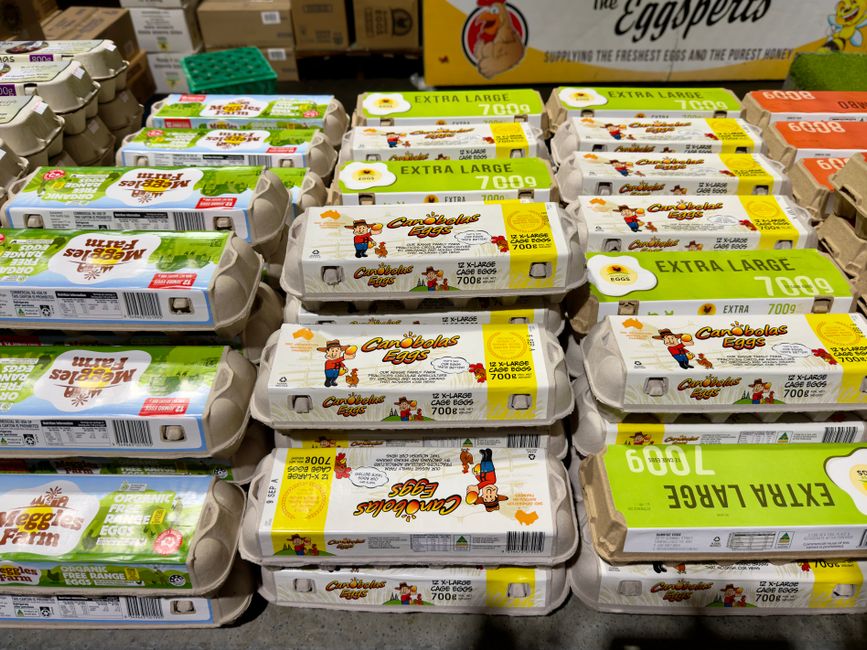
That leaves the shelf. By my reading, a store shelf at ordinary room temperature is probably above 15°C for much of the year, but neither source gives a store temperature, so I will not put a number on it. What the October 5 headline, "매장 달걀은 왜 상온일까?" ("Why are eggs in stores at room temperature?"), concludes is narrower. Eggs displayed at room temperature do not necessarily mean they were unwashed or unrefrigerated in distribution, and the article tells shoppers to check the packaging label.
Does washing an egg in Korea make it safe to leave out?
No, and the March 2026 guideline explains why Korean regulators care about the washing step at all. According to Nongmin Sinmun (농민신문, reporter Yun Eun-yeong, March 4, 2026), Korea recorded 21 Salmonella food-poisoning cases in 2020, 32 in 2021, 44 in 2022, 48 in 2023 and 58 in 2024. It adds that about 33% of Salmonella poisonings over the past five years were linked to eggs. Going from 21 to 58 is a rise of roughly 2.8 times (my arithmetic).
The guideline gives numbers for businesses that wash eggs. Per the article, a sodium hypochlorite wash is a 150 ppm solution for at least 30 seconds, and afterward the eggs are kept and distributed at 0 to 10°C. For ultraviolet treatment the figure is 0.7 UV intensity for at least 12 seconds. A separate write-up on FOODICON (reporter Lee Ji-hyun, March 4, 2026) adds that some businesses showed too little UV sterilizing effect, so the agency also wrote down how operators can measure UV intensity themselves.
In the guideline as reported, the washing step is followed by cold storage at 0 to 10°C.
The Jeju article also cites a Salmonella experiment on eggshells. Eggs kept at 4°C had bacterial growth suppressed by more than 99.9% up to day 35, while at 10 to 20°C the bacteria stayed at high levels. I could not open the original study, so this comes second-hand from that article, and it was an inoculation experiment rather than a measure of real supermarket eggs.
How should you store eggs after you buy them in Korea?
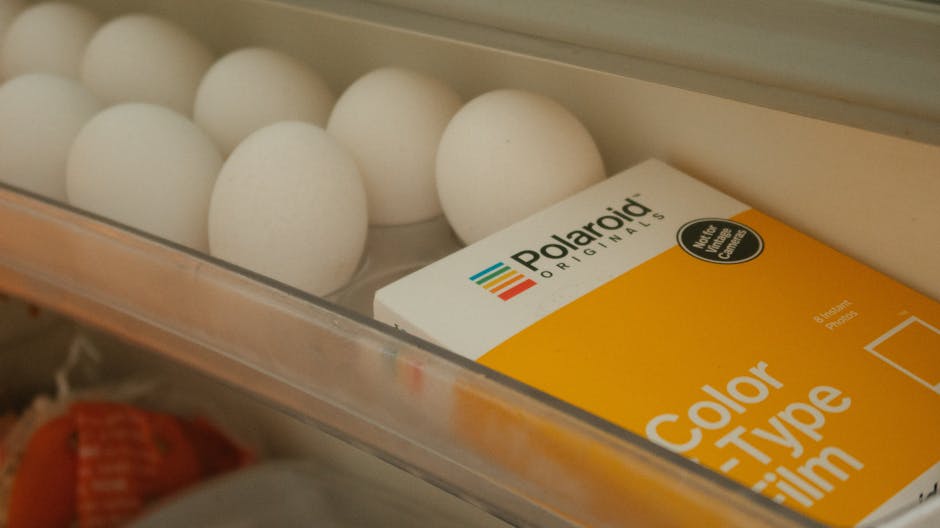
The March guideline's home advice, as Nongmin reports it, starts at "4℃ 이하 냉장 상태에서 보관", storage in the fridge at 4°C or below. At that temperature the Salmonella that may be on an egg falls by more than 99% from the first day of storage. Washing the shell with water in advance can damage the protective film on the surface, the article says, so pre-washing is best avoided.
On FOODICON, the consumer advice is to keep the eggs in a separate container, keep them toward the inside of the fridge, where the temperature changes less, at 4°C or below, and eat them after thorough heating. The cooking target in the Nongmin piece is an internal egg temperature of 75°C held for at least a minute.
There is also the date on the carton. A 2023 Nongmin Sinmun article reports that the ministry set a recommended distribution period of 45 days from the laying date, for washed eggs kept at 10°C or below, where the earlier shelf-life limit was 21 days. An egg that has already been cracked open and left over keeps 3 to 4 days at 5°C or below, per the same piece, which applies the liquid-egg standard from the food code.
The 45 days is tied to the 10°C condition in the article, so it is a figure for chilled eggs only. If you are buying a carton in Korea, take it home, keep it toward the inside of the fridge, and set the fridge at 4°C or below.
This is a running series, not a one-off post — a new post goes up every day, at around 9am Korea time.
About · Contact · Privacy Policy
Read next: Is Kimbap Really the Risk? What Korea's Salmonella Numbers Show · Korean Restaurant Table Sauce Rule: Not Banned, MFDS Says · How to Read the Date on Korean Food Packages After the 2023 Law Change


Comments
Post a Comment