Korean Soy Sauce Types: Is Acid-Hydrolyzed Being Banned?
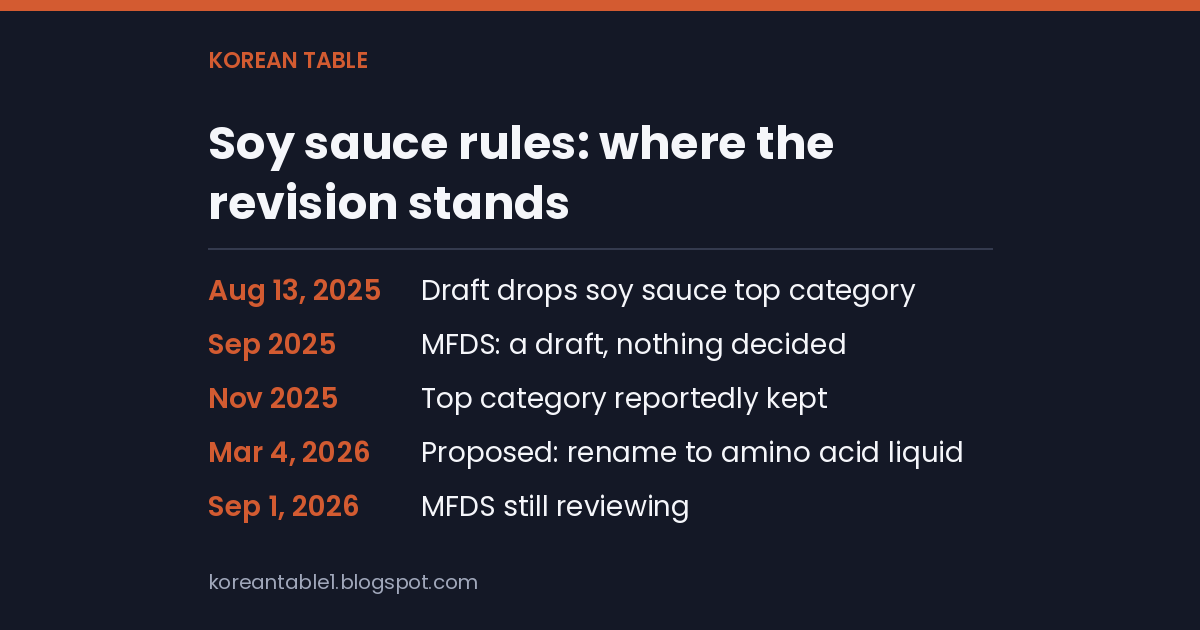
Nongmin News ran the headline "'산분해간장' 명칭 '아미노산액'으로…'장류'서 퇴출" on March 4, in a report on Korean soy sauce. Roughly translated, acid-hydrolyzed soy sauce gets renamed "amino acid liquid" and is expelled from the soy sauce category. The last word, 퇴출, sounds like a ban. The article by 지유리 describes a reclassification inside the Food Code (식품공전), the classification system that sorts every food in Korea into a type.
The product at issue, 산분해간장, is made by breaking down defatted soybeans with concentrated hydrochloric acid. Industry sources told a November 2025 Nongmin report that this takes a few days and involves no fermentation: "발효과정을 거치지 않는다".
Is Korea banning acid-hydrolyzed soy sauce?
The March report lists two changes. The enzyme-hydrolyzed type (효소분해간장) would be deleted because it has no recent domestic production or sales ("근래 국내 생산·판매 실적이 없는"). 산분해간장 would be renamed 아미노산액 and moved to the seasoning group's sauce category (조미식품류-소스류). The Ministry of Food and Drug Safety (MFDS, 식약처) is quoted saying the contents of the underlying report will not be confirmed as the revision plan as written: "보고서 내용이 그대로 개편안으로 확정되지 않는다". The article's own closing sentence, not an MFDS quote, says the revision is due to be finished at the end of the year ("연말 최종 완료될 예정이다").
The subtitle of that article adds two more items from the outline, vegetable oils merged into one 식물성유지 type and kimchi filed under 농산가공식품류. The November 2025 Nongmin report described a presentation proposing to cut the Food Code's 24 top-level categories, 102 mid-level categories and 291 food types to 16, 89 and 221.
As of October 10, the newest status I opened is a FoodToday report from September 1. MFDS is still reviewing. The direction is to take 산분해간장 out of 장류 and file it under sauces as an "amino acid liquid sauce" (아미노산액 소스), while 한식간장, 양조간장 and 혼합간장 stay in 장류. What these sources describe is a type renamed and moved in a proposal that is still under review, and none of them mentions a ban. I searched in Korean for an administrative notice (행정예고) on this change and none came up in the results, and the September piece gives no notice date either.
The first draft went further. Nongmin reported that an industry advisory meeting on August 13, 2025 discussed removing 장류 from the top-level categories, and the traditional soy sauce industry objected. Per FoodToday on September 11, 2025, the draft would also merge 한식간장 and 양조간장 into one "fermented soy sauce" (발효간장) type and cut the five soy sauce types to three. An agriculture ministry (농식품부) official is quoted by Herald Economy saying "간장 분류 통합에 강력히 반대한다", and MFDS said at the end of September that a draft existed but nothing was decided. By November, Nongmin reported, the authorities were keeping 장류 as a top-level category.
Acid-hydrolyzed soy sauce is also still being inspected under the current rules. On July 31, MFDS announced that Bragg Liquid Aminos, made in the United States, had 3-MCPD, a contaminant, at 0.08 mg/kg against a domestic limit of 0.02 mg/kg or less, and had the product recalled. Per FoodToday, the product is classed as 산분해간장, its use-by date is September 18, 2027, and 624 kg were imported.
Is mixed soy sauce mostly acid-hydrolyzed?
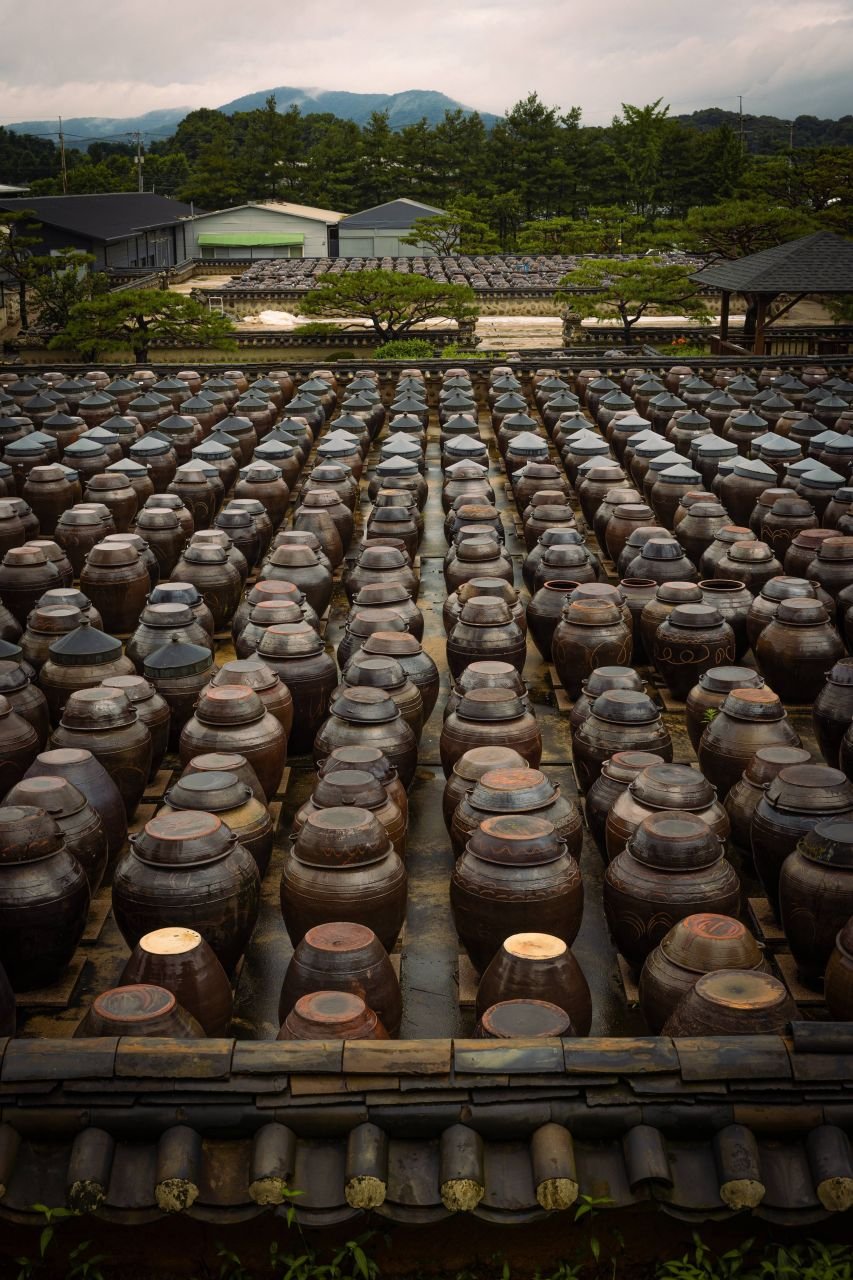
Per Herald Economy, Korean soy sauce falls into five Food Code types. 한식간장 is made with meju and salt and aged naturally ("메주와 소금을 사용해 자연 숙성한"). 양조간장 is soy mixed with wheat or barley and fermented with a koji starter (종국균). 산분해간장 is the chemically processed type above, and 효소분해간장 is soy protein broken down with enzymes. 혼합간장, mixed soy sauce, is acid-hydrolyzed soy sauce blended into 한식간장 or 양조간장 ("이런 산분해 간장을 한식간장·양조간장에 섞은 것이 혼합간장이다").
How much of a mixed bottle is acid-hydrolyzed? An opposition coalition, the 장류 식품공전 개악 저지를 위한 대책위원회, says it is 70 to 93 percent: "시판 혼합간장에 산분해간장이 70∼93% 사용되는데". That is an advocacy group's claim. Toyo Economy (토요경제) gives two bottle-level figures on May 12. It reports that the ingredient line of Mongo's 진 reads "양조간장 17%, 산분해간장 83%", and that Sempio's 진간장 금F3 is 혼합양조간장 30% and 산분해간장 70%. Industry sources told the paper that a product can be labeled mixed even when its brewed share is low. On the front, both bottles carry 진간장 in large type.

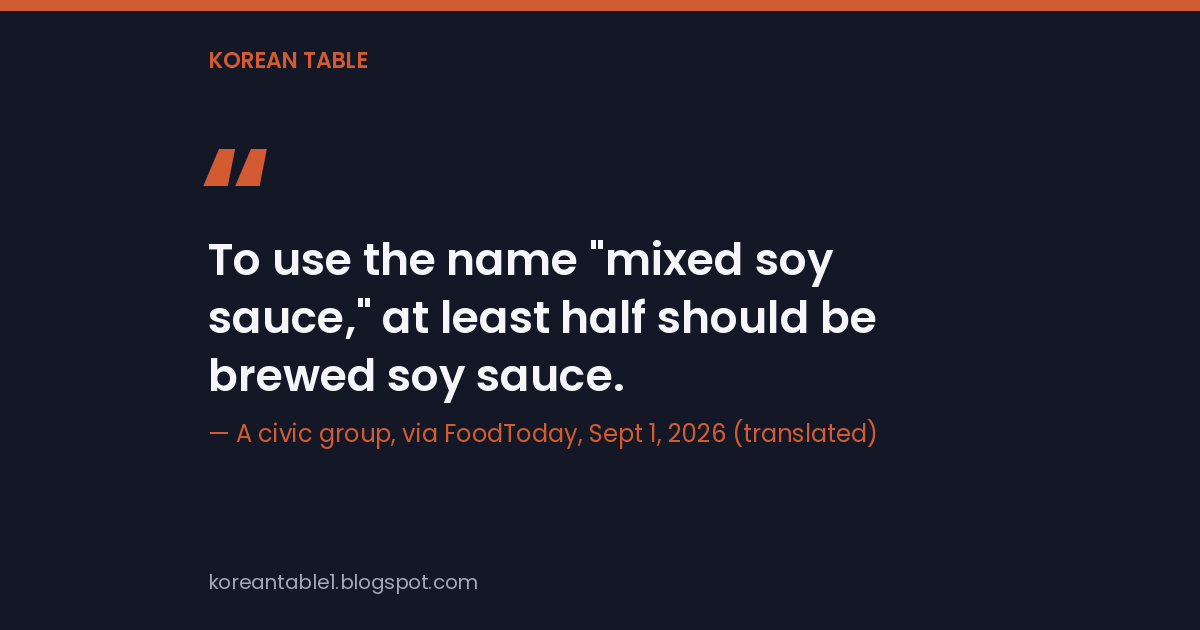
On the name itself, the civic group 소비자주권시민회의 wants at least half brewed (FoodToday, September 1). A soy sauce industry official answered that there is no clear basis for calling a product something other than soy sauce just because its acid-hydrolyzed share is high: "산분해간장 비율이 높다는 이유만으로 간장이 아니라고 볼 명확한 근거가 부족하다".
The one lab test I opened is from 2016. The Korea Consumer Agency tested 16 soy sauces from nine makers, according to a government press release reposted on korea.kr. It ran a levulinic acid reaction (레불린산 반응) on the 11 products that were not mixed, to look for acid-hydrolyzed soy sauce, and all 11 were negative: "양조 · 한식 간장에 산분해간장 혼입은 없었다". The agency also recommended fixes to KS certification marking on two products because it could confuse consumers about the food type. In 2025 an honorary professor at Chungnam National University, 오만진, was quoted by Nongmin as saying "(시판되는) 양조간장은 대부분 산분해간장이 80∼90%가량 섞여 있다". Nongmin prints no measurement behind that figure. The lab test dates from 2016 and the professor's statement from 2025.
The 2016 test also averaged sodium and price per 100 ml by type.
| Type (2016 test) | Sodium, mg per 100 ml | Price, won per 100 ml |
|---|---|---|
| Low-salt brewed (염도 낮춘 양조간장) | 4,502 | 690 |
| Regular brewed (일반 양조간장) | 5,819 | 771 |
| Mixed (혼합간장) | 6,279 | 381 |
| Korean-style (한식간장) | 8,585 | 569 |
Per 100 ml, the Korean-style type averaged about 1.9 times the sodium of the low-salt brewed type, and mixed soy sauce cost about half as much as regular brewed, by my arithmetic from the table. These are 2016 averages over 16 products, so they describe the types as tested that year and not the bottles on shelves now.
How do I tell which type is in my bottle?
If you are holding a bottle of 진간장, read the ingredient line (원재료명) first, because that is where Toyo Economy found the brewed and acid-hydrolyzed percentages on Mongo's 진. The Food Safety Information Service (식품안전정보원) is quoted in the March report saying the Food Code is separate from labeling and that labeling does not change: "식품표시는 변동되지 않아".
This is a running series, not a one-off post — a new post goes up every day, at around 9am Korea time.
About · Contact · Privacy Policy
Read next: Is Zero Sugar Soda Really Sugar-Free? Korean Lab Data · Korean Restaurant Table Sauce Rule: Not Banned, MFDS Says · Korean Laver (Gim) Iodine: 100 mg/kg vs 2,432 for Kelp


Comments
Post a Comment