Hanwoo 1++ Meaning: Why One Guide Still Says Only 8 and 9
On a Hanwoo label the 1++ grade comes with a marbling number printed beside it, 7, 8 or 9. An English guide from Zuzu Korea, dated April 11, 2026, gives 1++ as "No. 8 or 9" and calls it the "top ~10% of Hanwoo". When I opened it on October 11 (KST), the table still read that way. The first half is the rule from before December 2019, and the 10% matches the 2017 share.
Is Hanwoo 1++ Only Number 8 and 9?
Not since December 2019. In a policy news item dated December 5, 2019, the Ministry of Agriculture, Food and Rural Affairs (MAFRA) wrote that the 1++ standard moved "종전 근내지방도 8, 9번에서 7, 8, 9번으로", from marbling scores (근내지방도) 8 and 9 to 7, 8 and 9. The same item says the new label format applied from December 1, with a six-month grace period ("6개월간의 계도기간") so butcher shops could update their scale software.
A September 2019 Chuksan News report on the then-proposed rule described the format as "기존 1++등급으로 육질표시가 되던 것이 1++(7), 1++(8), 1++(9) 등으로 바뀐다". A bare 1++ on a label becomes 1++(7), 1++(8) or 1++(9).
English guides split on this. KUT Seoul's guide, dated May 20, 2026, writes that "Since December 2019, grade 1++ spans marbling scores 7, 8 and 9". The April guide above prints the older mapping.
Number 7 did not come in whole. Farminsight reported in April 2020 that the reform put "7번(No.7)의 상위등급 일부", a part of the upper range of No. 7, into 1++.
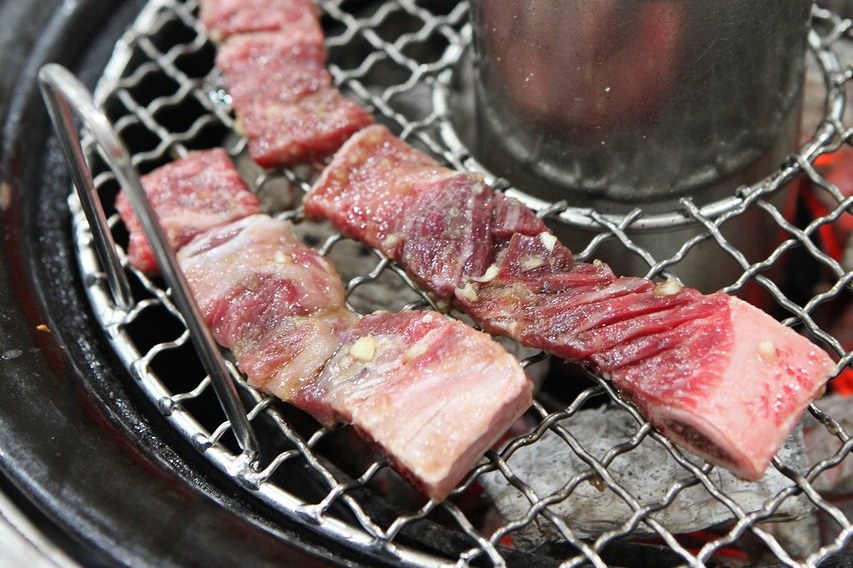
Is 1++ Still the Top 10% of Hanwoo?
No. Farminsight's September 11, 2026 report, citing the grading agency's statistics (축산물품질평가원), puts the 1++ share of all Hanwoo at about 14.9% in 2019 and 31.0% for January to July 2026. Over those years grade 1+ fell from 28.7% to 25.3% and grade 1 from 30.3% to 23.4%. The April 2020 report supplies 2017 and 2018.
| Year | Hanwoo graded 1++ |
|---|---|
| 2017 | 10.1% |
| 2018 | 12.2% |
| 2019 | 14.9% |
| 2021 | 23.8% |
| 2025 | 28.9% |
| Jan–Jul 2026 | 31.0% |
The Zuzu guide's "approximately 10.1%" matches the 2017 row, though the guide names no year. Wagyu Compared lists 1++ as 7 to 9 and gives "~12%". The 2018 share was 12.2%.
When MAFRA announced the change in its November 26, 2019 press release, it expected the share to rise from 12.2% to 20.1% ("개편 후 20.1%로 늘어날 것으로 예상"), and expected the larger supply to lower 1++ prices ("가격 하락 효과"). The 2021 figure of 23.8% is above that forecast. With about three in ten Hanwoo graded 1++ so far in 2026, the number inside the brackets is what separates cuts now.
The Zuzu guide also puts No. 9 at "approximately 1% of total national production", citing "LSES slaughter data" without a year. The Herald Business piece above gives a different figure for the same number: it says No. 9 is only 7% of beef slaughter volume ("소고기 도축 물량 중 7%밖에"), with no source. The two do not agree, and I can't tell which is closer. I searched in Korean for the agency's own per-number share (근내지방도 7번 8번 9번 비율, plus the grading agency's name) and found no agency statistics, only all-1++ figures. I did not open the agency's own statistics pages, so a breakdown may exist there.
Does a Higher Number Always Mean Better Beef?
The number reports marbling. The quality grade (육질등급) itself is set from five items: marbling, meat color, fat color, texture and maturity. Per the Hanwoo Board's grading page, each item is judged separately and the lowest grade becomes the final one ("가장 낮은 등급을 최종등급으로 판정합니다"), and only 1++ shows the extra marbling number.
MAFRA's 2019 press release marks that lowest-grade rule as one of the changes. It says grading had been centered on marbling and now also weighs texture, meat color and fat color, in response to a consumer trend that puts weight on health. Read literally, a 1++(7) passed every item at the 1++ level and the 9 adds only a higher marbling score (my reading).
How much higher? Herald Business wrote in 2021 that No. 9 means fat content of 19% or more, No. 8 means 17% or more and No. 7 means 15.6% or more, and that the 1++ cutoff had been lowered from 17% to 15.6%. The floors of the 7 and the 9 are 3.4 percentage points apart.
The letter after the grade measures something else. Per the government's easy-law page, written as of September 15, 2026, the yield grade (육량등급) is set from "도체중량, 등지방두께 및 등심단면적", meaning carcass weight, back-fat thickness and ribeye area, and 1++A and 2B are examples of the two grades written together. None of those measurements is marbling.
Price is where the number shows up in the market. MAFRA's December 2019 notice says the grading agency publishes "근내지방도 7, 8, 9번별 일일도매가격", a daily wholesale price for each of the three numbers.
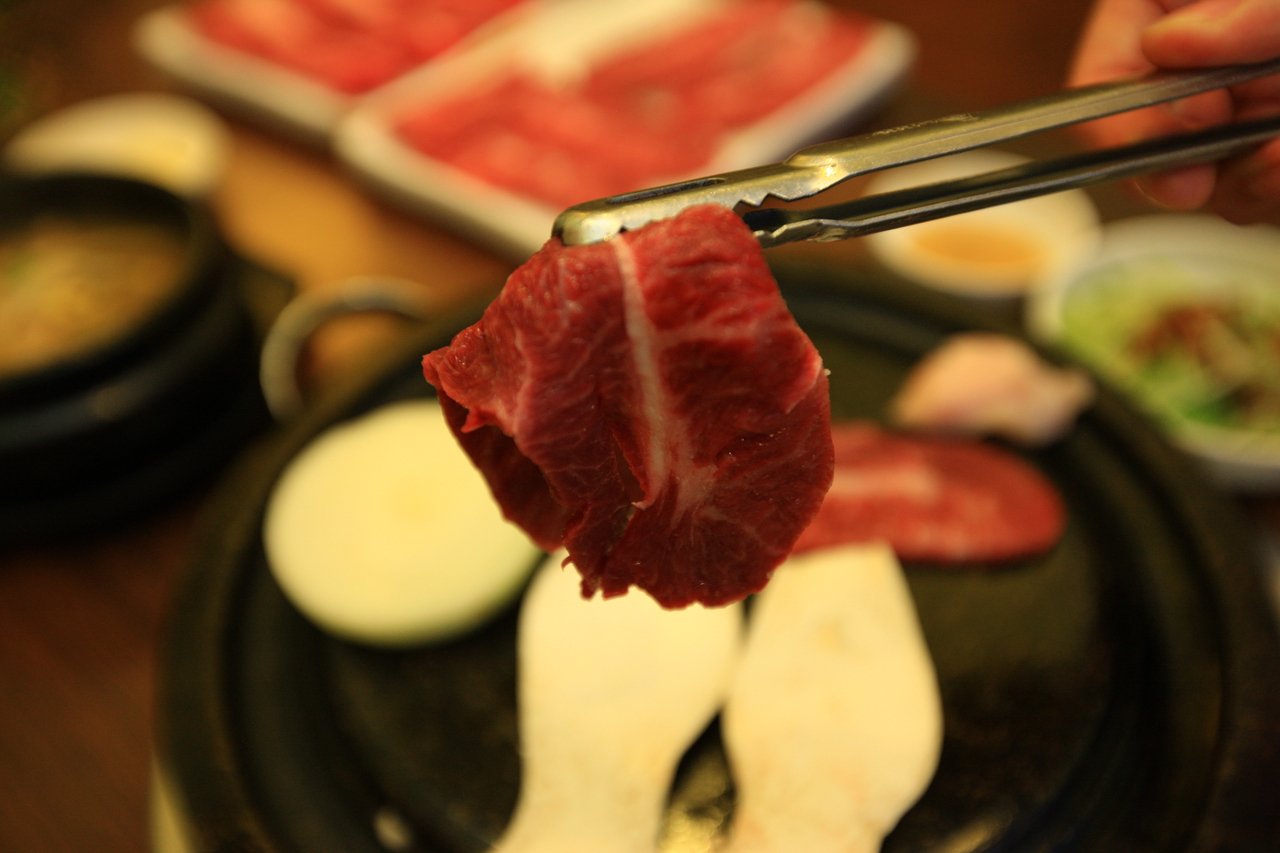
When a shop or menu lists only 1++, ask for the number (근내지방도 몇 번이에요?) and compare the price per 100 g across the 7, 8 and 9 cuts if it sells more than one.
This is a running series, not a one-off post — a new post goes up every day, at around 9am Korea time.
About · Contact · Privacy Policy
Read next: Korean Restaurant Table Sauce Rule: Not Banned, MFDS Says · Ssamjang vs Gochujang: The Korean BBQ Sauce Mix-Up · Korean BBQ Etiquette: Who Grills, When to Flip, What Not to Do


Comments
Post a Comment