Does Korean Sagol Bone Broth Have Calcium? Numbers vs Milk
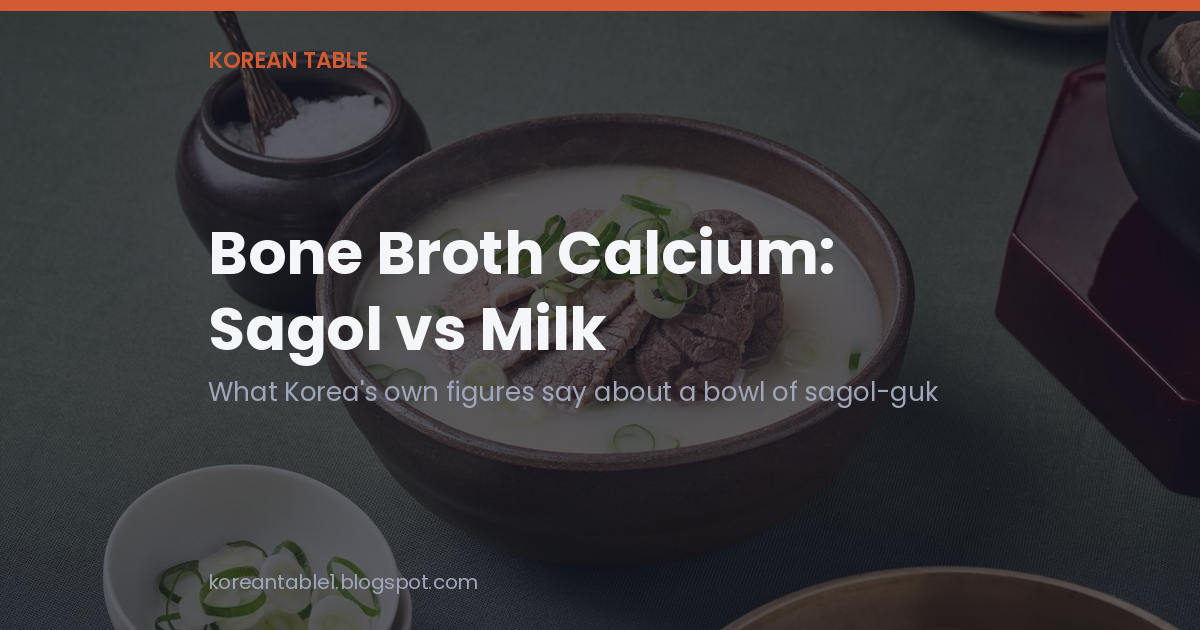
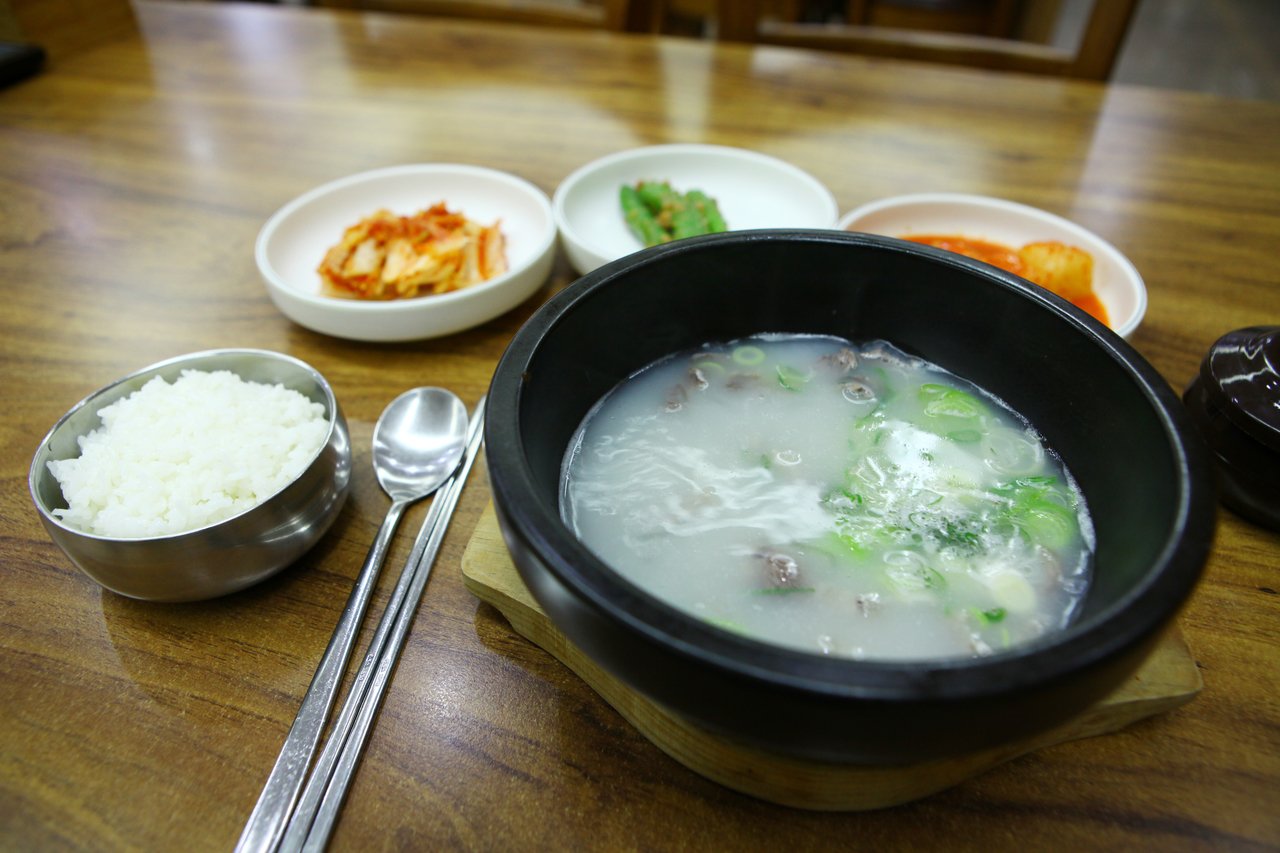
Sagol-guk (사골국) is the beef-bone soup Koreans simmer for hours, and a common belief says a bowl of it is good for your bones. Two Korean health outlets have taken that belief apart this year. Hidoc ran "사골국 먹으면 뼈 튼튼? 착각입니다" ("Sagol soup makes bones strong? That's a misconception") on January 28, and Segye Ilbo ran "골다공증에 최고라더니?" ("Supposedly the best for osteoporosis?") on March 9. I read both, plus a government press release that lists calcium among the soup's contents, to see what the bone broth calcium numbers are.
What the 2013 government release said
In February 2013 the Rural Development Administration (RDA, 농촌진흥청) published a press release headlined "사골국 열량은 낮고 콜라겐과 무기물 고루 함유", which roughly means sagol soup is low in calories and holds collagen and minerals. It was written to check a different worry. Its opening sentence says sagol had a reputation for high calories, and the RDA measured it at about 47 kcal per 100 ml once the fat was skimmed.
The calcium line is one clause in a list: the soup contains "칼슘, 마그네슘, 칼륨, 나트륨 및 철분 등 각종 무기물이 고루 함유돼 있는 것으로 나타났다". That is calcium, magnesium, potassium, sodium and iron, all present. The text never gives a calcium amount per bowl and never compares calcium with milk. Its only milk comparison is on calories, saying the soup is as low as low-fat milk ("저지방우유 수준").
The number is in the attached tables. Table 4 lists calcium at 21.15 mg per liter for the second-extraction broth, next to potassium at 15.04 and sodium at 43.87. By my arithmetic that is about 5 mg in the 250 ml bowl the release uses for its collagen figures.
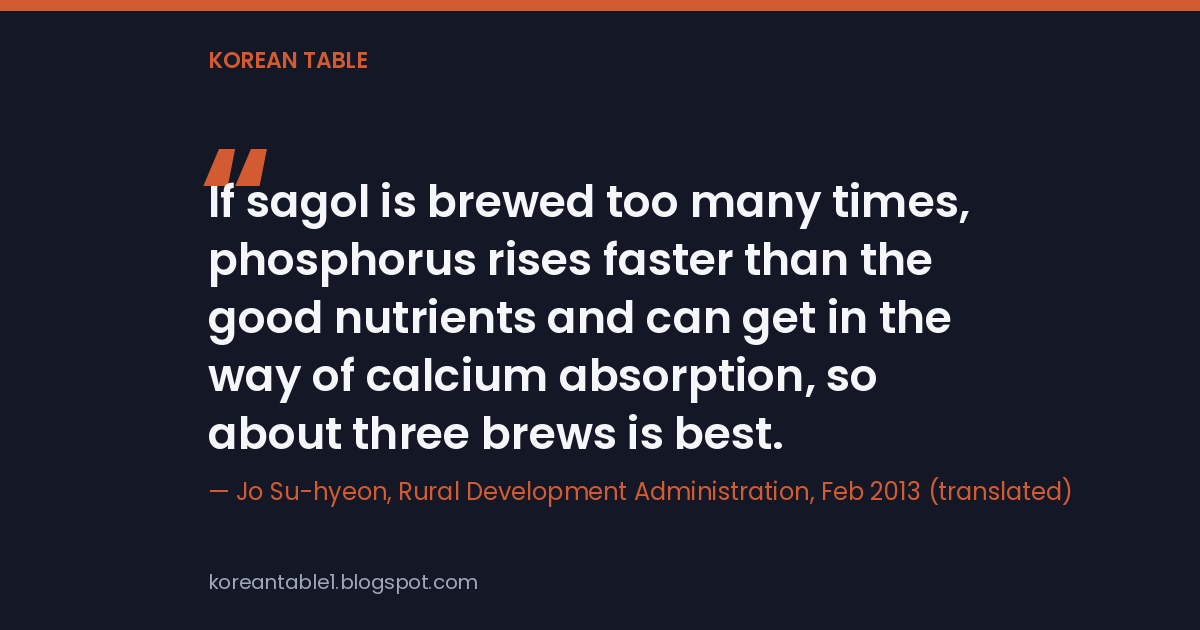
The release also carries a warning from researcher Jo Su-hyeon (조수현) of the National Institute of Animal Science. Brewing the bones too many times raises the phosphorus, which can interfere with calcium absorption, so about three brews is the recommendation. It adds that after four or more boilings the calcium content drops sharply.
Three sources, three numbers
The 2026 articles give bigger figures than the RDA table, and they do not agree with each other either.
| Source | Bowl size | Calcium as reported | Per 100 ml (my arithmetic) |
|---|---|---|---|
| RDA release, Feb 2013 | 1 liter | 21.15 mg | 2.1 mg |
| Hidoc, Jan 28, 2026 | 400 ml | 14 mg | 3.5 mg |
| Segye Ilbo, Mar 9, 2026 | about 240 ml cup | 10 to 15 mg | 4.2 to 6.3 mg |
Hidoc does not say who measured its 14 mg. Its quoted expert is dietitian Lee Jeong-ju (이정주) of Yongin Severance Hospital, who calls sagol soup "뼈 건강을 위한 좋은 급원 식품이 아니다" (not a good source food for bone health). Ardent News repeated the same figures two days later and credits them to MFDS (식품의약품안전처) test results. In the Segye text I opened, no lab or database is named for the 10 to 15 mg.
The highest and lowest figures differ by about a factor of three. All of them are small.
The 1/14 headline compares two different volumes
Hidoc sets 14 mg per 400 ml bowl against 200 mg for one carton of milk and calls the soup "1/14 level". Ardent's version of the sentence names the carton as 200 ml, so the comparison is a 400 ml bowl against half that much milk. Per 100 ml, 14 mg in 400 ml is 3.5 mg, against 100 mg for the milk, which makes the gap closer to 1/29. Using the RDA and Segye numbers instead, milk at 100 mg per 100 ml is 16 to 47 times higher (my arithmetic).
Segye's "50 bowls" is a fair round number. Fifty cups at 10 to 15 mg adds up to 500 to 750 mg (my arithmetic), which is the size of a day's need. The 2025 Korean dietary reference intakes summary, published by the Ministry of Health and Welfare, lists one milk serving at 236 mg, a little above the 200 mg in the 1/14 line.
Against the daily target
The 2025 Dietary Reference Intakes for Koreans (summary edition) set the recommended calcium intake at 800 mg a day for men aged 19 and over. For women it is 650 mg at ages 19 to 49 and 750 mg from 50 up. Against 650 mg, a 5 mg bowl is under 1 percent and a 14 mg bowl is about 2 percent. Segye reaches the same range, 1 to 2 percent of 700 to 1,000 mg.
The same document says the Korean calcium sources that matter are milk, anchovies, napa cabbage kimchi, cheese, yogurt, white bread and eggs. For calcium per serving it lists anchovies at 373 mg and milk at 236 mg. Its analysis of the 2013 to 2022 national health survey puts median intake at 440.4 mg a day, with 72.4 percent of people aged 1 and over below the average requirement.
Where the belief holds up
The calorie claim survives. A later RDA release from January 2018 puts the soup at about 47 kcal per 100 ml against 61 kcal for milk, so a skimmed bowl of sagol is lighter than a glass of milk.
The calcium claim does not. Nothing in these three sources shows a bowl contributing more than a couple of percent of a day's need, and the RDA's own researcher warned that repeated brewing can work against absorption.
Checking a specific bowl
The three figures above do not say which broth they measured, apart from the RDA's second extraction, so a boxed or restaurant sagol broth can differ. For a packaged one, the calcium line on the nutrition label times your bowl size is the number that applies to you. For a home-brewed pot, the MFDS food nutrient database (K-FIND) is the place to look up sagol-guk by name. When I opened it on October 5 (KST) it loaded as a search form, and I did not pull a sagol entry out of it, so every figure in this post comes from the press releases and the two news articles.

This is a running series, not a one-off post — a new post goes up every day, at around 9am Korea time.
About · Contact · Privacy Policy
Read next: Is Zero Sugar Soda Really Sugar-Free? Korean Lab Data · Korean Restaurant Table Sauce Rule: Not Banned, MFDS Says · Korean Laver (Gim) Iodine: 100 mg/kg vs 2,432 for Kelp


Comments
Post a Comment