How Long Does Banchan Last? What Survives a Week in the Fridge
Half of a typical Sunday banchan batch is built to outlast the week, and the other half is already turning by the time you get to Wednesday's rice bowl.
That split doesn't show up on any recipe card. Fermented and soy-braised side dishes get better with a few days in the fridge. Anything raw and freshly dressed (sliced cucumber, blanched greens) starts working against you almost as soon as the lid goes on. Batch-cooking four or five banchan in one afternoon and expecting them to age at the same rate is the mistake behind most "why does my meal prep taste off by midweek" moments.
The Banchan Built to Outlast the Week
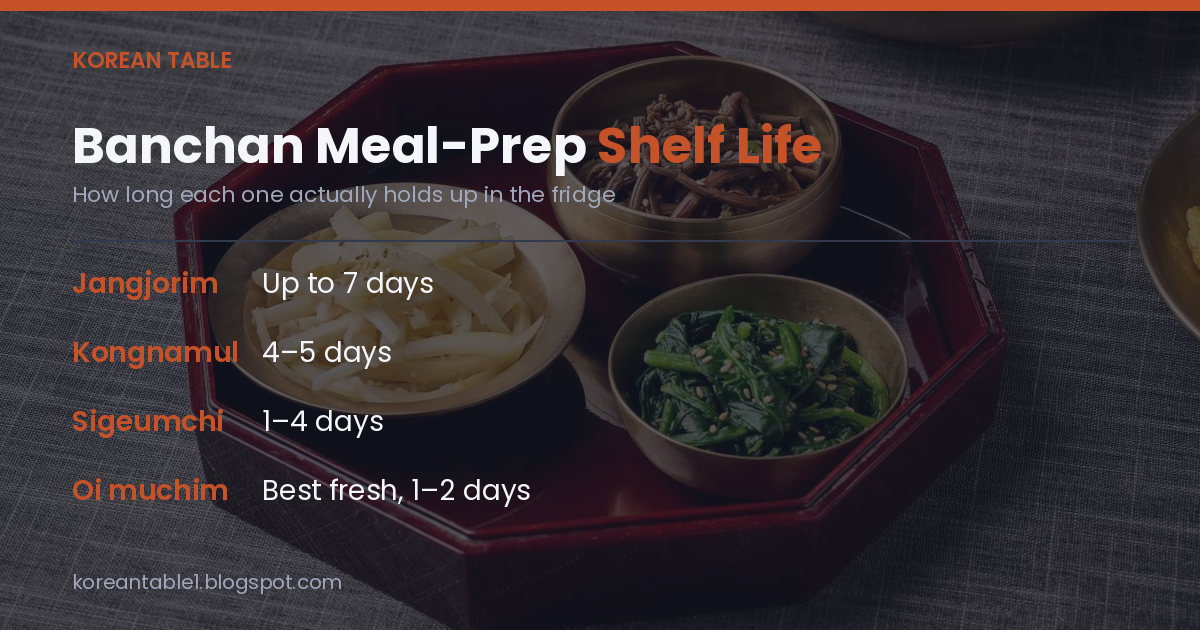
Jangjorim, soy-braised beef usually simmered with hard-boiled eggs in the same pot, is the one to make in real bulk without a second thought. It's one of the most common make-ahead banchan in Korean home kitchens for exactly this reason, not because it's easy (the braise takes about an hour, start to finish) but because it's one of the few dishes where waiting actively improves it. The beef tastes better on day three than day one, too, since it keeps pulling in flavor the longer it sits in that liquid. Korean Bapsang's recipe puts 5 tablespoons of soy sauce and 2 tablespoons of soup soy sauce into the braising liquid, simmers the beef about 30 minutes, then another 20 once the sauce goes in. The write-up is blunt about what that salt-and-soy concentration buys you: "keep it refrigerated in an airtight container. It will keep well up to 7 days."
Kimchi and kkakdugi, the cubed radish version, belong in the same bracket for an obvious reason. They're fermented on purpose, so a week in the fridge barely registers. That's the whole design of the dish, by intention rather than accident.

Does Kongnamul Muchim Really Last Five Days?
Soybean sprout salad sits in an odd middle spot. It's blanched and dressed rather than fermented, so it has none of jangjorim's built-in preservative. Beyond Kimchee's own recipe says: "Store it in an airtight container, and it will stay fresh for 4–5 days." That's longer than any raw-vegetable banchan and shorter than anything soy-braised, and the reason is texture rather than safety margin: sprouts hold their bite under sesame oil and salt far better than a leafy green does.

The Two That Don't Last, No Matter What You Do
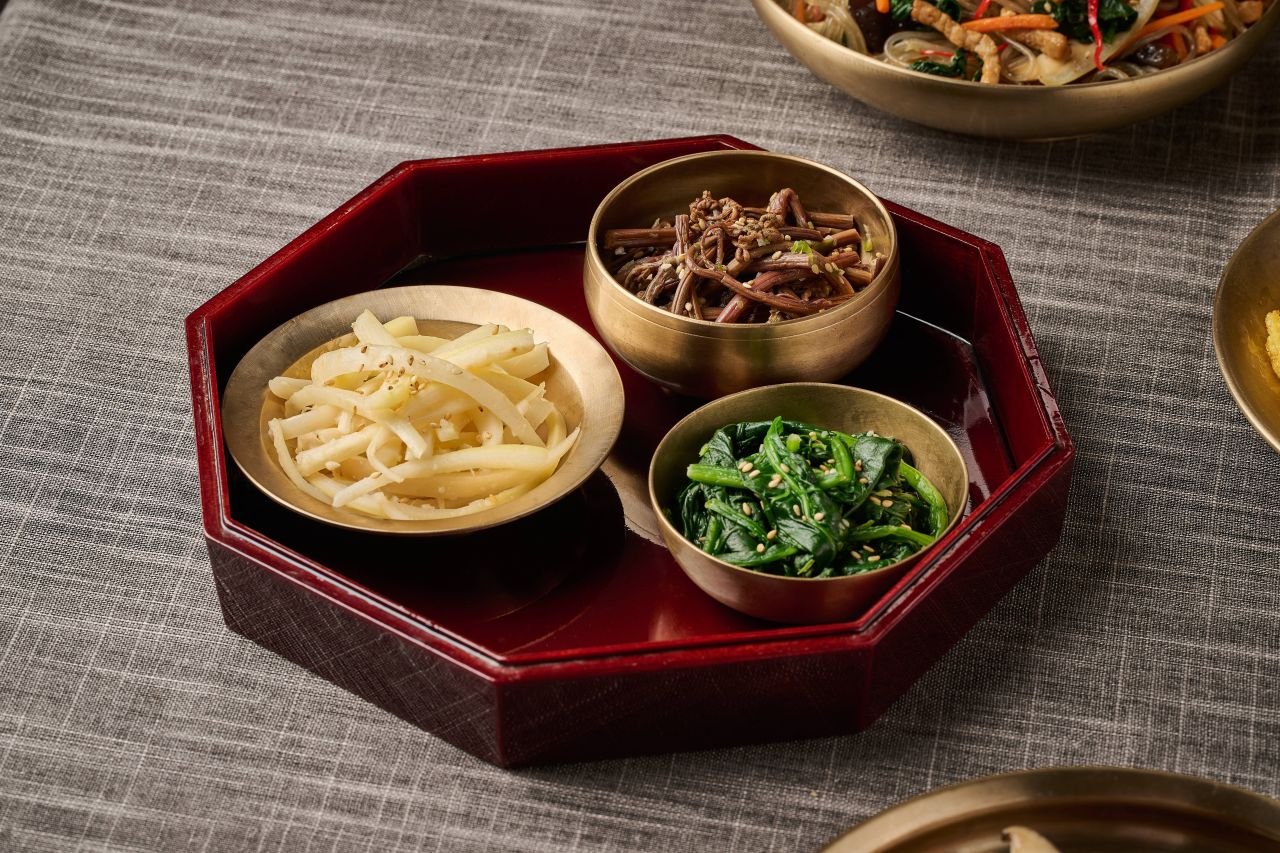
Sigeumchi namul, the blanched spinach side dish seasoned with about a teaspoon each of minced garlic and sesame oil plus a couple teaspoons of soup soy sauce per bundle (per Korean Bapsang's recipe), is where the sources genuinely disagree. Nom Nom Paleo tells readers to store leftovers "in an airtight container in the fridge for up to 4 days." StateFoodSafety is more conservative about the category spinach falls into: cooked vegetables generally hold three to four days, but "leafy greens should be consumed within one to three days" because of how much water they hold.
Neither source is exactly wrong. One is optimizing for taste, the other for safety margin. Split the difference by starting to eat it down on day two rather than waiting until day four.
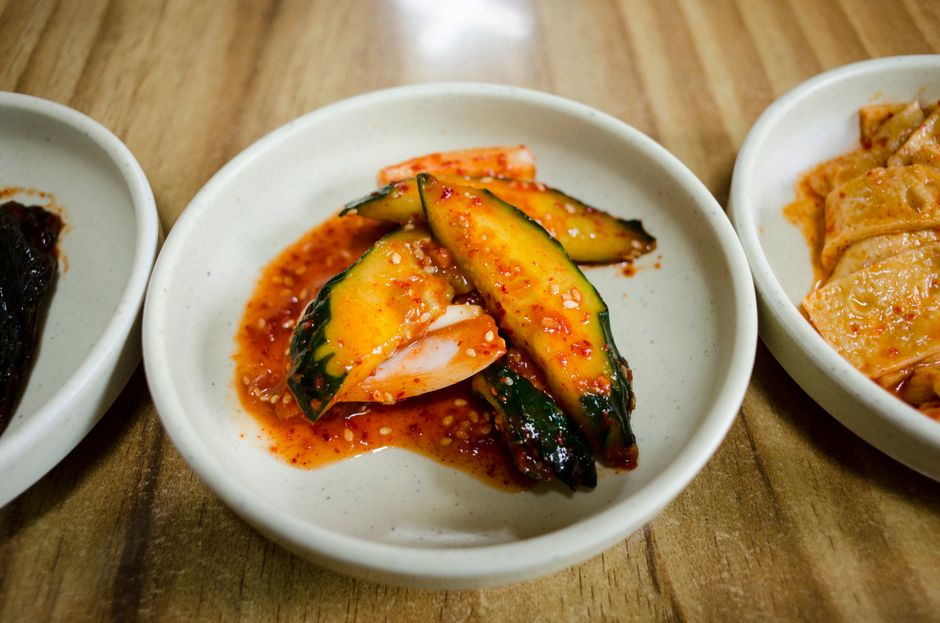
Oi muchim, the spicy cucumber salad, is the one you've probably ruined once without knowing why. Kimchimari's notes say you can refrigerate it for a few days, but the salted cucumber keeps releasing water the entire time it sits. Pull the container out on day three and you'll likely find the crisp spears from Sunday sitting in a puddle of their own pink-orange liquid.

What Freezing Can and Can't Save
Not for the leafy ones. Carmy, whose own sigeumchi namul recipe also lists "up to 4 days" for fridge storage, is upfront that she hasn't tested freezing this particular dish, since a side dish lives or dies on shape and texture in a way a soup doesn't. That kind of hesitation from someone who cooks the dish regularly is worth taking seriously rather than assuming freezing is a safe workaround just because it works for other food. Thawed spinach namul turns watery and loses the bite that makes it worth eating on its own, rather than folded into something else.
Jangjorim freezes far better, for the same reason it survives the fridge so well. It's already cooked hard in a concentrated salty liquid, so there's less delicate texture left to lose in the freezer. If you're only going to freeze one thing off this list, freeze a jar of the beef with its braising liquid instead of the greens.
How to Stretch the Ones That Fade Fast
A few habits move the needle here, and none of them need special equipment.
- Salt the cucumbers and drain off the liquid before dressing, then keep the gochugaru dressing in a separate small container and toss everything together right before serving, which alone buys oi muchim another day or two of crunch
- Let every dish cool to room temperature before sealing the lid; trapped steam is what turns crisp namul limp overnight
- Use glass containers over plastic for anything with gochugaru in it, since plastic holds the red stain and pepper smell far longer than glass does
- Cook the leafy greens last on prep day and eat them first during the week, so nothing sits past its real safety margin
- Reheat jangjorim gently in its own braising liquid on the stove instead of the microwave; the liquid keeps the beef from drying out across repeated reheats the way dry microwave heat doesn't
None of this calls for ingredients you can't find outside Korea. Guk-ganjang, the lighter soup soy sauce the namul recipes call for, sits on the shelf at most H Mart locations and through Korean grocery delivery services like Weee!; regular soy sauce works in a pinch for the jangjorim braise but won't give the same pale color. Toasted sesame oil is easier still, sitting in the international aisle of most large US and UK supermarkets now as well as Asian markets.
Once you've been burned by one soggy cucumber container, the fix is simple. Prep the jangjorim and the kimchi-adjacent dishes in real full-week batches, keep the kongnamul portion to about half that, and blanch the spinach only two days out from when you'll eat it. The cucumbers can wait — four minutes of slicing and dressing right before dinner beats a week-old puddle every time.
This is a running news series, not a one-off post — new stories go up twice a day, roughly 7am and 7pm Korea time.
More Korea coverage from our network: Hallyu Now · Korea Travel Planner · K-Sports Global · Seoul Skin Notes


Comments
Post a Comment