What Koreans Eat on Chuseok: Songpyeon, Jeon, the Flour Mistake
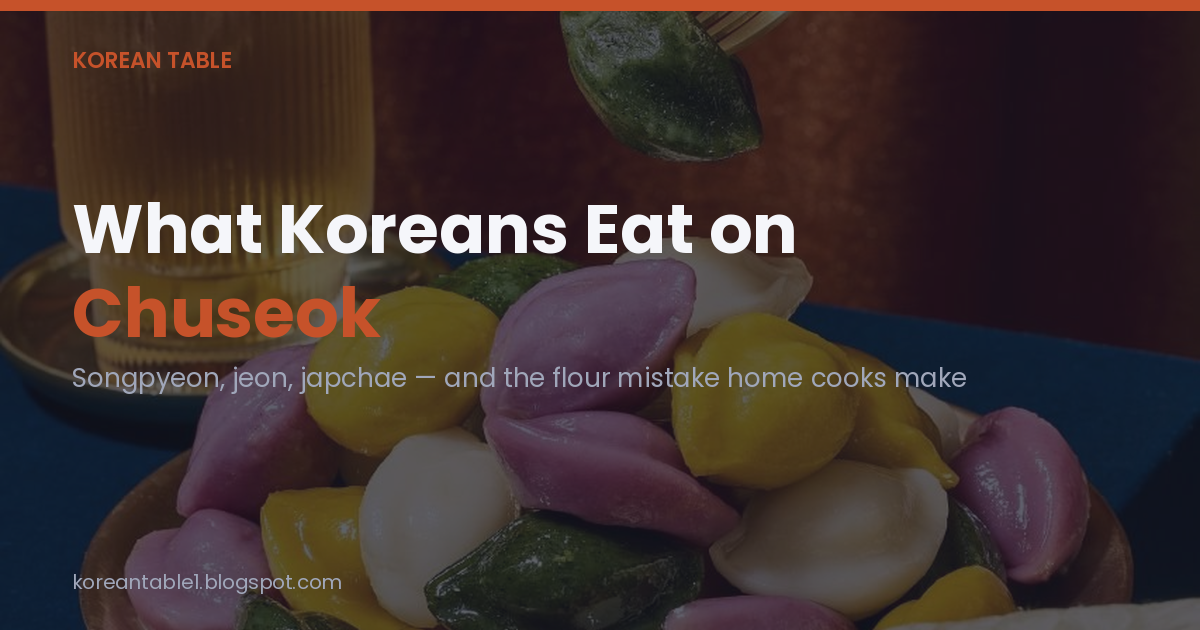
Ask what Koreans eat on Chuseok (추석) and most people say songpyeon first — the half-moon rice cake stuffed with sesame, chestnut, or sweetened black beans, steamed over a bed of pine needles so it comes out faintly perfumed. That's not wrong. It's just one dish out of a full table.
Chuseok 2026 falls on Friday, September 25. The official holiday runs Thursday the 24th through Saturday the 26th, and since the 26th butts right up against Sunday the 27th, most of the country ends up with four days off without touching a single vacation day.
Songpyeon, and the Superstition That Comes With It
Everyone in the family gets pulled into making songpyeon the night before Chuseok — it's one of the few Korean dishes that's genuinely a group project, and not one cook's job. Roll the dough into a ball, press a thumb-sized well into the center, pack in the filling, pinch it shut into a half-moon. Repeat for an hour, usually with the TV on in the background.
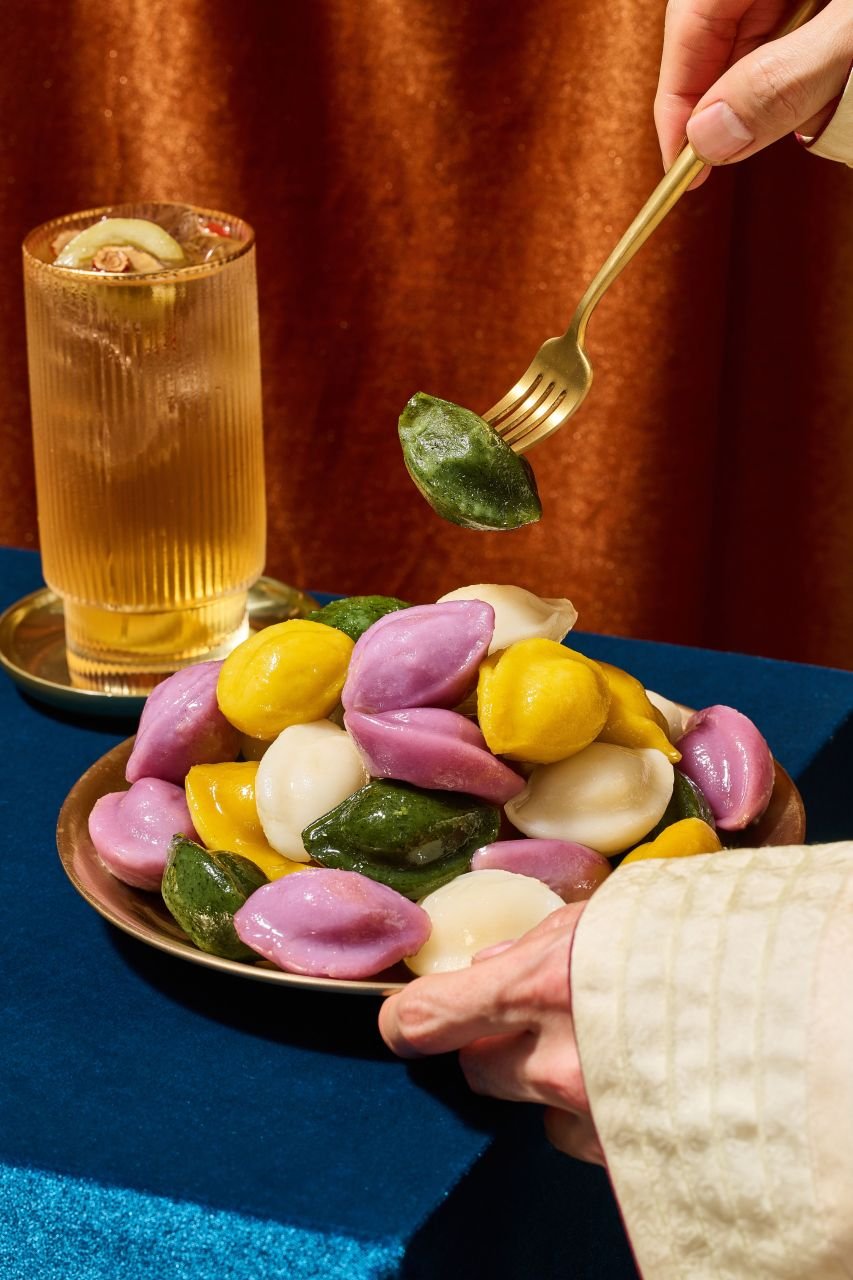
The half-moon shape isn't decorative. It's meant to read as the waxing moon (not yet full, still filling out), the whole point at a harvest holiday about things growing and gathering. An old belief attaches to the shaping itself, too — make a pretty songpyeon and you'll land a good spouse, or, if you're already expecting, a pretty daughter. As one Korean food writer put it, "a person who makes beautiful songpyeon will have beautiful children or meet a good spouse." Kids take it seriously. Grandparents tease about it while they work. Either way, it's what turns an hour of dough-shaping into the actual social event of the evening.
The Rice Flour Mistake
Here's where a lot of home cooks outside Korea get it wrong before they've even started: songpyeon isn't made with glutinous (sweet) rice flour — the one labeled chapssalgaru that shows up in almost every other Korean rice cake, injeolmi included. Songpyeon calls for short-grain rice flour, mepssalgaru, a different product. Grab the wrong bag and the dough turns gummy and dense instead of staying light with a clean, springy chew.
Korean Bapsang's dough ratio is a solid starting point for cooks who'd rather have exact numbers than "add flour until it feels right":
- Wet rice flour: 2 cups wet rice powder + 4–5 oz boiling water, kneaded until smooth — about 16 pieces
- Dry rice flour (if that's what's on the shelf): 1 cup short-grain rice flour + 1/3 cup glutinous rice flour (for softness) + 1/4 tsp salt + 4 Tbsp cold water, rested in the fridge a few hours
- Sesame filling: 1/3 cup toasted sesame seeds, ground, + 1.5 Tbsp sugar + 1 Tbsp honey + a pinch of salt
I haven't run this exact ratio myself, so treat it as a documented starting point, not a Korean Table-tested number — but the flour distinction itself isn't up for debate.
Beyond the Rice Cake
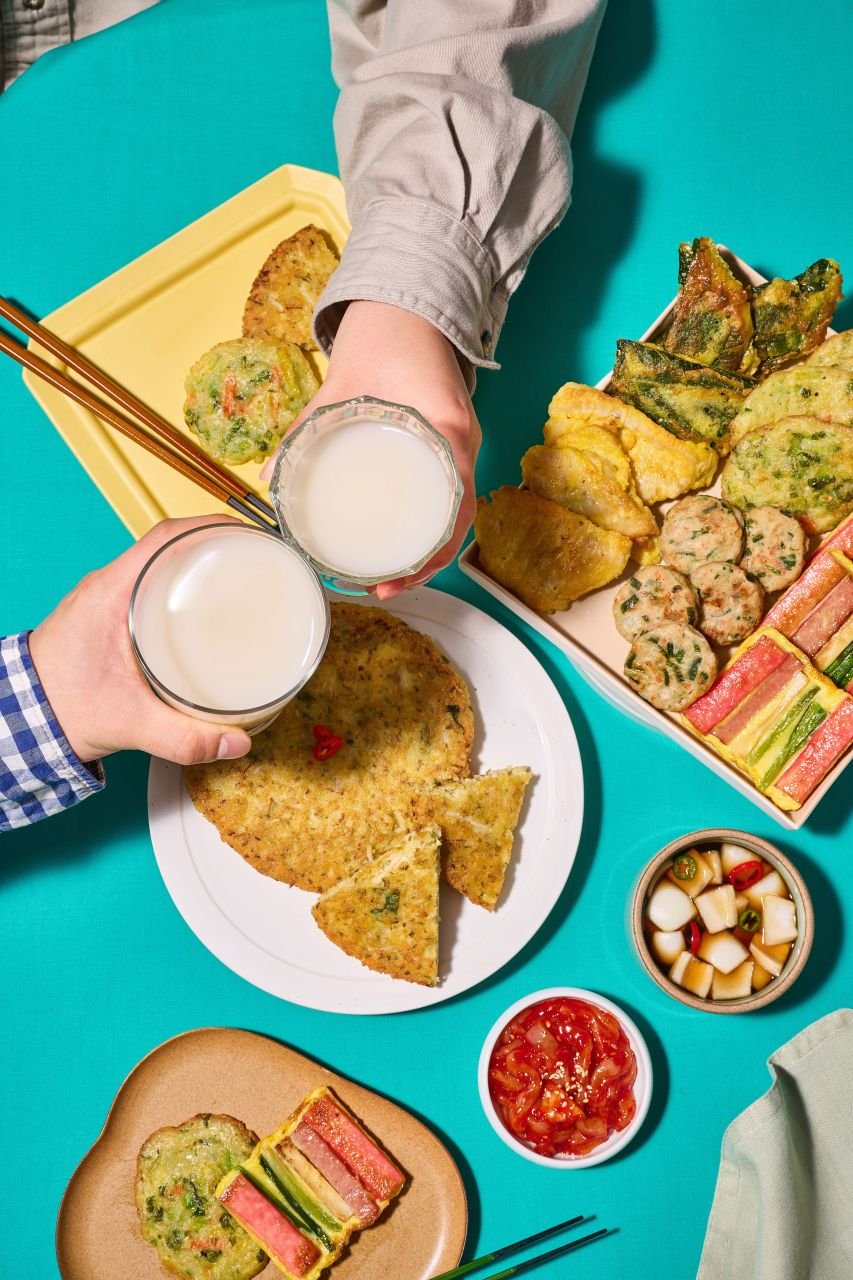
Songpyeon gets the spotlight, but the wider table runs a lot longer. Jeon, the pan-fried batter dishes, cover most of the savory side — pa-jeon with scallions, kimchi-jeon, wanja-jeon (meat and tofu patties), bindaetteok made from ground mung beans. Japchae, the sweet-potato glass-noodle stir-fry, usually shows up too, alongside galbijjim (braised short ribs), namul (seasoned vegetable sides), and sweets like yakgwa and sikhye.
None of this is standardized. Beyond Kimchee says: "there isn't one fixed Chuseok menu for every Korean family. Regional traditions and family customs differ." Songpyeon fillings shift by province, and whether bindaetteok or some other jeon variety lands on the table depends more on whose grandmother is cooking than any national rulebook.
Why the Food Matters More Than the Fireworks
Most of Chuseok's actual holiday time goes into food, and not sightseeing. Chuseok.info puts it plainly: "most of the time spent during the holiday is typically for preparing, cooking, and feasting." Nearly all of that effort goes toward charye (차례), the ancestral rite where the family sets out the food for deceased relatives before anyone else eats. That's why Chuseok reads less like a single meal and more like a full day of prep — songpyeon the night before, then jeon, namul, and the rest cooked fresh the morning of, arranged, offered, and only then served to the living.
Finding the Ingredients Outside Korea
Short-grain rice flour and the sesame or red-bean fillings are the two things worth tracking down before Chuseok, and not the day before. Korean grocery chains like H Mart carry both, plus pre-made frozen songpyeon around the holiday if making your own dough isn't in the cards this year — Weee! stocks a similar range online for anyone without a store nearby. Check the freezer section specifically; fresh mepssalgaru doesn't sit on a dry-goods shelf the way regular flour does.
Making your own from scratch this year, or buying the pre-made tray and calling it a holiday? Either is a real way to do Chuseok — just check the rice flour bag before you start kneading.
This is a running news series, not a one-off post — new stories go up twice a day, roughly 7am and 7pm Korea time.
You might also like: Chuseok 2026 in Seoul: Last Trains Run Until 1 AM, Not 2 (Korea Travel Planner) · Air Premia's Chuseok Sale Puts Korea Flights at $661 (Korea Travel Planner) · Do You Need Travel Insurance for Korea? What an ER Visit Costs (Korea Travel Planner)
More Korea coverage from our network: Hallyu Now · Korea Travel Planner · K-Sports Global · Seoul Skin Notes


Comments
Post a Comment