Tteokbokki Without Gochujang: What Actually Works
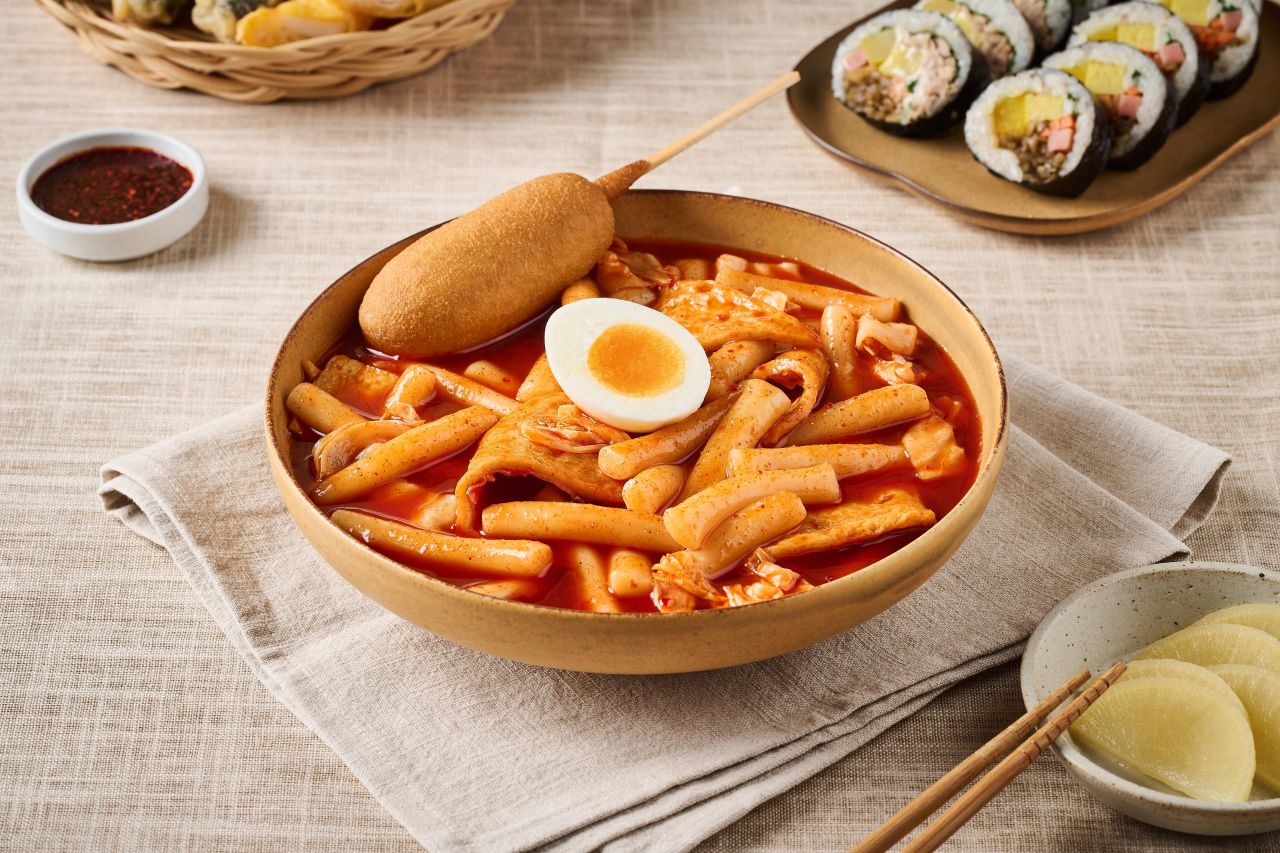
Ran out of gochujang halfway through a batch of tteokbokki, or cooking for someone who can't do spicy at all? The rice cakes don't care which sauce coats them. What needs replacing is three separate jobs gochujang does at once, and most "gochujang-free" recipes floating around online only cover one of them.
What Gochujang Is Doing in the Pot
Gochujang isn't one flavor. It's chili heat from the gochugaru stirred into the paste, sweetness and body from fermented glutinous rice, and a deep, funky umami from fermented soybean that plain sugar and chili flakes can't fake by themselves. Leave it out without a plan for all three and the sauce tastes thin, no matter how much gochugaru you dump in to compensate.
That's why the internet's gochujang substitutes split into two completely different problems: getting spicy tteokbokki without the specific paste, and skipping the heat altogether. Pick the wrong one for what you're trying to do and you'll end up with a pot of rice cakes that tastes like a compromise.
Still Want the Heat? Fake the Paste With What's Already in Your Pantry
If gochugaru and doenjang are both sitting in your fridge, you can rebuild gochujang's three jobs separately instead of buying a jar of paste. AnnaTastes' gochujang-free version uses 2 tablespoons gochugaru for heat, 1 tablespoon doenjang for the fermented funk, 2 tablespoons soy sauce, 1 tablespoon sugar, 1 tablespoon minced garlic, and 1 teaspoon grated ginger. Soak the rice cakes 20 to 30 minutes if they're frozen, then simmer everything together 8 to 10 minutes instead of pan-frying.
Doenjang is the ingredient doing the real work here. It's fermented soybean, the same base gochujang starts from before chili gets added, so it covers the umami a straight gochugaru-and-sugar mix can't. This version is genuinely spicy, not a mild stand-in. Reach for it when the problem is "no gochujang in the house," not "no spice, please."
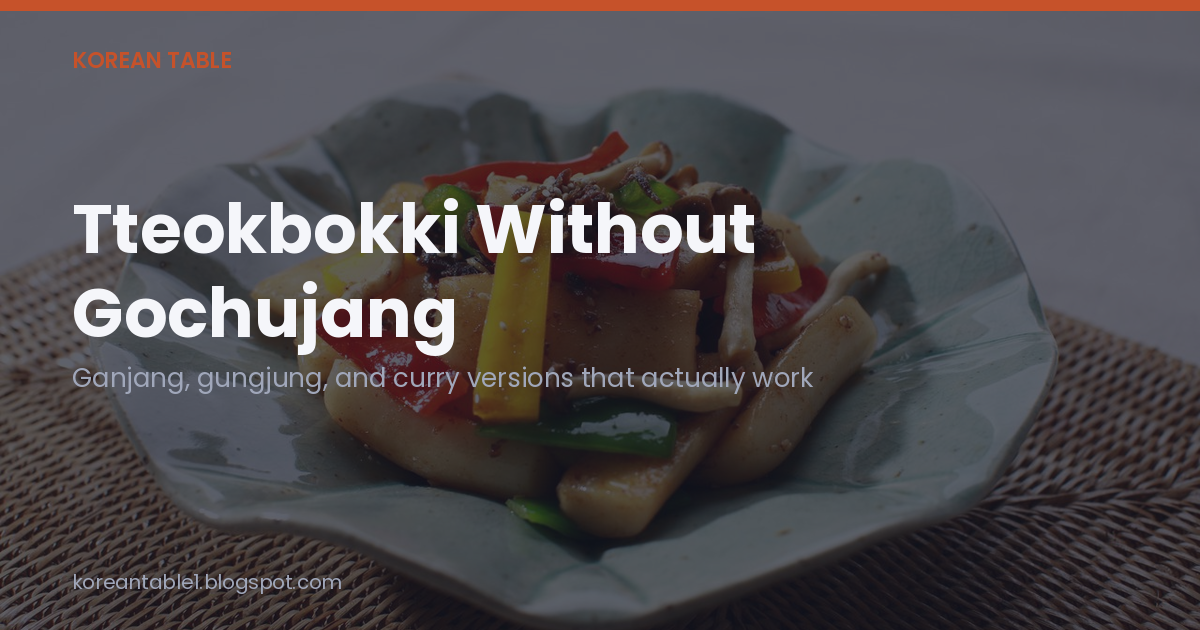
Gungjung Tteokbokki: The Version That Predates the Chili
Skip the heat entirely and you land on gungjung tteokbokki, a dish that has nothing to do with running short on paste. Chili peppers weren't even in Korea yet when this version was first served. Kimchimari's soy-sauce stir-fry traces it to Joseon Dynasty royal court cooking, and Beyond Kimchee's version calls it a dish "enjoyed at royal banquets," centuries before the red street-food version existed.
The rice cakes get tossed in just 1 tablespoon soy sauce and 1 tablespoon sesame oil. Thin beef strips get their own marinade: 1.5 tablespoons soy sauce, 1 tablespoon rice wine, 1 tablespoon sesame oil, 1 teaspoon sugar, 1 tablespoon honey, minced garlic, and black pepper. Stir-fry it with oyster mushroom, onion, carrot, and scallion.
No chili at any point.
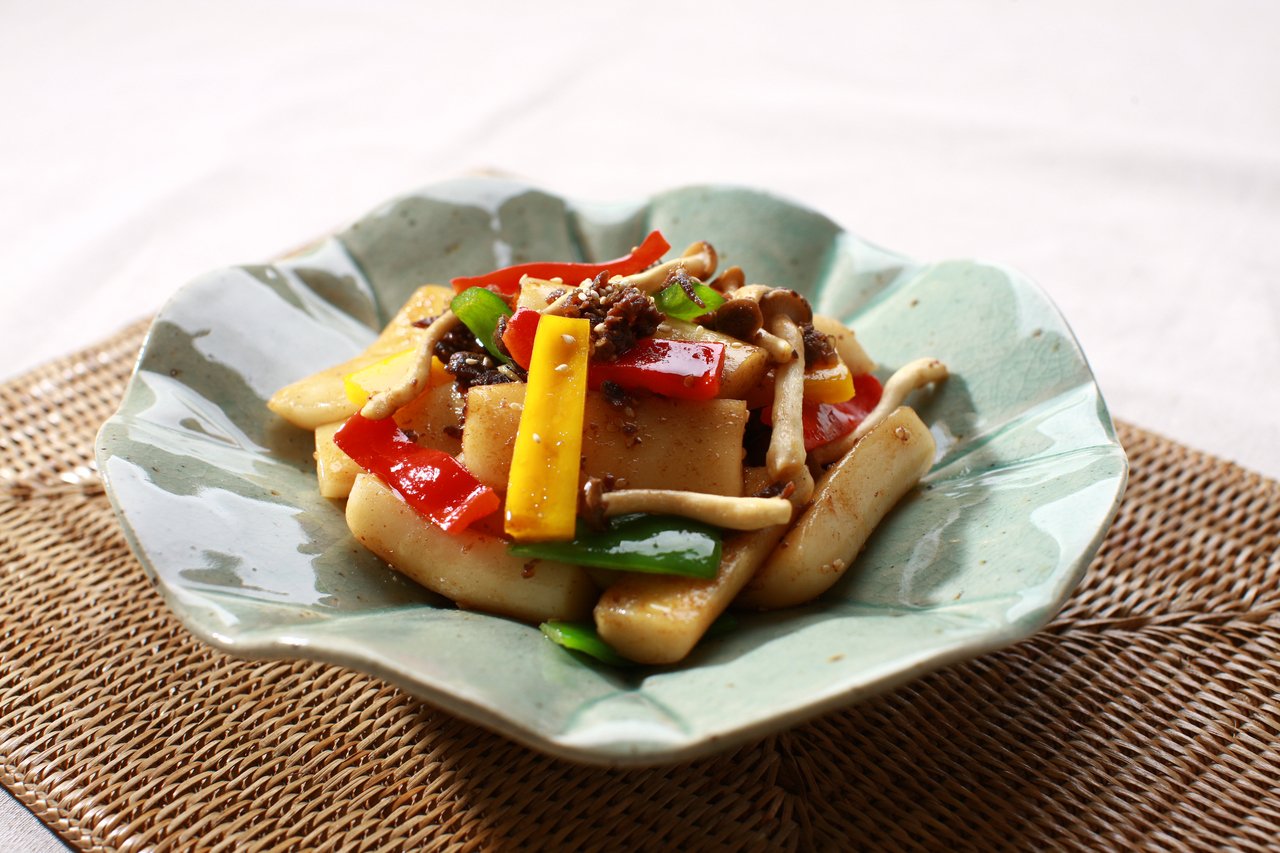
Soy-sauce tteokbokki, ganjang tteokbokki, isn't a lesser version of the red stuff. It's the older dish, and gochujang is the newer arrival.
Bulgogi Tteokbokki: The Sweeter Soy Street Version
If gungjung tteokbokki reads a little formal for a weeknight, bulgogi tteokbokki is the same no-chili idea dressed for street food. OhHappyJoy's sauce runs 4 tablespoons soy sauce to 1 tablespoon sugar, 1 tablespoon oligo syrup, and 1 tablespoon sesame oil, finished with sesame seeds, a roughly 4:1:1:1 ratio that's easy to scale up. Oligo syrup is a mild Korean corn syrup used for glaze; light corn syrup or honey works as a 1:1 swap if that's what's in your pantry.
The meat gets its own quick marinade first (soy sauce, mirin, minced garlic, sugar), seared, then tossed with the pan-fried rice cakes and sauce. It's the version to reach for when "not spicy" needs to still taste like a proper meal, not a diet compromise.
Curry Tteokbokki, When Kids Are Eating Too
Curry tteokbokki skips soy sauce's saltiness for something closer to a mild stew. Love Korean Food's version runs 3 to 4 cups rice cakes with 2 cups water or broth and 4 to 5 tablespoons curry powder, or 2 to 3 curry roux blocks. Add fish cake and whatever vegetables are around, then simmer until the sauce coats the tteok. Most Korean home cooks reach for Ottogi's mild, turmeric-forward curry powder here, not an Indian or Thai blend, since that's the flavor "curry" means in Korean home cooking. The recipe's own author says any curry mix works, though, if the amount gets adjusted to taste.
I haven't tested a coconut-milk version with fresh (not frozen) tteok, so I can't say how the texture holds up past the first bowl. Worth knowing before you commit a pack of good rice cakes to a recipe you found on a whim.
| Version | Base | Spice level | Best for |
|---|---|---|---|
| Gochugaru + doenjang | Chili flakes + fermented soybean | Full heat, no paste | Out of gochujang, still want spicy |
| Gungjung tteokbokki | Soy sauce + sesame oil | None | Formal, kid-friendly, dinner party |
| Bulgogi tteokbokki | Soy sauce + sugar + oligo syrup | None | Weeknight, still tastes like a meal |
| Curry tteokbokki | Korean curry powder | None (mild) | Feeding kids, using up fridge vegetables |
None of these need a special trip beyond a Korean grocery run. Doenjang, gochugaru, and Ottogi curry powder all sit on the same shelf at H Mart or a local Korean market, usually a few feet from the gochujang tubs. All three ship from Korean grocery sites online, too, if there's no store nearby.
Which one you reach for depends on what's missing from the pantry — the paste, or the heat. Serve any of them the same way: straight from the pan, still glossy, before the rice cakes have a chance to firm up on the plate.
This is a running news series, not a one-off post — new stories go up twice a day, roughly 7am and 7pm Korea time.
More Korea coverage from our network: Hallyu Now · Korea Travel Planner · K-Sports Global · Seoul Skin Notes


Comments
Post a Comment