Kimchi With Regular Cabbage: What Changes and What Doesn't
Yangbaechu kimchi (양배추김치) is what Korean cooks abroad started calling kimchi made with ordinary round cabbage instead of napa — not a hack, a real dish with its own name, born from grocery runs that came back without napa on the shelf.
If your nearest H Mart or Asian grocery stocks napa, buy it. This isn't an upgrade, it's what you reach for when the store genuinely doesn't carry it, or you want a jar that's edible by dinner instead of next week. Regular green cabbage sits in every Western supermarket's produce aisle, no special trip required, and that's the whole case for it.

Why the Two Cabbages Aren't Interchangeable
Napa grows as a loose, oblong head with ruffled leaves that fan upward from the stem, thin enough to fold easily and mild enough that a short brine softens it clean through. Regular round cabbage packs its leaves into a dense, tight head that stays firm raw and tastes more peppery before it mellows, according to Hitchcock Farms, a produce grower that ships both. Swap one for the other in the same recipe and the timing below has to reset from zero. It's not napa's schedule with a substitute vegetable dropped in; the cabbage itself behaves differently start to finish.
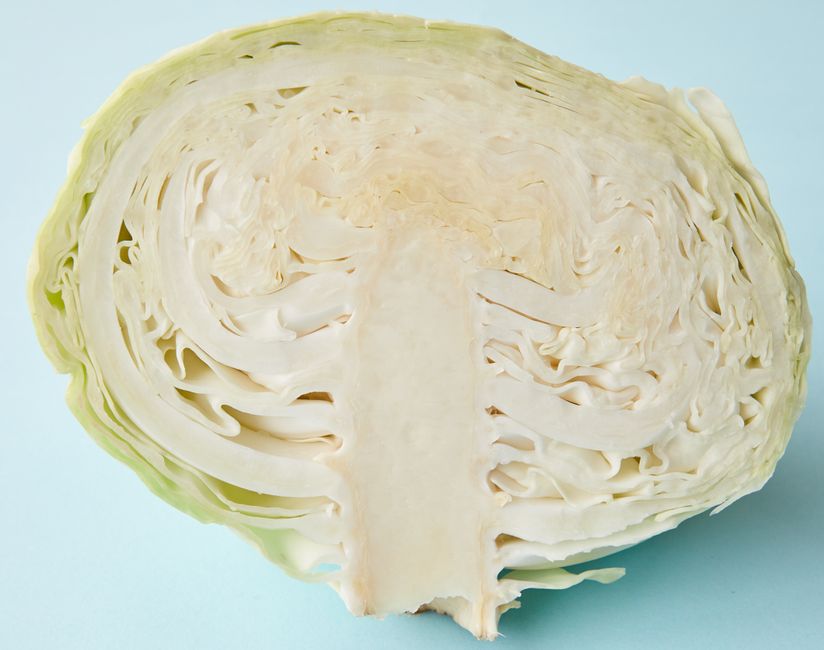
The Salting Time Isn't Close
| Napa (traditional, whole/quartered) | Green cabbage (chopped) | |
|---|---|---|
| Cut | Whole head, quartered | 1½-inch pieces |
| Salt brine | Roughly 1 part salt to 8 parts water | 4 tbsp salt in 2 cups water, plus 2 tbsp direct |
| Time | 10–24 hours, turned every 3–4 hrs | About 1 hour, until slightly wilted |
| After rinsing | Drained upside down 2–5 hrs | Straight into the seasoning |
Crazy Korean Cooking's traditional method brines whole quartered heads for 10 to 24 hours, rotating the cabbage every 3 to 4 hours so the thick stem ends spend more time submerged than the leafy tops, then drains it upside down for 2 to 5 hours before any seasoning goes on. Beyond Kimchee's green cabbage version skips almost all of that: cut into 1½-inch pieces, it wilts in about an hour under a lighter brine.
Most of that gap isn't about the cabbage at all. It's about the cut. Chop napa into the same size pieces and it salts fast too. The traditional method takes a day because it keeps the leaves whole, not because napa is naturally slow to season. Green cabbage kimchi is a quick-kimchi format that happens to use a cabbage sturdy enough to survive being cut small.
A Ratio You Can Scale
Beyond Kimchee tested this on one 3.5-pound (1.5 kg) head:
- 6 tbsp Korean coarse sea salt (4 tbsp dissolved in 2 cups water for the brine, 2 tbsp scattered over the cut cabbage directly)
- 7 tbsp gochugaru, 1 tbsp sugar
- ½ small onion, 4 garlic cloves, ½-inch ginger, 3 tbsp Korean anchovy sauce (myeolchi aekjeot, a type of Korean fish sauce), 2 tbsp cooked rice blended with 2 tbsp water to bind the paste (or mashed potato), 3 chopped scallions
Scale it by weight and the ratio holds: roughly 1¾ tbsp salt and 2 tbsp gochugaru per pound of cabbage. Adjust to your kimchi from there. A saltier bottle of anchovy sauce means less salt in the paste, and how sour you want it by day three has more to do with your kitchen's actual temperature than any fixed hour count.
Leave the finished batch out, loosely covered, for a day or two, then move it to the fridge. Beyond Kimchee calls it ready after three to four more days there; give it closer to a week if you want fuller sourness. Either way it holds onto its crunch the whole time — that's the one thing this cabbage does that napa never quite does.

Where It Still Comes Up Short
I wouldn't reach for it in jjigae. A stew wants cabbage that's gone soft and properly sour, and green cabbage is still holding its bite at the point napa would have collapsed into the broth weeks earlier. It's also not the cabbage for the deep, aged funk of kimchi that's sat in the back of the fridge for two months — this version peaks early and mostly stays where it started. What it's good for is the same week or two most jars get eaten in anyway, reached a lot faster.
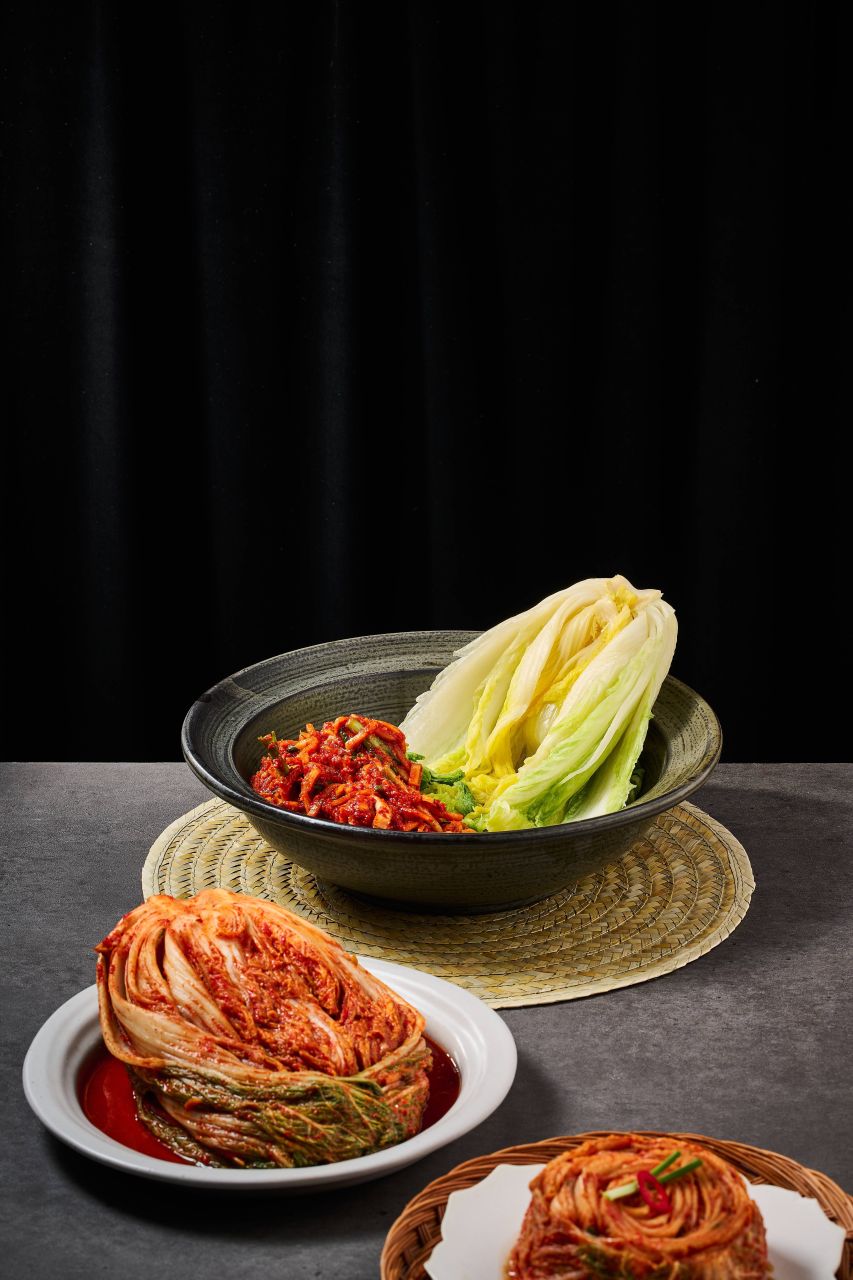
Keep it in the fridge in a sealed jar and it's good for a couple of weeks, getting sharper by the day instead of just sitting there. Eat it straight as banchan while it's still mostly crunchy, or fold it into fried rice once it's turned sourer than you'd want raw. If you've tried this with savoy or napa-adjacent Chinese cabbage instead of regular green, I'd like to know whether the timing moved much — the numbers above are Beyond Kimchee's tested batch, not a side-by-side I've run myself.
This is a running news series, not a one-off post — new stories go up twice a day, roughly 7am and 7pm Korea time.
More Korea coverage from our network: Hallyu Now · Korea Travel Planner · K-Sports Global · Seoul Skin Notes


Comments
Post a Comment