Samgyeopsal at Home Without a Korean BBQ Grill: The Right Pan
Short version: a heavy cast iron skillet gets you about 90% of the way to real samgyeopsal, and you don't need a single piece of Korean BBQ equipment to make it happen tonight.
That's the question I keep seeing from people who've had the real thing at a restaurant — the domed grill plate built into the table, the vent sucking smoke straight down — and now want it in a normal kitchen with a normal stove. You can get there.
The result won't be identical to a table with built-in ventilation, but it's close enough that most people who've had the restaurant version can't tell the difference once the meat's wrapped in lettuce and dunked in sauce.

The Pan Matters More Than the Fire
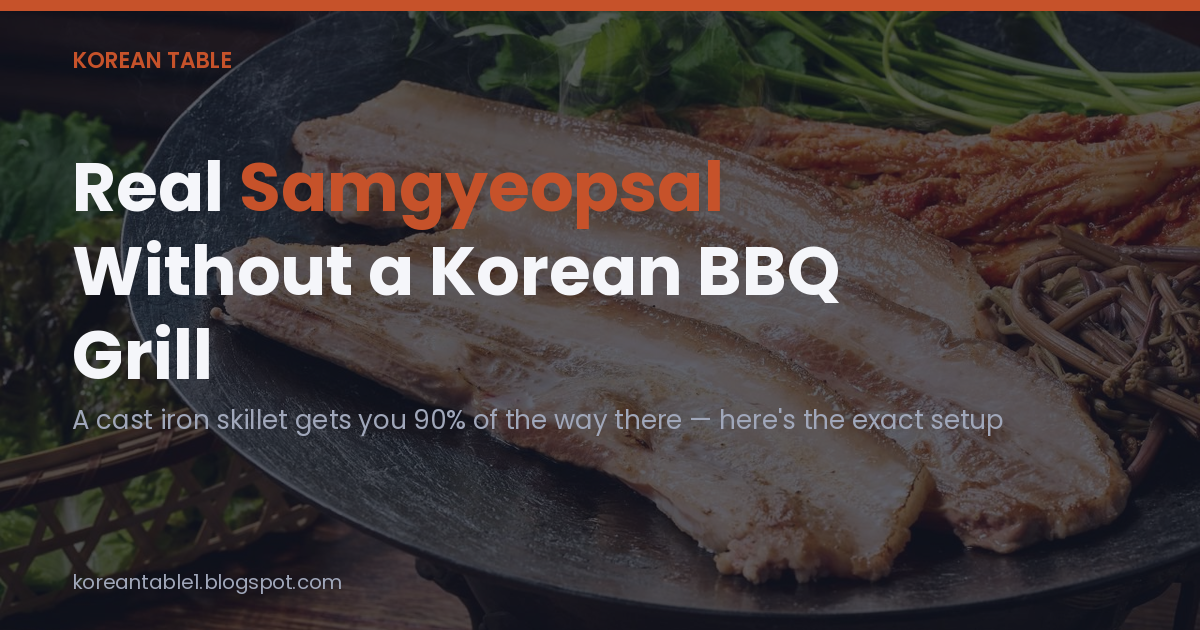
Forget finding a substitute for the grill plate itself. What you actually need is something heavy enough to hold high heat without cooling down every time you add meat. A cast iron skillet or griddle does this better than almost anything else in a home kitchen — it gets hot enough, holds that heat through batch after batch, and gives you the char that's genuinely half the point of the dish, according to Wandercooks, which specifically recommends a cast-iron griddle for stovetops that can't reach restaurant-grill temperatures. A regular nonstick skillet works too, just don't expect the same char — the coating limits how hot you can safely run it, and char is where the flavor lives.
Here's the sequence that actually works, from Blonde Kimchi's home version: get the pan ripping hot, lay the pork belly down, and gently move it around as the fat starts rendering out. Once the pink is nearly gone, flip and drop the heat to medium, keeping the pieces moving so nothing sits still long enough to scorch. Cut it into bite-size pieces with kitchen scissors once it's about 70% done — that's the actual Korean restaurant move, not a home-cook shortcut, and it's a lot safer than trying to slice hot pork belly with a knife on a crowded pan.
An electric indoor grill — the George Foreman kind with sloped nonstick plates — works in a pinch. You lose the fat pooling under the meat and most of the smoke, which for some people is the whole appeal of the dish. Fine for a Tuesday when you want the flavor and don't care about the theater. Don't crowd the pan either way: two or three strips at a time keeps the surface hot enough to sear instead of steam, which is the single most common reason a home attempt turns out gray and boiled-looking instead of caramelized.
Buy It Sliced Right, Not Whatever's in the Deli Case
This is where most home attempts actually fail, before the pan ever gets hot. Standard samgyeopsal is cut about 1 centimeter (roughly half an inch) thick — thick enough that the fat has time to render before the meat overcooks, thin enough that it still cooks through in a few minutes per side. Whatever's pre-packaged as "pork belly" or bacon at a regular Western supermarket is cut for a different job (bacon, or slow braising) and runs noticeably thinner than that. Cooked at samgyeopsal heat, it burns on the outside before the fat underneath has a chance to melt — that's the "why does mine taste dry and burnt" complaint I see most often, and it's a sourcing problem, not a technique problem.
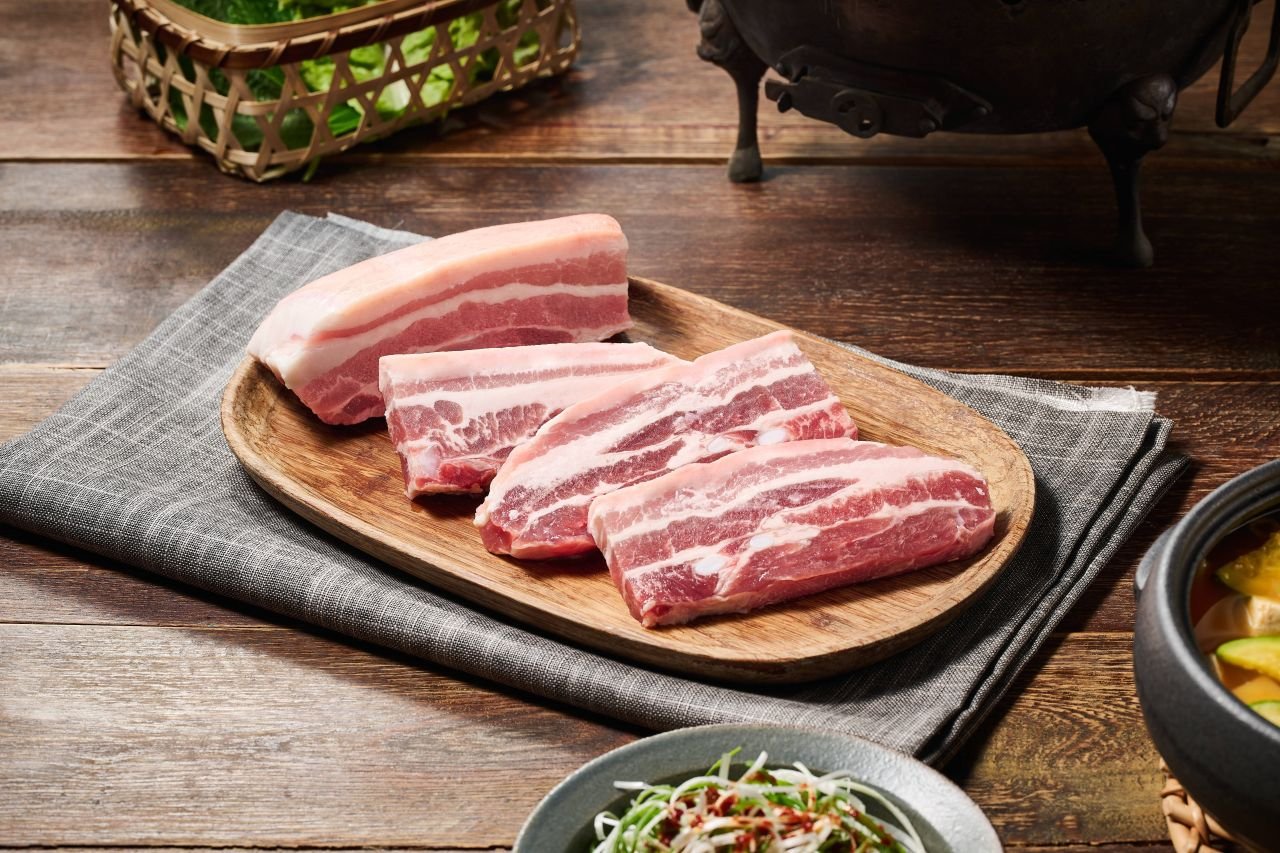
Fix it at the counter, not in the pan. A Korean grocery chain like H Mart, or the meat counter at most Asian markets, will slice a slab of pork belly to order — ask for it around 1 centimeter thick, unsliced, with the skin removed if you can get it. If you're working from a whole slab at home, a sharp knife and a partially frozen piece of meat (30–40 minutes in the freezer firms it up enough to slice evenly) gets you close. Buying it pre-cut and thin because it's what's available isn't a real substitution — it changes the dish, and not in a good way.

The Sauce You Already Have Half the Ingredients For
Ssamjang doesn't need a trip to a specialty store if you already have doenjang and gochujang in the fridge from another recipe. Korean Bapsang's version is 2 tablespoons doenjang to 1 tablespoon gochujang — that ratio matters more than people expect, since gochujang's sweetness can overpower doenjang's saltier, funkier depth if you flip it. Add 1 teaspoon minced garlic, ½ tablespoon sugar or honey, 2 teaspoons sesame oil, 1 teaspoon sesame seeds, and a tablespoon of water or rice wine to loosen it to a dip consistency. Five minutes, no cooking required.
Bottled ssamjang from a Korean grocery store is genuinely fine and what most Korean households actually use on a weeknight — homemade isn't a badge of authenticity here, it's just what you do when you don't have a jar in the fridge. Don't skip the sesame oil in either version, bottled or homemade — it's a small amount but it's doing the job of rounding out the paste's sharp edges, and a version without it tastes noticeably flatter.
Managing Smoke, and What Goes Around the Meat
An open flame indoors means smoke, full stop — no pan trick eliminates that part. Run your exhaust fan on its highest setting before you start, not after the smoke alarm goes off, and crack a window if you have one near the stove. A splatter screen over the pan cuts down on grease landing on your stovetop without trapping the smoke that's supposed to escape.
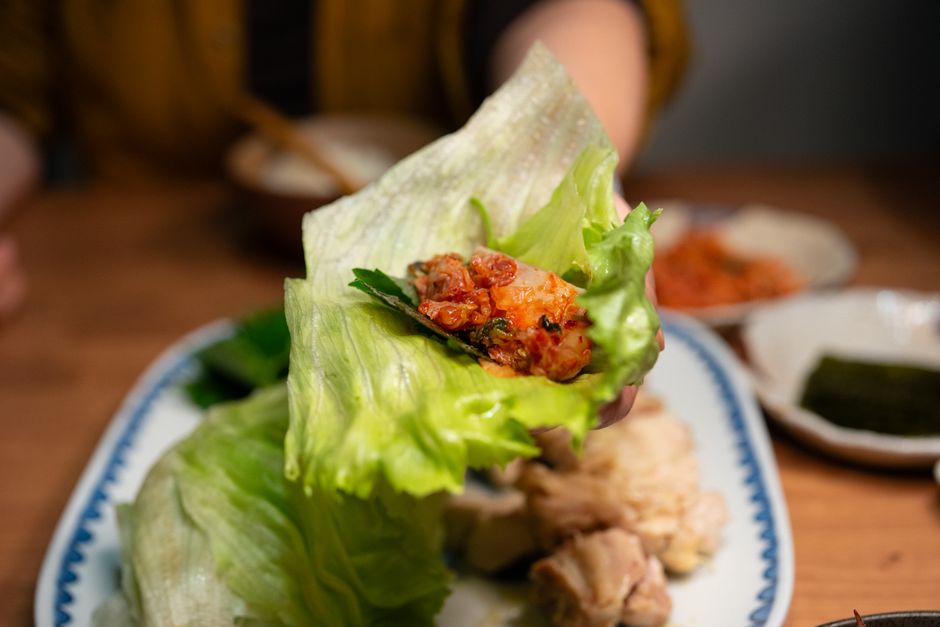
Perilla leaves are the wrap Koreans actually reach for alongside lettuce, and they're genuinely hard to find fresh outside a Korean grocery store — H Mart carries them, and it's one of the retailers Tasting Table names as a reliable source for the leaf. Online Asian grocer Weee! delivers them (or the closest substitute, shiso leaf) to most major US metro areas if there's no store nearby. Shiso sits right next to perilla at Japanese and Korean markets for a reason — same plant, slightly milder. Butter lettuce alone works if neither turns up, but you'll lose the mild anise-and-mint edge perilla brings, which is a real flavor difference, not just a garnish swap.
Steamed short-grain rice and a bowl of kimchi round out the table. That part doesn't need a recipe — canned or jarred kimchi from any Korean grocery does the job fine here, since it's a side, not the main event.
A basic cast iron skillet from a hardware store handles all of this fine — it's never the weak link once you've got one. The pork belly thickness is where people actually lose the dish, and that gets decided before the stove's even on.
This is a running news series, not a one-off post — new stories go up twice a day, roughly 7am and 7pm Korea time.
More Korea coverage from our network: Hallyu Now · Korea Travel Planner · K-Sports Global · Seoul Skin Notes


Comments
Post a Comment